

Start here
Why Start a Home Garden on a Budget
Next
Choosing the Right Spot and Scale
Then
Understanding Your Soil Before You Spend a Dime
When you're ready
What to Plant First: Picking Beginner-Friendly Crops
Go further
Stretching Your Garden Budget Further
Keep going
Keeping the Garden Going All Season
Why Start a Home Garden on a Budget
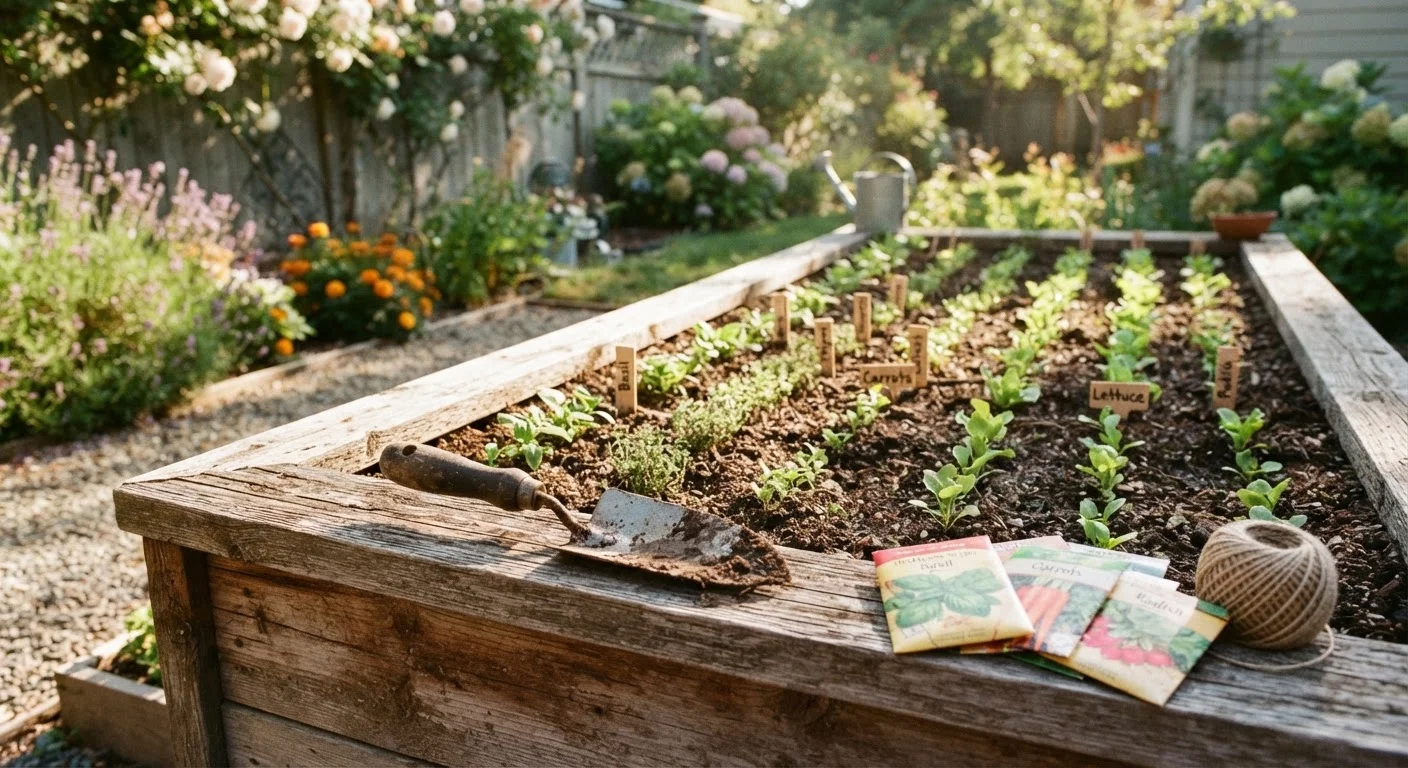
Growing your own food is one of the most practical things a family can do with a small outdoor space. Even a modest plot of lettuce, beans, and tomatoes can meaningfully supplement a grocery budget over a season, and the habit builds year over year as your skills and soil improve. But the startup can feel daunting - especially when garden centers are full of expensive gadgets and specialty products that imply you need them to succeed. You don't.
The truth is that gardens operated on tight budgets often outperform over-purchased ones. When you start small and focused, you learn faster, waste less, and avoid the frustration of overextending before you understand your space. This guide is built for families who want real results without unnecessary spending.
If tracking household spending is part of your plan, our family budgeting guide can help you carve out a realistic garden line item from the start.
Choosing the Right Spot and Scale
Before buying a single seed, spend time observing your yard or outdoor space across different times of day. Note where sunlight falls for the longest, where water pools after rain, and where foot traffic makes the ground compacted. These observations cost nothing and prevent expensive mistakes.
Most vegetables need at least six hours of direct sun daily. Pick the sunniest available spot first, even if it's smaller than you'd like. A 4×8-foot bed managed well will feed a family more reliably than a sprawling, neglected plot. If yard space is limited, square foot gardening is a method specifically designed to maximize yields from compact areas.
For families without in-ground space, containers are a real option - though they come with trade-offs in watering frequency and soil volume. Our article on growing food in containers gives an honest look at what works and what doesn't before you invest in pots.
Start Smaller Than You Think You Need To
First-year gardeners almost universally underestimate how much time even a small bed requires. A 4×4-foot plot is a genuinely reasonable starting point for a family new to gardening. You can always expand in year two with the experience and confidence you've built.
Understanding Your Soil Before You Spend a Dime
Soil is not just dirt. It's a living system that determines whether your plants thrive or struggle. The good news: improving soil is one of the most cost-effective investments you can make, and it pays off for years.
Start with a basic soil test. Many university cooperative extension services offer inexpensive or free soil testing kits that tell you your soil's pH and nutrient levels. This prevents you from buying amendments you don't need. Most vegetable gardens do best in slightly acidic to neutral soil (roughly pH 6.0-7.0).
The single most impactful thing you can add to almost any soil is compost - decomposed organic matter that improves drainage in clay soil, increases moisture retention in sandy soil, and feeds soil organisms that benefit plants. Making your own compost from kitchen scraps and yard waste costs very little. See our step-by-step guide to building compost at home to get started. Also check out spring garden prep for a practical pre-season checklist covering drainage and soil readiness.
pH
A measure of how acidic or alkaline your soil is, on a scale from 0 to 14. Most vegetables grow best in soil with a pH between 6.0 and 7.0.
Compost
Decomposed organic material - like food scraps and yard waste - that improves soil structure, adds nutrients, and supports healthy plant growth.
Open-pollinated variety
A plant variety pollinated naturally by wind, insects, or other means, whose seeds reliably produce plants with the same traits as the parent plant.
Direct sowing
Planting seeds directly into the garden bed rather than starting them indoors in containers first. Some crops, like beans and carrots, do best this way.
Amendments
Materials added to soil to improve its structure, drainage, or nutrient content - examples include compost, lime, and perlite.
Cooperative extension
A publicly funded network of university-based offices across the U.S. that provides free or low-cost agricultural and gardening guidance to the public.
What to Plant First: Picking Beginner-Friendly Crops
The crops you choose in your first season should do two things: produce reliably with modest effort, and give you something your family will actually eat. Ornamental success is nice, but edible returns keep families motivated.
Strong beginner choices include:
- Lettuce and salad greens - fast-growing, tolerant of partial shade, and harvestable in as little as four to six weeks from transplant.
- Radishes - one of the quickest crops available, often ready in three to four weeks, great for impatient first-timers.
- Green beans (bush variety) - low-maintenance, productive, and straightforward from direct sowing.
- Zucchini - reliably prolific; one or two plants is often enough for a family.
- Cherry tomatoes - more forgiving than large-fruited varieties and highly productive in small spaces.
When deciding whether to start from seed or purchase transplants, consider both cost and timing. Seeds are considerably less expensive and offer far more variety, but they require more lead time. Our article on seeds vs. seedlings lays out the trade-offs clearly so you can decide based on your schedule and budget.
Stretching Your Garden Budget Further
Once you've covered the essentials - a good spot, decent soil, and reliable crops - there are several practical ways to keep costs low without cutting corners on results.
- Save seeds. Many open-pollinated (non-hybrid) vegetable varieties produce seeds you can dry and store for the following season at no additional cost.
- Swap with neighbors. Seed swaps and plant exchanges - organized locally or informally - let you access variety without spending.
- Repurpose containers. Food-grade buckets, old colanders, and wooden crates can serve as planters. Avoid containers that previously held chemicals.
- Make your own fertilizer. Home compost eliminates the need for most purchased fertilizers once it's established.
- Borrow or share tools. A basic set of hand tools - trowel, hoe, watering can - is all most small gardens need. Many communities have tool libraries.
Understanding which plants come back each year (perennials) versus those you replant annually also affects long-term costs. Our guide to annuals vs. perennials breaks down the long-term value of each approach.
Keeping the Garden Going All Season
The difference between a thriving garden and a disappointing one is usually consistent, simple maintenance - not expensive inputs. A few key habits make the biggest difference.
Water deeply and less frequently. Shallow, frequent watering encourages shallow roots. Most vegetable gardens do better with less frequent, thorough watering that reaches deeper into the soil. Many common assumptions about watering are actually counterproductive - our article on garden watering myths clears up the most common ones.
Stay on top of weeds early. A few minutes of weeding weekly in the early season prevents hours of work later and eliminates competition for nutrients and water.
Record what you observe. Noting planting dates, what worked, what didn't, and when problems appeared gives you a personal reference that improves every subsequent season. Our guide to keeping a garden journal explains exactly what's worth tracking.
If your garden underperforms despite your efforts, common culprits include inconsistent watering, overcrowding, and poor timing. See why your vegetable garden keeps underperforming for a diagnostic walkthrough of the most frequent beginner missteps.
Frequently Asked Questions
Costs vary widely depending on scale and what you already own. A small in-ground plot using seeds, basic hand tools, and amended existing soil can be started for well under $50. Raised beds and container setups typically cost more upfront but can still be done affordably with repurposed materials.
Lettuce, radishes, green beans, zucchini, and cherry tomatoes are generally considered forgiving choices for beginners. They grow relatively quickly, tolerate minor mistakes, and produce well in small spaces, making them good confidence-builders in the first season.
Not always. If your existing ground soil drains reasonably well and isn't heavily compacted, you can improve it with compost rather than buying bags of premixed soil. A simple soil test - available through many cooperative extension offices - tells you exactly what amendments your plot actually needs.
Seeds are considerably less expensive and offer more variety, but they require more time and attention early on. Transplants cost more but reduce the time to harvest. Our detailed comparison can help you decide - see <a href="/home-garden/gardening-basics/seeds-vs-seedlings-weighing-cost-convenience-and-success-rates">Seeds vs. Seedlings</a> for a full breakdown.
Most edible crops need at least six hours of direct sunlight per day to produce well. Leafy greens like lettuce and spinach can tolerate partial shade, but fruiting vegetables like tomatoes and peppers need full sun to thrive.
Row covers, hand-picking, companion planting, and encouraging beneficial insects are all low-cost, effective approaches. Our guide to <a href="/home-garden/gardening-basics/organic-pest-control-in-the-home-garden">organic pest control</a> walks through practical chemical-free methods that are safe around children and pets.
The content provided on our blog site traverses numerous categories, offering readers valuable and practical information. Readers can use the editorial team’s research and data to gain more insights into their topics of interest. However, they are requested not to treat the articles as conclusive. The website team cannot be held responsible for differences in data or inaccuracies found across other platforms. Please also note that the site might also miss out on various schemes and offers available that the readers may find more beneficial than the ones we cover.