

Why Keeping a Garden Journal Is Worth the Effort
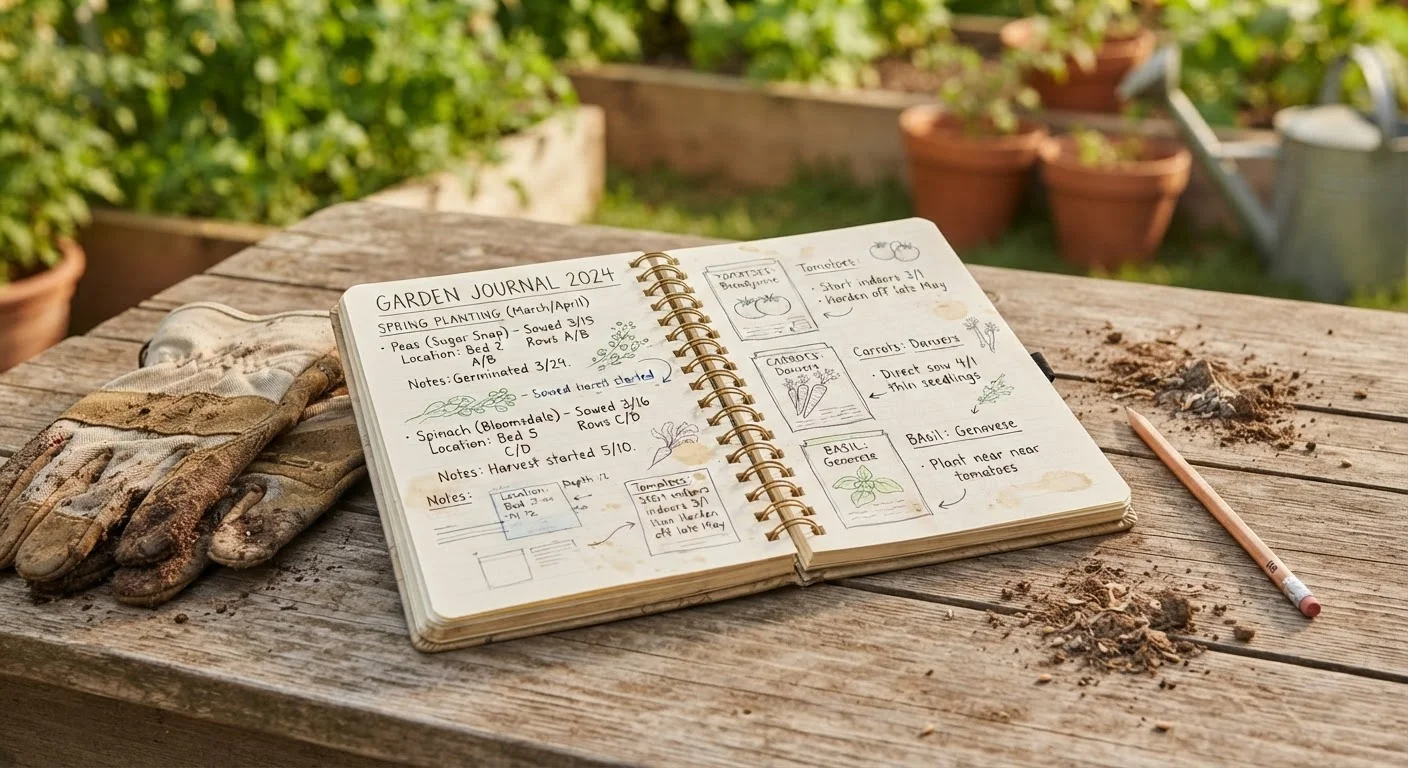
Most gardeners rely on memory to carry lessons from one season to the next. But memory is unreliable - especially when six months separate your last harvest from your next seed order. A garden journal closes that gap by turning fleeting observations into a permanent, searchable record you can actually use.
If you're starting a home garden on a tight budget, a journal is one of the highest-return investments you can make - it costs almost nothing and pays off in fewer wasted seeds, smarter timing, and less guesswork every year.
Your Journal Reflects Your Specific Conditions
Generic seed packets and gardening guides are written for broad audiences. Your journal, by contrast, captures what actually happens in your specific yard, microclimate, and soil. Over two or three seasons, those personal observations become more useful than most general advice. What works for a neighbor two streets over may not work for you - and your journal will show you why.
What to Record in Your Garden Journal
A garden journal doesn't need to be elaborate. The goal is consistent, specific notes that you'll actually understand when you read them next spring. Focus on five core categories:
Record planting and germination dates for every crop you grow.
Timing is one of the biggest variables in garden success. Knowing exactly when you sowed seeds and when seedlings emerged lets you fine-tune your schedule the following year, helping you avoid late frosts or missed harvest windows.
Note weather conditions throughout the growing season, including unusual events.
A heat wave, a late frost, or an exceptionally wet June can explain puzzling crop failures or surprising successes. Without a record, those connections are easy to forget by the time the next season rolls around.
Document what you planted, where you planted it, and in what quantity.
Crop rotation - moving plant families to different spots each year - helps reduce soil-borne disease and pest buildup. Without a map or layout sketch, it's nearly impossible to remember where last year's tomatoes or squash were planted.
Record pest and disease observations, including when and where they appeared.
Many garden pests and diseases follow predictable seasonal cycles. Spotting patterns across years tells you when to watch most closely and whether certain varieties or locations in your garden are consistently vulnerable.
Rate each variety's performance at the end of the season.
Not every variety sold performs well in every region or soil type. A simple end-of-season note - yield, flavor, disease resistance, ease of growing - prevents you from spending money on seeds that underperformed in your garden before.
For more context on how plant choices affect what you'll need to track year over year, see our guide on annuals vs. perennials for family gardens.
How to Build the Habit and Get Started Today
The biggest obstacle to keeping a garden journal isn't knowing what to write - it's getting started and staying consistent. The format truly doesn't matter: a spiral notebook, a phone app, a folder of dated photos with captions, or a simple spreadsheet all work equally well. What matters is that entries are dated, specific, and easy for you to revisit.
Before each new season, use your spring garden prep checklist alongside your journal from the previous year. That combination - one looking forward, one looking back - gives you a powerful planning foundation.
If you've been puzzled by repeated crop failures, your journal entries may quickly reveal the culprit. Our article on why vegetable gardens underperform pairs well with the patterns your journal will surface.
The content provided on our blog site traverses numerous categories, offering readers valuable and practical information. Readers can use the editorial team’s research and data to gain more insights into their topics of interest. However, they are requested not to treat the articles as conclusive. The website team cannot be held responsible for differences in data or inaccuracies found across other platforms. Please also note that the site might also miss out on various schemes and offers available that the readers may find more beneficial than the ones we cover.