

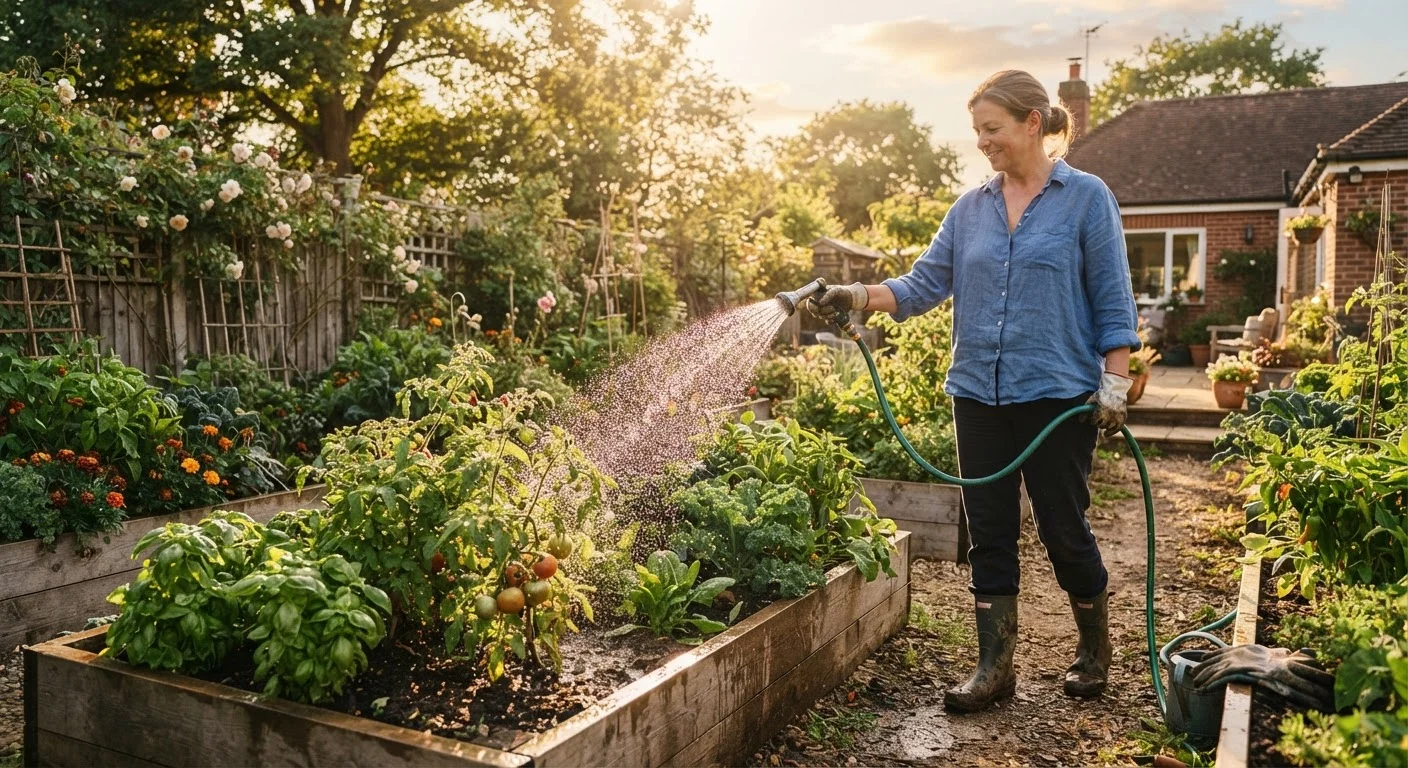
Why Watering Myths Are So Hard to Shake
Gardening advice is passed down through generations, and much of it made intuitive sense before we understood plant biology more clearly. The problem is that outdated rules - like watering every day or avoiding wet leaves - can quietly drain both your water bill and your plant supply. Budget-conscious families growing food at home can least afford to lose plants to preventable mistakes.
The good news: once you replace these myths with accurate habits, watering becomes less time-consuming and more effective. Below, we address the most persistent misconceptions head-on.
Myth
You should water your garden on a fixed daily schedule - plants need water every single day.
Fact
Plants need water based on soil moisture, weather, and growth stage - not the calendar.
Watering daily regardless of conditions is one of the most common and costly habits in home gardening. Sandy soils dry out quickly while clay soils retain moisture for days. Rainfall, humidity, and temperature all affect how fast soil dries. A better approach: push your finger two inches into the soil near the plant's base. If it feels dry at that depth, water. If it's still damp, wait. This simple check prevents both drought stress and root rot from excess moisture.
Myth
Watering plants in the middle of the day scorches the leaves because sunlight magnifies water droplets.
Fact
Water droplets on leaves do not cause scorch - the actual risk of midday watering is rapid evaporation, not burning.
The idea that water droplets act like tiny magnifying glasses has been tested by researchers and found to be largely inaccurate under real garden conditions. What midday watering does do is waste water - a significant portion evaporates before it reaches the root zone on a hot, sunny afternoon. Morning watering is still the practical choice: cooler temperatures mean less evaporation, and leaves dry before evening, reducing the humid conditions that encourage fungal diseases.
Myth
Wilting always means a plant needs more water.
Fact
Wilting can indicate both underwatering and overwatering - the cause must be diagnosed before adding more water.
When roots are damaged by waterlogged soil, they can no longer transport moisture efficiently, causing the plant to wilt even when the ground is soaking wet. Adding more water in this situation makes the problem worse. Check the soil: if it's already wet and the plant is wilting, reduce watering and improve drainage. If the soil is genuinely dry and crumbly, then gradual, deep watering is the right move. Understanding the difference could be the margin between saving a plant and losing it.
Myth
A little water frequently is better than a deep, infrequent soak.
Fact
Deep, infrequent watering encourages roots to grow deeper and makes plants more drought-resilient.
Frequent shallow watering trains roots to stay near the soil surface, where they're vulnerable to heat and rapid drying. Deep watering - slow enough to penetrate 6 to 8 inches into the soil - encourages roots to follow moisture downward. Deeper root systems are better anchored and can access moisture reserves during dry spells. For most garden plants, a thorough watering two to three times per week during dry weather is more beneficial than a light daily sprinkle. See how shallow watering contributes to underperforming vegetables and other common missteps.
Myth
Mulch doesn't make a real difference to how often you need to water.
Fact
A 2-3 inch layer of organic mulch can significantly reduce soil moisture loss and cut watering frequency.
Bare soil exposed to sun and wind can lose moisture rapidly through evaporation. Organic mulch - such as wood chips, straw, or shredded leaves - acts as an insulating blanket, keeping soil cooler and slowing moisture loss. For budget-conscious families, mulching with shredded leaves from your own yard costs little to nothing and improves soil quality as it breaks down. If you're starting a home garden on a tight budget, mulching is one of the highest-value steps you can take.
Practical Habits That Actually Help Your Garden
Overwatering Kills More Plants Than Drought
Chronically soggy soil suffocates roots by cutting off the oxygen they need to function. If your plants are wilting, yellowing, or dropping leaves, overwatering is just as likely a culprit as underwatering. Always check the soil a few inches below the surface before reaching for the hose.
Beyond debunking myths, a few evidence-grounded habits make a consistent difference in garden health. Water at the base of plants rather than overhead when possible - this delivers moisture directly to the root zone and keeps foliage drier. Use a watering can or drip irrigation for container plants, which dry out faster than in-ground beds. Group plants with similar water needs together so you're not over-saturating drought-tolerant herbs while trying to keep moisture-loving vegetables happy.
Keep an eye on your water usage too - wasted water from poor habits is a real household cost. Fixing other water issues at home can also add up; common leaky tap myths show just how small inefficiencies quietly drain budgets. Apply the same critical thinking to your garden: question the conventional wisdom, observe your specific plants and soil, and adjust accordingly.
This article is for general informational and educational purposes only. Garden outcomes vary based on local climate, soil type, plant variety, and many other factors. Results cannot be guaranteed.
The content provided on our blog site traverses numerous categories, offering readers valuable and practical information. Readers can use the editorial team’s research and data to gain more insights into their topics of interest. However, they are requested not to treat the articles as conclusive. The website team cannot be held responsible for differences in data or inaccuracies found across other platforms. Please also note that the site might also miss out on various schemes and offers available that the readers may find more beneficial than the ones we cover.