

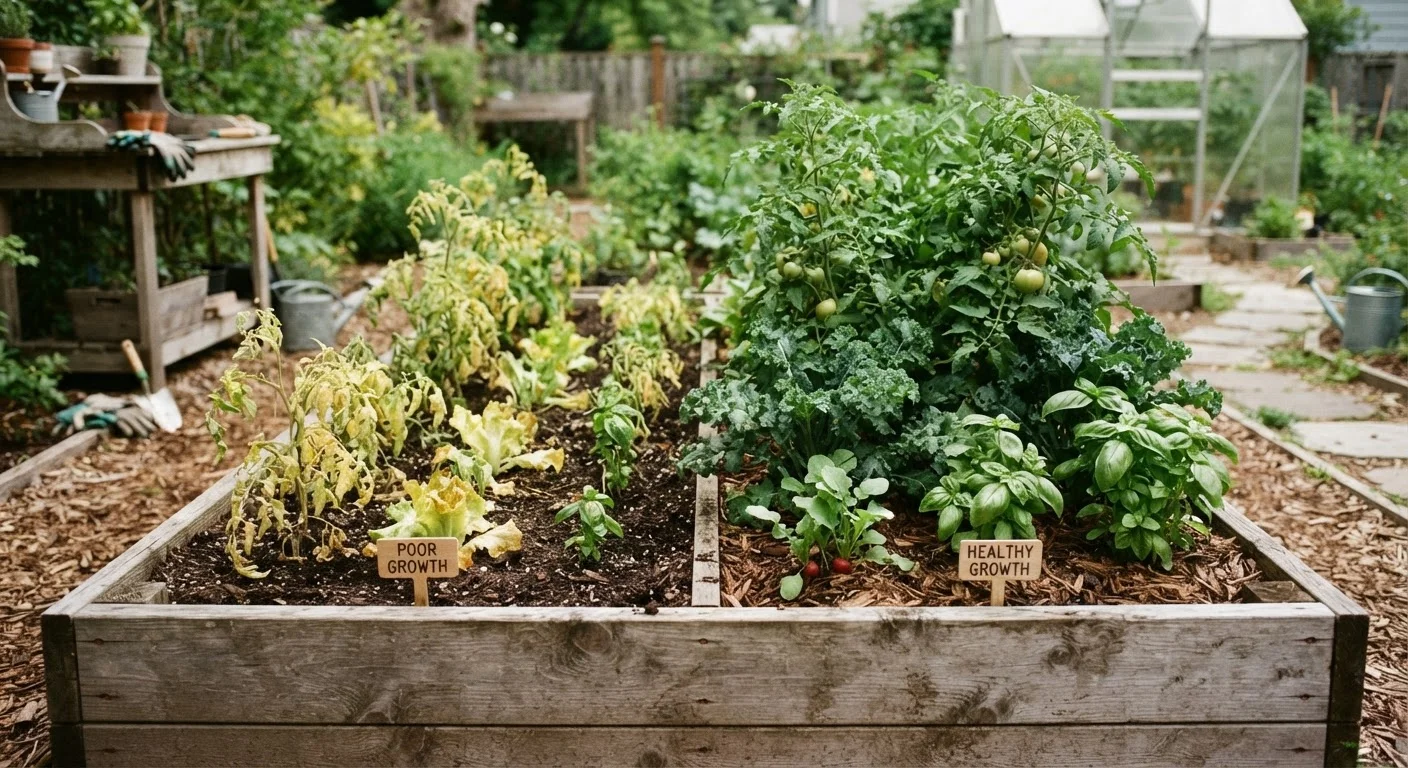
The Hidden Culprits Behind a Disappointing Harvest
Growing your own vegetables sounds straightforward - put seeds in the ground, add water, wait. Yet many families end up with leggy seedlings, half-formed tomatoes, or beds that produce almost nothing despite real effort and expense. The frustrating reality is that most underperforming gardens fail for a small handful of predictable, fixable reasons.
Understanding these patterns puts you back in control. Whether you're gardening in a backyard plot or exploring container growing options, the same core principles apply. The mistakes below are the ones we see most often - and each one has a clear path to correction.
Overwatering or watering on a fixed schedule regardless of conditions.
Why it happens: Most new gardeners assume more water equals better growth, and a daily routine feels responsible. However, soil moisture varies with weather, plant size, and drainage, so rigid schedules rarely match actual plant needs.
Crowding plants too close together to maximize space.
Why it happens: Seed packets and transplant trays make it tempting to fill every inch of a bed, especially when you want a big harvest from a small area. The consequences of crowding - poor airflow, shading, and competition for nutrients - aren't visible until damage is done.
Planting too early or too late for your local climate zone.
Why it happens: Enthusiasm at the start of the season drives many gardeners to plant before the last frost date, while confusion about fall windows causes others to miss a second planting opportunity entirely.
Skipping soil preparation and assuming any ground will do.
Why it happens: Soil looks similar on the surface, so many gardeners assume it's ready for planting without testing pH or checking for compaction, drainage problems, or nutrient deficiencies.
Neglecting to manage pests and disease until the damage is severe.
Why it happens: Early pest pressure or disease symptoms can be subtle, and busy families often don't notice problems until a significant portion of the crop is already affected.
Building Better Habits for Long-Term Garden Success
Fixing an underperforming garden rarely requires starting from scratch. In most cases, correcting one or two foundational habits - how you water, when you plant, or how you prepare your soil - produces noticeable improvement within a single season.
~50%
Home gardens that underperform due to soil issues
Soil health - including pH imbalance, compaction, and low organic matter - is widely cited by cooperative extension programs as a leading factor in poor home vegetable garden yields.
2-3×
Yield improvement from correct plant spacing
University extension research consistently shows that properly spaced vegetable plants can produce significantly more per plant than crowded ones due to better light access and airflow.
Water management deserves special attention. Many gardeners water on a fixed schedule regardless of actual soil conditions, leading to either drought stress or root suffocation. Our companion guide on garden watering myths breaks down the most persistent misconceptions so you can develop a smarter routine.
Keep a simple garden journal - note planting dates, weather patterns, what thrived, and what didn't. Even a few notes per week builds a year-over-year reference that removes guesswork and helps you make better decisions with each new season. Patience paired with observation is the most cost-effective garden tool you have.
The content provided on our blog site traverses numerous categories, offering readers valuable and practical information. Readers can use the editorial team’s research and data to gain more insights into their topics of interest. However, they are requested not to treat the articles as conclusive. The website team cannot be held responsible for differences in data or inaccuracies found across other platforms. Please also note that the site might also miss out on various schemes and offers available that the readers may find more beneficial than the ones we cover.