

Why Pet-Proofing and Child-Proofing Are Two Different Tasks
Many families treat pet-proofing and child-proofing as the same project, tackling both with a single sweep of cabinet locks and outlet covers. In practice, they address overlapping but distinct problems. Child-proofing focuses on what a curious toddler might touch, climb, swallow, or fall into. Pet-proofing considers what an animal might access, chew, escape through, or react to - and critically, what situations might put the child and the animal in an unsafe dynamic.
A baby gate that keeps a crawler out of the kitchen may do nothing to stop a determined dog. A cabinet lock designed for a two-year-old may still be easy for a cat to paw open. And a space that feels perfectly safe when the child is alone can become unpredictable when an animal is present and stressed. Thinking through the home with both sets of needs in mind - separately, then together - is the more reliable approach.
If you're navigating this from the very beginning, our guide on preparing your home before a newborn arrives covers the early groundwork well.
Room-by-Room Safety Hazards to Address
Kitchen
Kitchens concentrate the highest density of hazards: cleaning products, sharp utensils, hot surfaces, and food items that may be toxic to pets (grapes, xylitol-containing foods, onions, and others). Store all chemicals in locked lower cabinets or high shelves. Trash cans with locking lids prevent both pets and toddlers from rummaging. Be especially careful with dishwasher pods - they are acutely toxic to dogs if chewed and visually appealing to small children.
Bathroom
Medications are one of the most serious and underestimated hazards in multi-species households. According to the ASPCA Animal Poison Control Center, human medications consistently rank among the top toxin exposures reported for pets. Keep all medications - including vitamins and supplements - in latched medicine cabinets well out of reach. Toilet lids should remain closed if you have a small dog or toddler; drowning risk is real for both.
Living Areas and Bedrooms
Electrical cords attract chewing from both puppies and teething toddlers. Use cord concealers or run cables behind furniture. Small toys, batteries, button cells, and rubber bands are swallowing hazards for pets - especially dogs - and should be kept off floors. Window blind cords are a strangulation risk for children and a tangling hazard for cats; switch to cordless blinds where possible. See also our companion piece on child safety locks and window restraints for hardware specifics.
Outdoor and Garage Spaces
Garages typically hold antifreeze (ethylene glycol), which is extremely attractive to cats and dogs and rapidly fatal in small amounts. Store it sealed and elevated. Lawn and garden chemicals warrant the same caution - for a deeper look at safer alternatives, our article on organic pest control in the home garden is a useful companion. Check fences for gaps a toddler or small dog could squeeze through, and ensure gate latches require a deliberate two-step action that a young child cannot replicate.
Antifreeze Is a Hidden Household Killer
Ethylene glycol - found in most conventional antifreeze products - has a sweet taste that attracts both dogs and cats. Even a small amount can cause rapid kidney failure. Store all antifreeze in sealed containers on high shelving in locked areas, and clean up any spills on driveways immediately. If you suspect your pet has ingested any, contact a veterinarian or animal poison control line without delay.
Creating Safe Zones for Both Pets and Kids
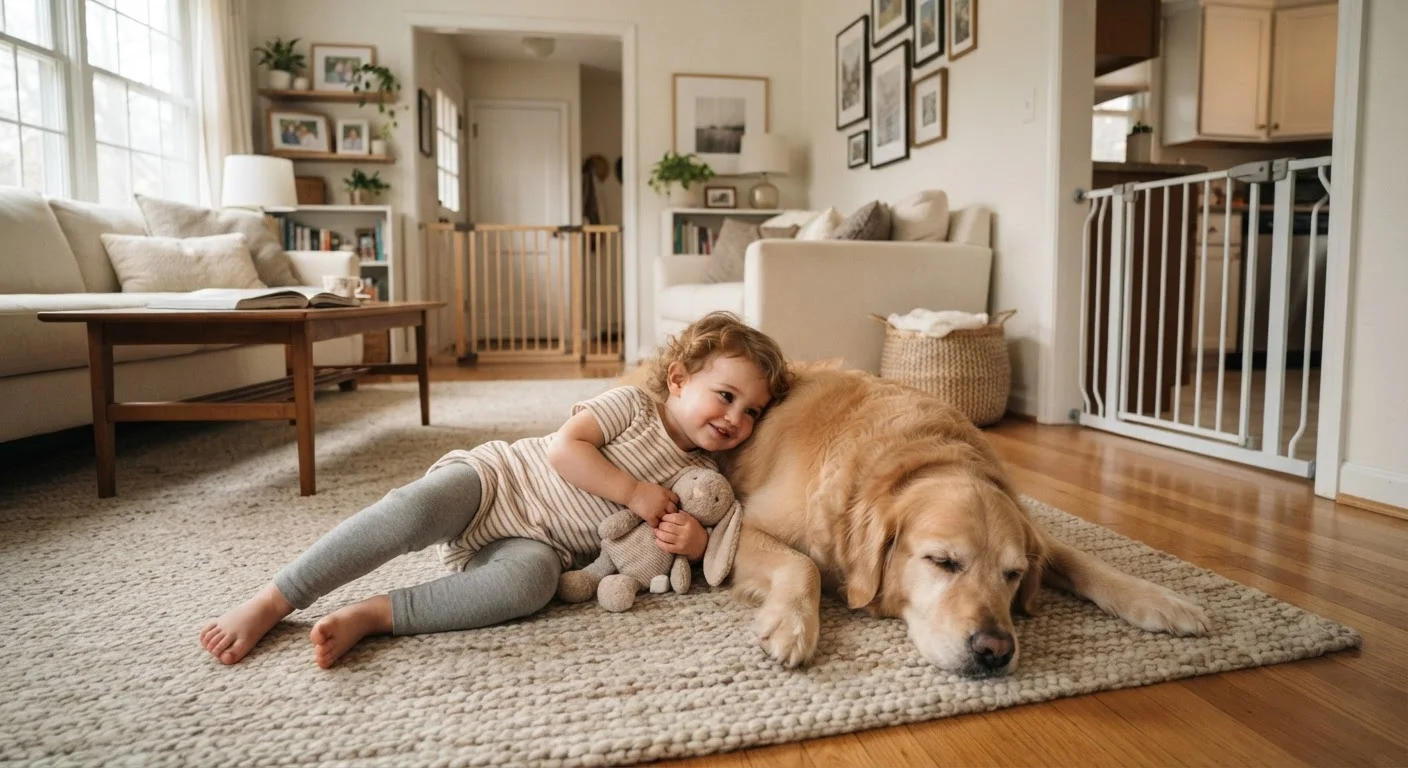
One of the most effective things a family can do is give both the pet and the young child defined spaces - areas where each can be without the other. Pets that lack a reliable retreat tend to show stress behaviors more frequently, and a stressed animal is more likely to snap or scratch. A dog crate, a cat tree in a gated room, or even a quiet corner with a bed behind a baby gate can serve this purpose effectively.
For toddlers, physical barriers communicate boundaries better than verbal instructions alone. Pressure-mounted baby gates work for doorways; hardware-mounted gates are more appropriate for stairways and high-traffic pet zones. Our dedicated guide on creating safe zones for pets and toddlers walks through room division in practical detail without requiring major renovations.
Place your pet's crate or bed behind a baby gate in a quiet room rather than in a high-traffic area. A pet that can reliably escape stimulation is far less likely to feel cornered.
Veterinary behaviorists consistently link a pet's ability to self-remove from stressful situations to lower rates of fear-based aggression toward children.
Do a floor-level audit of every room by actually getting down on your hands and knees - you'll spot hazards like loose cords, dropped tablets, and pet toy parts that aren't visible from standing height.
Infants and toddlers interact with the world from floor level; a standing adult's perspective misses a significant proportion of accessible hazards.
Label two separate sets of cleaning supplies - one pet-safe, one for general use - and store them in different locations. This prevents accidental use of harsh chemicals in pet areas.
Many common household cleaners, including phenol-based disinfectants, are acutely toxic to cats; clear labeling reduces the risk of misuse by any household member.
Food, Feeding Areas, and Hygiene Risks
Pet food bowls left on the floor are consistently accessed by mobile infants and toddlers. This matters for two reasons: certain pet foods can cause gastrointestinal upset in young children, and bowls harbor bacteria - particularly Salmonella - that children are more vulnerable to than adults. The Centers for Disease Control and Prevention (CDC) has documented cases of Salmonella infection in young children linked to pet food and feeding areas.
Practical adjustments include feeding pets in a room the child cannot enter, picking up bowls between meals rather than leaving them out all day, and washing pet dishes separately from family dishes or in a dedicated basin. Our article on pet food cross-contamination risks covers this topic in full, including handwashing guidance after pet contact.
Water bowls are lower risk but still worth positioning away from the main play area - a crawling baby discovering a water bowl tends to splash and ingest water that may contain bacteria from the pet's mouth.
Supervision, Routines, and the Habits That Actually Stick
The most common safety breakdown in households with pets and young children isn't a missing gate or an unlocked cabinet - it's the slow erosion of supervision habits. Families often relax oversight after months of uneventful interaction, reasoning that nothing has gone wrong so far. This reasoning carries real risk. Our article "They've always been fine together" is risky logic explains why past behavior is not a reliable predictor.
Practical supervision means an adult who can intervene is physically present whenever a toddler and pet share a space - not in the next room, not glancing from across the kitchen. For families where this isn't always possible, using gates or crates to separate them during gaps is the more honest and safer approach than relying on an animal's patience.
Household routines also matter. Consistent rules - pet sleeps here, child's play area is there, feeding happens in this spot - reduce the number of judgment calls anyone has to make in a rushed moment. When rules vary by day or by which adult is home, gaps appear. See our piece on how families accidentally undermine pet safety routines for the patterns worth watching.
Teaching children age-appropriate behavior around pets is a parallel effort. Even toddlers can begin learning "gentle hands," and older children can understand not to disturb a pet that is eating or sleeping. Our guide on teaching children to interact safely with the family pet gives age-by-age guidance on this.
When to Reassess Your Setup
A safety arrangement that worked well when your child was eight months old may be inadequate at eighteen months. Toddlers develop climbing skills, problem-solving abilities, and speed faster than many parents anticipate - and what was an effective barrier becomes a minor obstacle. Similarly, a puppy that was manageable at twelve weeks may be large enough at six months to knock a child down unintentionally.
Reassess your physical setup at each significant developmental milestone: when a baby starts crawling, when they start walking, when they begin climbing furniture, and when they start opening doors. Do the same when the pet changes - after illness, after a move, after the arrival of another pet or child. Our guide on age-appropriate pet responsibilities for children is a useful reference for calibrating what children can handle at each stage, which informs how supervision needs shift over time.
If you're considering adding a pet to an already-young household, understanding which animals tend to adapt well to family life is worth exploring first - our hub on kid-friendly pets is a good starting point.
This article provides general home safety information for educational purposes. It is not a substitute for professional advice from a veterinarian, pediatrician, or certified child safety specialist. If you have concerns about specific hazards or animal behavior in your home, consult a qualified professional.
The content provided on our blog site traverses numerous categories, offering readers valuable and practical information. Readers can use the editorial team’s research and data to gain more insights into their topics of interest. However, they are requested not to treat the articles as conclusive. The website team cannot be held responsible for differences in data or inaccuracies found across other platforms. Please also note that the site might also miss out on various schemes and offers available that the readers may find more beneficial than the ones we cover.