

Why Choose Organic Pest Control?
Synthetic pesticides can be effective, but they carry real trade-offs - residues on produce, potential toxicity to pets and children, and harm to beneficial insects like pollinators. For families growing food in the backyard, these risks often outweigh the convenience. Organic pest control methods work with your garden's natural systems rather than against them, keeping the space safer for everyone who uses it.
The good news for budget-conscious households is that most organic approaches are also low-cost. Many rely on vigilance, smart planning, and a handful of inexpensive household ingredients rather than specialized products. If you're just getting started, see our beginner's guide to starting a home garden on a budget for the foundational steps before tackling pest management.
It's also worth noting that no pest control strategy - organic or otherwise - guarantees a pest-free garden. The goal is to keep populations manageable so your plants thrive, not to eliminate every insect in sight.
Know Your Enemy: Identifying Common Garden Pests
Treating the wrong pest wastes time and money - and can disrupt the insects that are actually helping you. Before reaching for any solution, spend a few minutes observing your plants closely. Look at the underside of leaves, near the soil line, and along stems.
- Aphids: Tiny, soft-bodied insects clustered on new growth; cause curled, yellowing leaves.
- Caterpillars and cutworms: Chewed leaf edges or plants severed at the base overnight are telltale signs.
- Whiteflies: Small white insects that scatter when plants are disturbed; leave sticky residue on leaves.
- Slugs and snails: Irregular holes in leaves plus a shiny slime trail, most active at night or after rain.
- Spider mites: Fine webbing on leaf undersides with stippled, pale discoloration on top.
- Squash vine borers: Wilting squash plants with sawdust-like frass near the stem base.
Once you've identified what you're dealing with, you can choose a targeted response rather than a broad-spectrum treatment that may harm helpful species.
When scouting for pests, check plants in the early morning - many insects are slower and easier to spot in cool temperatures, and you'll catch problems before they escalate.
Early detection is the single greatest factor in keeping pest populations manageable; most organic methods work best when applied before a pest reaches high numbers.
Before spraying anything, try physically removing pests first - a strong stream of water from a hose dislodges aphid colonies immediately, and hand-picking caterpillars into soapy water is surprisingly efficient for small gardens.
Mechanical removal has zero risk of harming beneficials or leaving residues, and for small infestations it's often sufficient on its own.
Prevention First: Building a Pest-Resistant Garden
The single most effective pest management strategy is making your garden inhospitable to pests in the first place. Healthy plants in well-prepared soil are simply more resilient. Run through a pre-season checklist - our spring garden prep guide covers soil, drainage, and early pest prevention in detail.
Key Prevention Practices
- Improve soil health: Rich, well-draining soil grows stronger plants. Compost is one of the most cost-effective inputs available - learn how with our home composting walkthrough.
- Rotate crops: Moving plant families to different beds each season breaks pest life cycles that overwinter in the soil.
- Remove debris promptly: Fallen leaves, rotting fruit, and spent plants provide shelter and food for pests. Clear them regularly.
- Water at the base: Wet foliage encourages fungal disease and attracts certain insects. Use drip irrigation or water early so leaves dry by evening.
- Use row covers: Lightweight fabric row covers physically exclude flying insects from vulnerable crops without blocking light or rain significantly.
DIY Organic Sprays and Barriers
When prevention isn't enough, several simple homemade treatments can reduce pest pressure without synthetic chemicals. These are general-purpose preparations; effectiveness varies by pest, plant, and conditions.
Common Homemade Treatments
- Insecticidal soap spray
- Mix a small amount of pure liquid castile soap (roughly 1-2 teaspoons per quart of water). Spray directly on soft-bodied insects like aphids and whiteflies. The soap disrupts their outer membrane. Rinse plants after a few hours to avoid leaf burn, and test on a small area first.
- Neem oil solution
- Neem oil (pressed from the neem tree seed) disrupts insect feeding and reproduction. Dilute according to label directions and apply in the evening to avoid harming bees. It breaks down relatively quickly in sunlight.
- Garlic or hot pepper spray
- Blend a few cloves of garlic or a hot pepper with water, strain well, and spray around plants. Acts as a deterrent for many chewing insects and some mammals.
- Diatomaceous earth
- Food-grade diatomaceous earth (a powder made from fossilized algae) sprinkled around plant bases creates a physical barrier that damages the exoskeletons of crawling insects like slugs and beetles. Reapply after rain.
Store any remaining spray safely and out of reach - even natural substances can irritate eyes or cause reactions in children and pets. For more context on household product safety, see our guide to household toxins dangerous to pets.
Test Sprays on a Small Area First
Even gentle homemade sprays can cause leaf burn or discoloration on certain plants, especially in hot or direct sun. Apply to a single leaf and wait 24 hours before treating the whole plant. Always spray in the early morning or evening to reduce both leaf burn risk and the chance of contacting active pollinators.
Encouraging Beneficial Insects and Wildlife
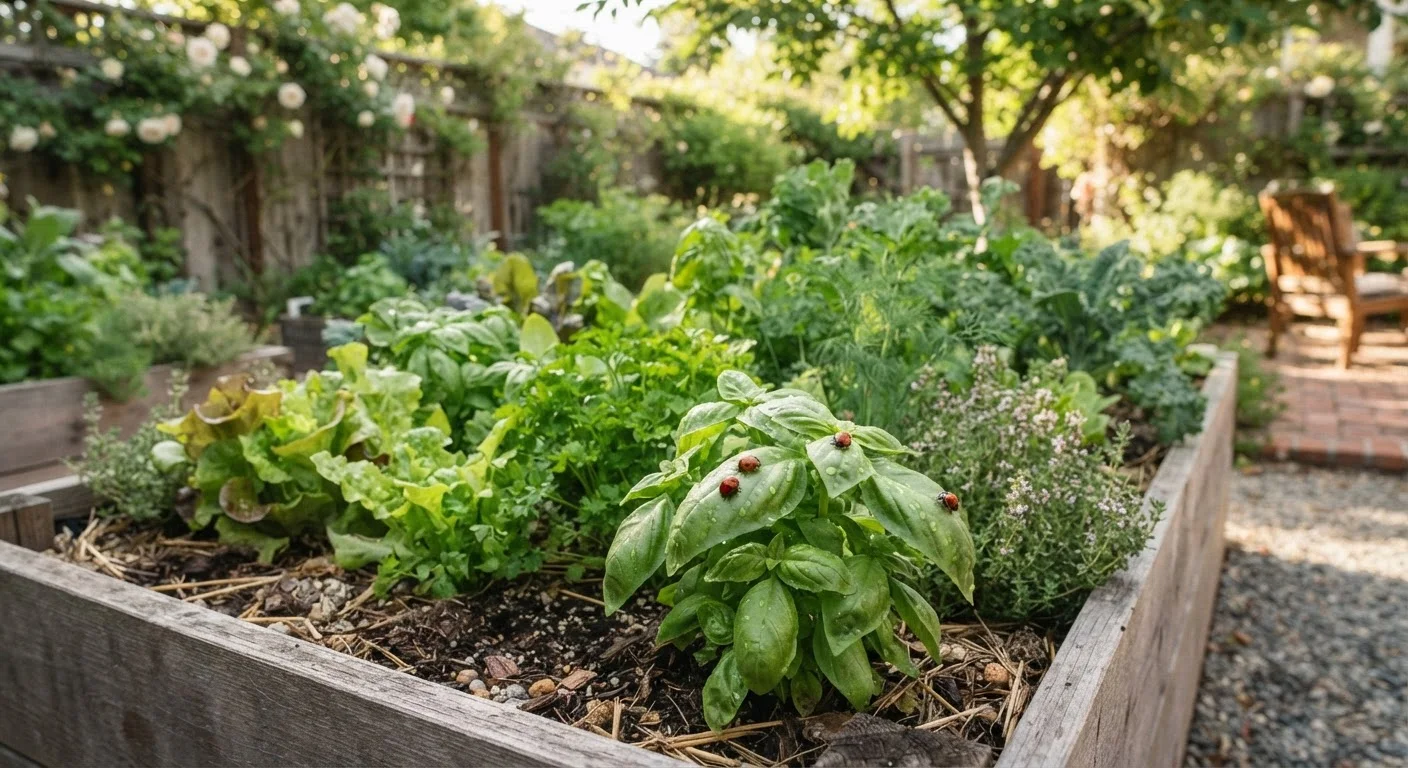
Nature provides its own pest control workforce - if you give it room to operate. Ladybugs, lacewings, ground beetles, parasitic wasps, and spiders all prey on common garden pests. A single ladybug can consume dozens of aphids per day.
How to Attract and Support Beneficial Insects
- Plant nectar-rich flowers: Herbs like dill, fennel, and cilantro allowed to flower, plus plants like marigolds and sweet alyssum, attract predatory and parasitic insects.
- Avoid broad-spectrum treatments: Even organic sprays can harm beneficial insects. Spot-treat only the affected plants rather than applying widely.
- Provide habitat: A patch of undisturbed mulch, a shallow water dish, or a small brush pile gives beneficial insects and toads places to shelter and overwinter.
- Use companion planting: Strategic plant pairings can naturally deter specific pests while drawing in beneficials. Our companion planting guide covers combinations that have demonstrated real results.
Birds also eat enormous numbers of caterpillars and grubs. A simple birdbath and a few native shrubs can make your garden more attractive to them throughout the season.
When Organic Methods Have Limits
Organic pest management is genuinely effective for most home garden situations, but it's not a cure-all. Some pest infestations - particularly late-stage or those involving soil-borne pests - may be beyond what household remedies can resolve. In those cases, consider:
- Removing heavily infested plants entirely to prevent spread to neighboring beds.
- Consulting your local cooperative extension service, which provides region-specific, research-based guidance free of charge.
- Accepting some damage as part of gardening organically. A few chewed leaves don't necessarily mean the harvest is lost.
If you do choose to use a commercially available organic product (such as certified OMRI-listed formulations), read the label carefully - natural doesn't automatically mean harmless to all living things. Families with pets spending time in the garden should review pet safety considerations before applying anything to outdoor spaces. Keeping your approach thoughtful, targeted, and patient is what makes organic pest control sustainable over the long run.
The content provided on our blog site traverses numerous categories, offering readers valuable and practical information. Readers can use the editorial team’s research and data to gain more insights into their topics of interest. However, they are requested not to treat the articles as conclusive. The website team cannot be held responsible for differences in data or inaccuracies found across other platforms. Please also note that the site might also miss out on various schemes and offers available that the readers may find more beneficial than the ones we cover.