

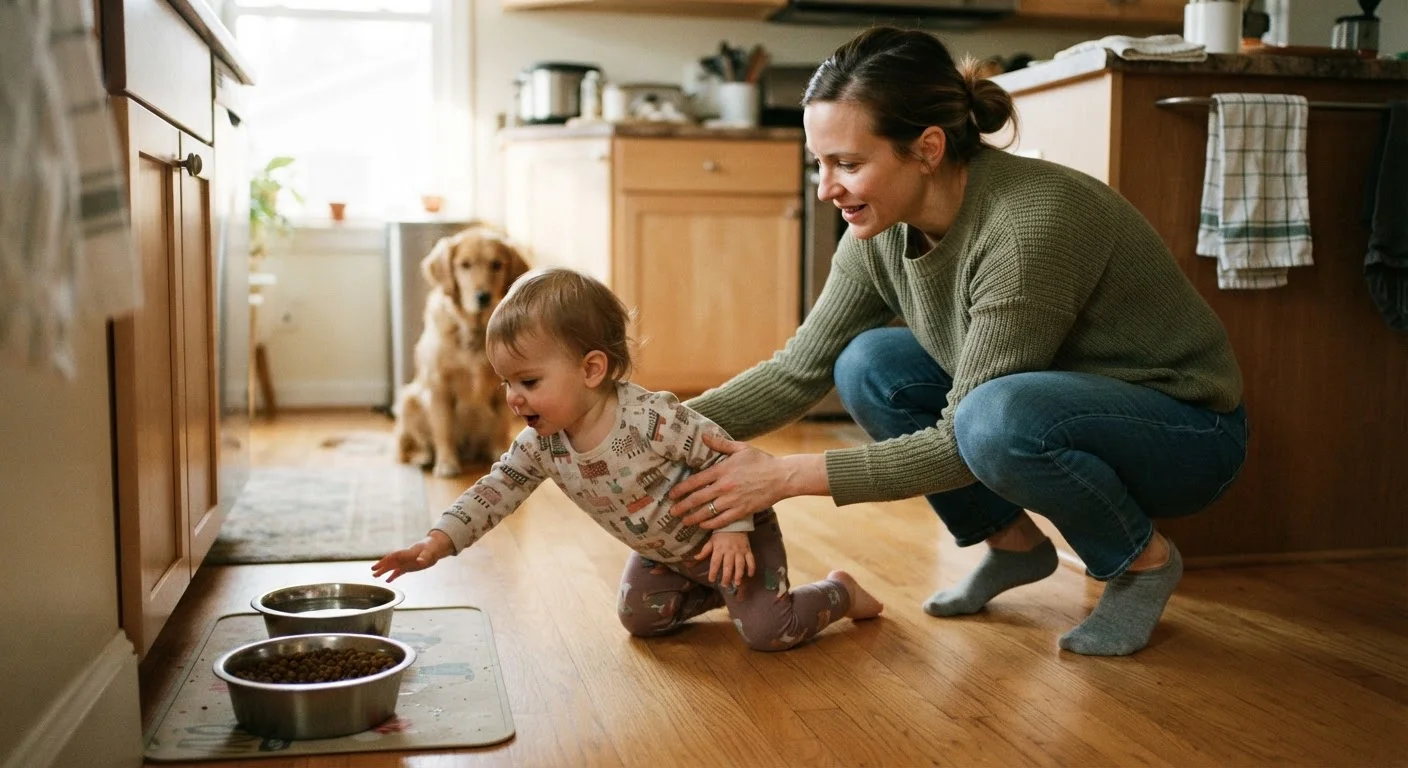
Why Pet Food Is a Genuine Hygiene Concern for Kids
It's easy to dismiss a child mouthing a piece of kibble or splashing in a dog's water bowl as harmless curiosity. But veterinary and public health guidance consistently identifies pet feeding stations as meaningful sources of bacterial contamination in family homes.
The U.S. Centers for Disease Control and Prevention (CDC) has linked pet food and treats - including commercially produced dry kibble - to outbreaks of Salmonella in humans, with young children among the most vulnerable groups due to their developing immune systems and hand-to-mouth behavior. E. coli, Listeria, and other pathogens have also been documented in pet food environments.
This isn't about fear - it's about understanding that the same bowl your dog eats from three times a day is also a contact surface in a home full of small people who crawl, explore, and touch everything. For more on shared-space hazards, see our pet-proofing walkthrough for families with young children.
Best Practices for Reducing Cross-Contamination Risk
None of these practices require expensive products or major home renovations. Most are habit changes that quickly become second nature.
Feed pets in a designated area that young children cannot freely access.
Physical separation is the most reliable barrier. When bowls live behind a baby gate, in a laundry room, or on an elevated surface out of toddler reach, the opportunity for contact is dramatically reduced without requiring constant supervision.
Switch to scheduled feeding rather than leaving food out all day.
Free-feeding means a bowl of potentially bacteria-laden food sits at floor level for hours. Scheduled meals limit the window during which the bowl is accessible and also make it easier to keep the area clean.
Wash hands with soap and water immediately after handling pet food, bowls, or treats.
The CDC specifically recommends handwashing after any contact with pet food or feeding equipment - not just raw diets. Pathogens can survive on hands long enough to transfer to mouths, especially in children who touch their faces frequently.
Wash pet food bowls daily using hot water and dish soap, separate from family dishes.
Biofilm - a thin bacterial layer - can build up quickly on bowl surfaces, even when the bowl appears visually clean. Daily washing disrupts this buildup. Using separate cleaning equipment prevents cross-contamination to dishes your family eats from.
Store pet food in sealed containers with latching lids, kept out of children's reach.
Open bags of kibble on the floor or in low cabinets are an invitation for curious hands. Sealed containers also slow moisture and pest contamination, which can accelerate bacterial growth in the food itself.
Be extra cautious with raw pet food diets and handle them with the same care as raw meat.
Raw pet food carries a significantly higher contamination risk. The FDA has documented multiple pathogen detections in commercially sold raw pet food products. Families with infants, toddlers, or immunocompromised members should discuss raw feeding risks with both their vet and their child's pediatrician.
Quick Wins You Can Put in Place Today
If you're just starting to think about this, a few immediate changes can meaningfully lower your household's risk while you work toward more permanent solutions.
For related hygiene concerns involving pets and young children in shared spaces, our article on litter boxes and toddler safety covers another commonly overlooked area.
Teaching Kids Why They Shouldn't Touch Pet Food
Rules work better when children understand the reasoning behind them - even in simple, age-appropriate terms. Telling a three-year-old "that food makes dogs healthy but could make your tummy hurt" is more effective than a flat "no."
For older children, you can build on this by making them part of the solution: letting them help feed the pet (with adult supervision and immediate handwashing afterward) can transform the forbidden bowl into a responsibility rather than a temptation.
If your child is old enough to be learning how to interact with your pet more broadly, our guide on teaching children to interact safely with the family pet offers age-based frameworks that apply here too. You might also find our piece on pet toys vs. kids' toys useful - the boundary-setting principles are very similar.
This article provides general hygiene and safety information for educational purposes only. It is not a substitute for professional medical or veterinary advice. If you are concerned about a child's exposure to pet food or potential illness, consult a qualified healthcare provider.
The content provided on our blog site traverses numerous categories, offering readers valuable and practical information. Readers can use the editorial team’s research and data to gain more insights into their topics of interest. However, they are requested not to treat the articles as conclusive. The website team cannot be held responsible for differences in data or inaccuracies found across other platforms. Please also note that the site might also miss out on various schemes and offers available that the readers may find more beneficial than the ones we cover.