

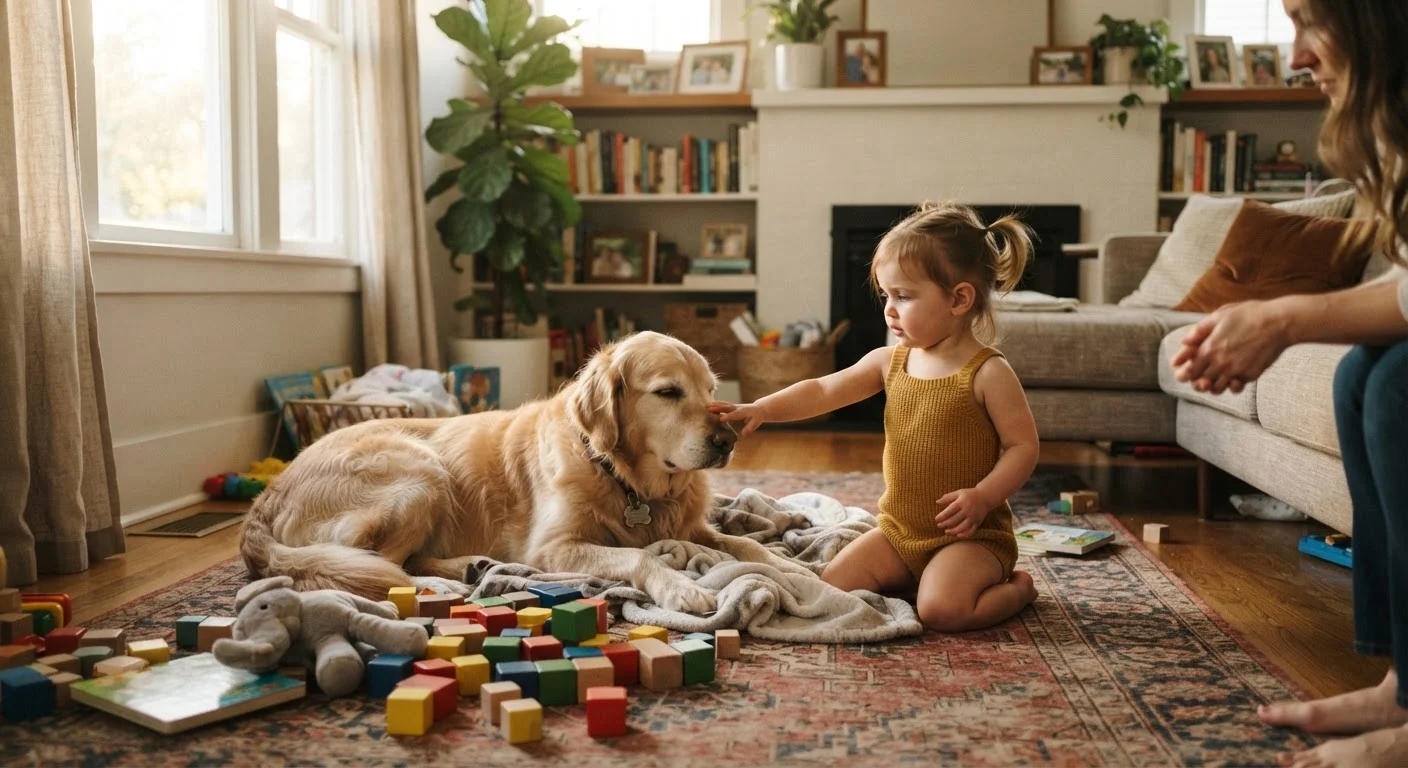
Why Good Intentions Aren't Enough
Most families with pets genuinely care about keeping everyone safe. The problem isn't attitude - it's that safety routines erode quietly, through small decisions that feel reasonable in the moment. A tired parent makes an exception. A capable-looking child is left in charge. A familiar pet is trusted without ongoing verification of that trust. None of these feel like mistakes at the time.
What makes this harder is that the gaps rarely cause problems immediately. Pets and children coexist without incident for weeks or months, which reinforces the idea that the shortcuts are working. Then circumstances change - a stressful afternoon, a new visitor, a pet that isn't feeling well - and the missing safeguard becomes visible only in hindsight.
This article isn't about blame. It's about naming the patterns that research and behavioral observation have flagged as the most common contributors to preventable incidents in family homes. Recognizing them is the first step to interrupting them.
Past Calm Doesn't Mean Future Safe
Many families assume that because their pet and children have coexisted peacefully, nothing will go wrong. Behavioral thresholds in animals can shift due to pain, illness, startling, or accumulated stress. See our explainer on why 'they've always been fine' is risky logic for a fuller picture of why consistent precautions still matter.
The Mistakes Families Most Commonly Make
The following patterns show up repeatedly in households where pets and children share space. They're not the result of carelessness - they're the result of the normal pressures families operate under every day.
Making 'just this once' exceptions to household pet rules in front of children.
Why it happens: Parents are tired, company is over, or a child is upset - and bending the rule feels easier in the moment than enforcing it.
Leaving children and pets together unsupervised because previous interactions were calm.
Why it happens: Familiarity breeds confidence, and busy households often rely on a pet's track record as a substitute for active supervision.
Storing household toxins in low or accessible locations because 'the pet never goes there.'
Why it happens: Pets, like toddlers, explore new areas when routines change - guests arrive, doors are left open, or furniture is moved.
Assigning pet care responsibilities to children without ongoing adult oversight.
Why it happens: Responsibility for a pet is rightly seen as a developmental opportunity, and families often hand it off fully once a child seems capable.
Letting feeding routines become informal or shared among multiple family members without coordination.
Why it happens: In busy households, whoever is around tends to feed the pet - which can result in overfeeding, missed meals, or a child feeding the pet unsuitable food.
Failing to re-establish pet safety routines after a household change such as a move, new baby, or schedule shift.
Why it happens: Routines that worked before feel like they should carry over automatically, even when the household context has fundamentally changed.
If you've recognized more than one of these in your own home, that's useful information - not cause for guilt. Household pet safety isn't a one-time setup task; it's a practice that needs periodic re-examination, especially as children grow and pet behavior evolves. The risks around cats and crawling babies, for example, look very different from those when the same child is four years old.
Building Routines That Actually Hold
The most durable pet safety habits in family homes share a few qualities: they're simple enough to follow under stress, they don't rely on any single person's memory, and they treat supervision as a practice rather than a judgment call made in the moment.
Consider doing a brief walkthrough of your home's physical setup - gates, storage, feeding areas, and pet retreat spaces - every few months, or whenever something in the household changes. Children's developmental stages shift quickly, and a gate that blocked a toddler may not stop a determined five-year-old. Similarly, a pet's behavior can shift with age, health changes, or accumulated stress in ways that aren't always obvious day to day.
It's also worth thinking about how responsibility is distributed across your household. When safety depends on everyone 'just knowing' the rules, consistency tends to break down. Explicit agreements - about who supervises, when, and what the non-negotiables are - hold up better under the weight of a busy family schedule. For a broader look at how well-intentioned habits quietly unravel in family life, the patterns explored in what undermines children's study habits apply with surprising relevance here too.
This article is for general informational purposes only. If you have concerns about a specific animal's behavior or a child's safety around pets, consult a qualified veterinary behaviorist or your family's healthcare provider as appropriate.
The content provided on our blog site traverses numerous categories, offering readers valuable and practical information. Readers can use the editorial team’s research and data to gain more insights into their topics of interest. However, they are requested not to treat the articles as conclusive. The website team cannot be held responsible for differences in data or inaccuracies found across other platforms. Please also note that the site might also miss out on various schemes and offers available that the readers may find more beneficial than the ones we cover.