

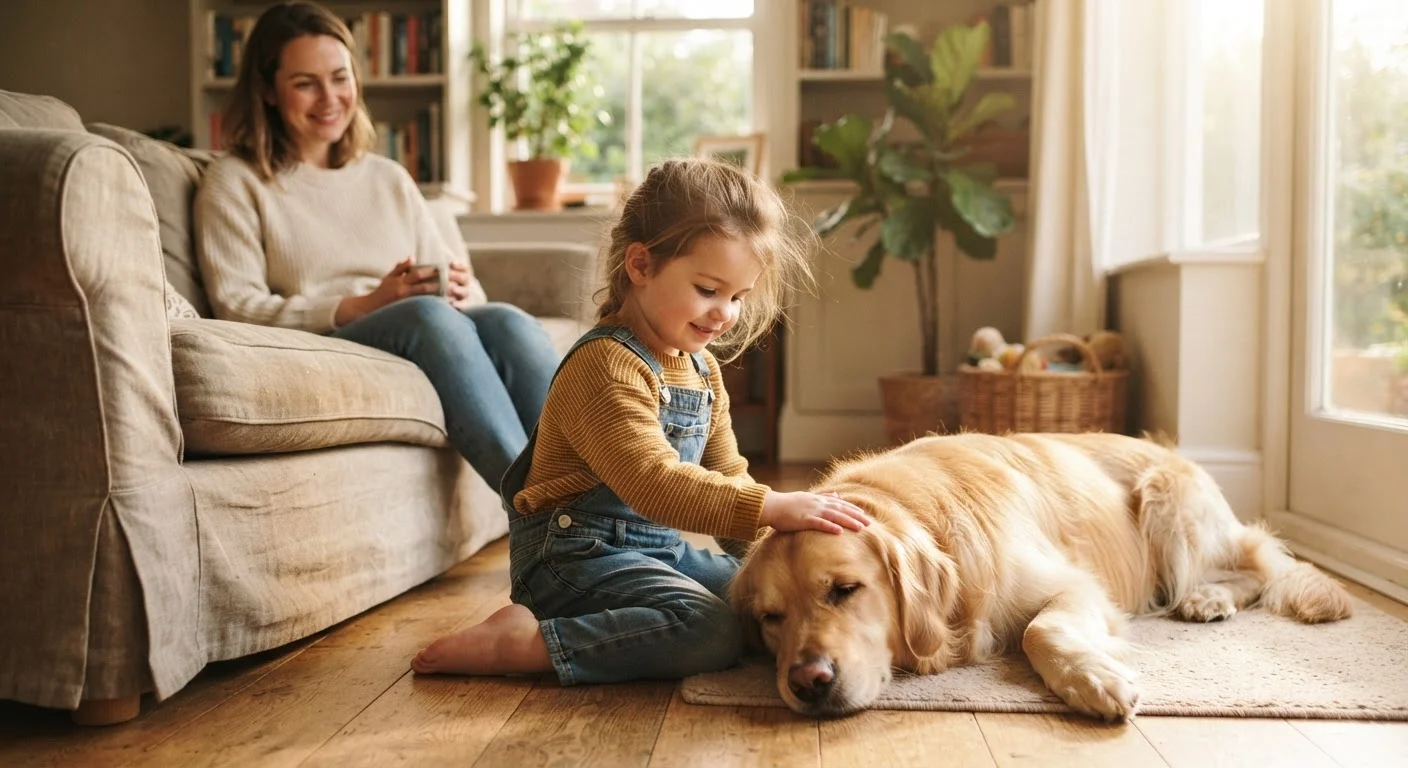
Why Good Intentions Aren't Enough
Most families who experience a bite or scratch from their own pet describe the animal as 'always great with kids.' The reality is that past peaceful interactions don't guarantee future ones - and children, through no fault of their own, often trigger animal stress responses without realising it. Our companion piece explains why 'they've always been fine together' is risky logic worth reading alongside this guide.
Safe interaction is a skill, not a personality trait. It has to be actively taught, repeatedly practised, and reinforced by adults who model the same behaviour they're asking children to adopt. The good news is that children genuinely want to do right by the animals they love - they just need the framework to act on that instinct.
If you're also thinking about what kind of pet best suits your family's dynamic, see our overview of what makes a pet truly kid-friendly.
Core Practices for Safer Interactions
The following approaches are grounded in guidance from veterinary and child safety organisations. They apply across species - dogs, cats, and many other household pets - and scale up as children grow in understanding and self-control.
Establish a clear 'ask first' rule before any child approaches any animal.
Children often rush toward animals out of excitement, which can startle even a calm pet. Building the habit of pausing, checking in with an adult, and approaching slowly creates a predictable pattern that animals can adjust to more safely.
Teach children that every pet needs a no-go retreat space they must always respect.
Animals under stress need to withdraw safely. When children follow a pet into its crate, bed, or corner, the animal loses its only escape route and is far more likely to react defensively.
Demonstrate and practise gentle touch using a consistent phrase and physical guidance.
Telling a toddler 'be gentle' is rarely enough without showing what gentle actually looks like and feels like. Hands-on practice - with an adult guiding the child's hand in slow strokes - builds the muscle memory the concept needs.
Help children identify stress signals in animals before they escalate.
Most animal bites are preceded by warning signals that children simply haven't been taught to recognise - flattened ears, a tucked tail, wide eyes, or stiff posture. Early recognition prevents situations from reaching a dangerous threshold.
Never allow children to interact with a pet that is eating, sleeping, or in pain.
A pet that is guarding food, startled awake, or experiencing discomfort is operating on instinct rather than its usual temperament. This is when even habitually gentle animals bite or scratch without prior warning signs.
Model calm, respectful behaviour around animals consistently - children learn by observation.
Adults who handle pets roughly, tease them, or raise their voices around them are inadvertently teaching children that this behaviour is acceptable. Children mirror what they see, so your daily interactions set the standard.
For families who have recently introduced a rescue dog, the early weeks require extra structure. Our guide on introducing a rescue dog to a home with children outlines what to put in place from day one.
Age-Appropriate Expectations
How much a child can absorb - and reliably apply - depends heavily on developmental stage. Toddlers under three can follow one-word cues and benefit most from physical redirection and close adult supervision. Children aged four to seven can understand simple rules and begin recognising basic body language cues when adults take time to point them out. Older children can take on more responsibility, including helping to monitor pet stress signals during play.
When to Consult a Professional
If a pet has shown repeated warning signs - growling, snapping, or freezing - around children, consult a certified animal behaviourist or veterinarian before continuing unsupervised interaction. This article provides general guidance for everyday households and is not a substitute for professional assessment of an animal's behaviour.
The key principle at every age: supervision adjusts, it doesn't disappear. As children demonstrate consistent, respectful behaviour over time, adults can gradually step back - but they should never assume the learning is complete. For a fuller breakdown of what tasks and responsibilities suit each stage, see our guide on age-appropriate pet responsibilities for children at every stage.
Also worth noting: pet interactions involve more than petting. Children who routinely access pet food areas introduce real hygiene risks. Our article on pet food and kids cross-contamination risks covers practical ways to manage this.
Starting Today: Quick Wins for Any Family
You don't need a formal training programme to start building safer habits. Small, consistent adjustments - a phrase you use, a boundary you reinforce, a space you designate - compound over time into genuinely protective patterns.
If your household is still deciding on a pet, or thinking about how a new animal will fit into your living situation, our guide on creating safe zones for pets and toddlers offers practical layout ideas that support everything covered here.
The content provided on our blog site traverses numerous categories, offering readers valuable and practical information. Readers can use the editorial team’s research and data to gain more insights into their topics of interest. However, they are requested not to treat the articles as conclusive. The website team cannot be held responsible for differences in data or inaccuracies found across other platforms. Please also note that the site might also miss out on various schemes and offers available that the readers may find more beneficial than the ones we cover.