

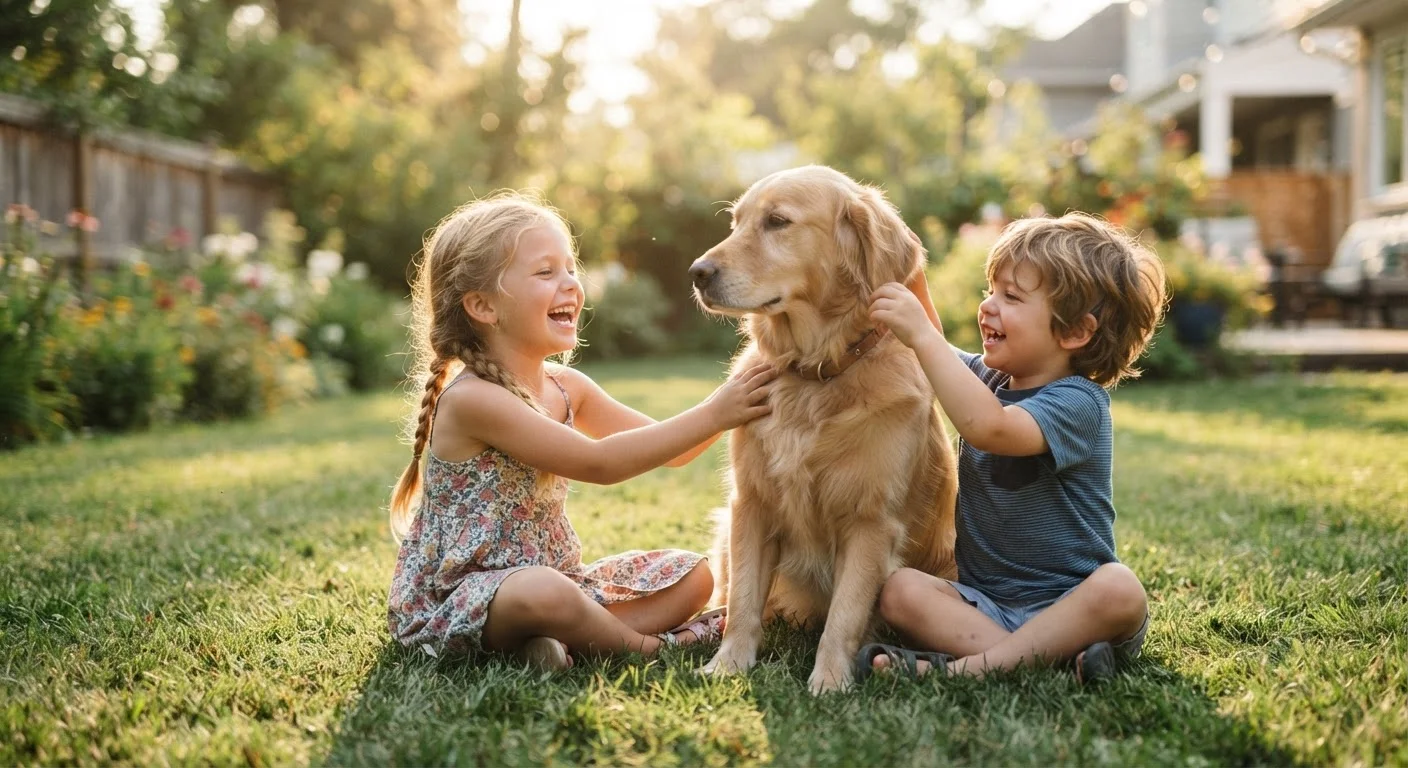
Why 'Kid-Friendly' Is About Traits, Not Just Species
Most families start the pet search with a species in mind - a dog, a cat, maybe a rabbit. But veterinary behaviourists and child development researchers broadly agree that individual temperament matters more than species when predicting how an animal will behave around young children. A nervous, under-socialised dog poses more risk than a confident, well-adjusted cat, regardless of what either is supposed to be like.
What families are really looking for is a cluster of traits: tolerance for noise and sudden movement, a calm baseline stress response, and the ability to signal discomfort without immediately escalating to a bite or scratch. These traits exist across species, but they're not guaranteed within any of them. Understanding what you're actually assessing helps you ask better questions - of a shelter, a breeder, or even a pet already living in your home.
For a broader starting point, our comprehensive guide to choosing a first family pet walks through the full picture including cost, space, and age considerations.
The Core Traits That Signal a Safer Match
When evaluating any animal's suitability for a home with children, these traits carry the most weight:
- Stress tolerance: Can the animal remain calm when a toddler shrieks, runs nearby, or bumps into it unexpectedly? Animals with low stress thresholds are more likely to react defensively in chaotic household moments.
- Predictable communication: Animals that give clear, readable warning signals - a flattened ear, a tail tuck, a slow movement away - are safer than those who go from calm to reactive with little warning. Teaching kids to read these signals is a natural next step.
- Positive socialisation history: An animal exposed early and positively to children, household noise, and handling is more likely to remain settled. Ask shelters directly about a pet's history with kids.
- Appropriate energy matching: A very high-energy animal in a low-activity home may become frustrated and restless, which raises stress levels for the pet and indirectly for children.
- Recovery speed: How quickly does the animal return to calm after being startled? Fast recovery is a strong positive indicator.
~77%
Dog bites involve a familiar dog
According to the American Veterinary Medical Association, the majority of dog bites to children involve a dog known to the family, reinforcing that familiarity alone is not a safety guarantee.
50%
Bite victims are children
The CDC reports that children represent roughly half of all dog bite victims, with children aged 5-9 at the highest risk - partly due to developmentally typical but unpredictable movement and behaviour.
Early weeks
Critical socialisation window for dogs
Veterinary science identifies a primary socialisation window roughly between 3 and 14 weeks of age in dogs - experiences during this period significantly shape lifelong responses to children and household activity.
Size interacts with all of this. Larger animals can cause unintentional injury more easily, so the supervision standard should reflect that - not as a reason to avoid large pets, but as a reason to be clear-eyed about risk management.
Socialisation History: The Factor Families Overlook
Many families focus on breed or species characteristics and underestimate how much an animal's early experiences shape its behaviour with children. A kitten raised in a quiet home with no children may find a loud, active household genuinely overwhelming - not because cats can't be kid-friendly, but because this particular cat wasn't prepared for it.
When meeting a potential pet, ask specifically: Has this animal spent time with children under five? How did it respond? Was it ever startled or handled roughly, and how did it react? These questions reveal more than general species reputation.
For families already dealing with tension between an existing pet and children, knowing how to respond to warning signals is essential reading. And it's worth remembering that past peaceful interactions don't guarantee future safety - 'they've always been fine together' is riskier logic than it sounds.
Practical Considerations Beyond Temperament
Trait-matching is the foundation, but families also need to think practically. Space is a real constraint - some pets suit smaller homes far better than others. Health is another dimension: allergies affect a significant number of children, and understanding how pet allergies actually work before committing is wise.
Care demands also land differently depending on the animal. Dogs generally require more time, training investment, and daily exercise than many families anticipate. Smaller animals like guinea pigs or rabbits seem low-maintenance but can be fragile and easily stressed by rough handling - making them better suited to older children who've developed more careful motor control.
Once a pet is home, the work continues. Teaching children how to interact safely and matching care tasks to developmental readiness both help make the relationship sustainable - and genuinely rewarding - for the whole household.
This article provides general educational information about pet selection for families. It is not a substitute for advice from a qualified veterinary professional or certified animal behaviourist regarding a specific animal or household situation.
Frequently Asked Questions
Temperament refers to an animal's consistent behavioural tendencies - how it responds to stress, strangers, sudden sounds, and physical contact. A pet with a stable, tolerant temperament is less likely to react defensively when a toddler moves unpredictably. It's shaped by genetics and early life experience.
No animal can be guaranteed entirely safe around young children in all situations. Even the most gentle pets can react when startled, hurt, or cornered. Consistent supervision and teaching children how to interact respectfully are just as important as choosing the right animal.
Size contributes to risk level but doesn't determine friendliness. A large, calm dog may be safer than a small, anxious one. However, larger animals can cause more significant unintentional injury if they do react suddenly, so supervision thresholds should reflect that physical reality.
Early, positive exposure to children, noise, and unpredictable movement helps animals build tolerance. Pets that weren't socialised around children as youngsters may need a longer, more careful introduction period - and some may never fully adjust, regardless of species.
Absolutely. A high-energy animal in a low-activity household can become frustrated and more reactive. Matching the pet's natural activity needs to what the family can realistically provide reduces stress for the animal and creates a calmer environment for children.
Yes, but small animals often require more careful handling than families expect - they can scratch or bite if squeezed or startled. They tend to suit older children who can learn gentle, controlled interaction rather than very young toddlers who may grip without meaning to hurt.
The content provided on our blog site traverses numerous categories, offering readers valuable and practical information. Readers can use the editorial team’s research and data to gain more insights into their topics of interest. However, they are requested not to treat the articles as conclusive. The website team cannot be held responsible for differences in data or inaccuracies found across other platforms. Please also note that the site might also miss out on various schemes and offers available that the readers may find more beneficial than the ones we cover.