

Start here
Why Rescue Dogs Need a Different Approach
Prepare
Before the Dog Comes Home
First contact
The First Meeting: Neutral Ground and Calm Energy
Settle in
Setting Up a Safe Home Environment
Coach the kids
Teaching Children How to Interact With the New Dog
Stay alert
What to Watch for in the First Few Weeks
Why Rescue Dogs Need a Different Approach
Adopting a rescue dog is a generous act - and a genuinely complex one when children are in the picture. Unlike a puppy raised from birth in a stable home, a rescue dog arrives with a history your family doesn't fully know. That history might include neglect, inconsistent handling, or exposure to environments very different from yours.
This doesn't mean rescue dogs can't thrive with kids - many do, beautifully. But it does mean the adjustment period deserves more structure and more caution than families sometimes anticipate. Before thinking about introductions, it's worth reading up on which temperament traits signal a safer match for families - not all dogs are equally suited, and shelter assessments, while helpful, have limits.
Decompression period
The initial days or weeks after adoption when a rescue dog needs low stimulation and minimal demands to begin feeling safe in a new environment.
Resource guarding
A behavior where a dog becomes tense, stiff, or defensive around food, toys, or resting spots - common in dogs with unpredictable past access to resources.
Whale eye
A stress signal in dogs where the whites of the eyes become visible, indicating the dog is uncomfortable or feeling threatened.
Neutral ground
A location outside the home - like a park - where a first dog-child meeting can happen without the dog feeling territorial about its new space.
Calming signals
A range of body language behaviors dogs use to communicate discomfort or a desire for space, including yawning, lip licking, and looking away.
Before the Dog Comes Home
The groundwork laid before arrival matters as much as anything you do on day one. Start with a frank conversation with shelter staff: ask specifically how the dog responds to children's voices, fast movement, being touched unexpectedly, and other animals. Request any known history and behavioral notes.
At home, designate one quiet area as the dog's retreat - a crate with the door open, or a gated corner - before the dog ever crosses the threshold. Walk through your space and address hazards: loose wires, small toys, unsecured food. Our guide on pet-proofing your home when you have young children covers room-by-room considerations worth working through in advance.
Hold a family meeting. Agree on rules - no rough play, no sneaking into the dog's space, no feeding from the table - so children hear expectations from adults they trust, before the excitement of arrival overrides everything.
The First Meeting: Neutral Ground and Calm Energy
Bring the dog and the children together for the first time on neutral ground - a quiet park or a calm stretch of sidewalk - rather than inside the home. This prevents the dog from immediately feeling territorial or overwhelmed in its new space.
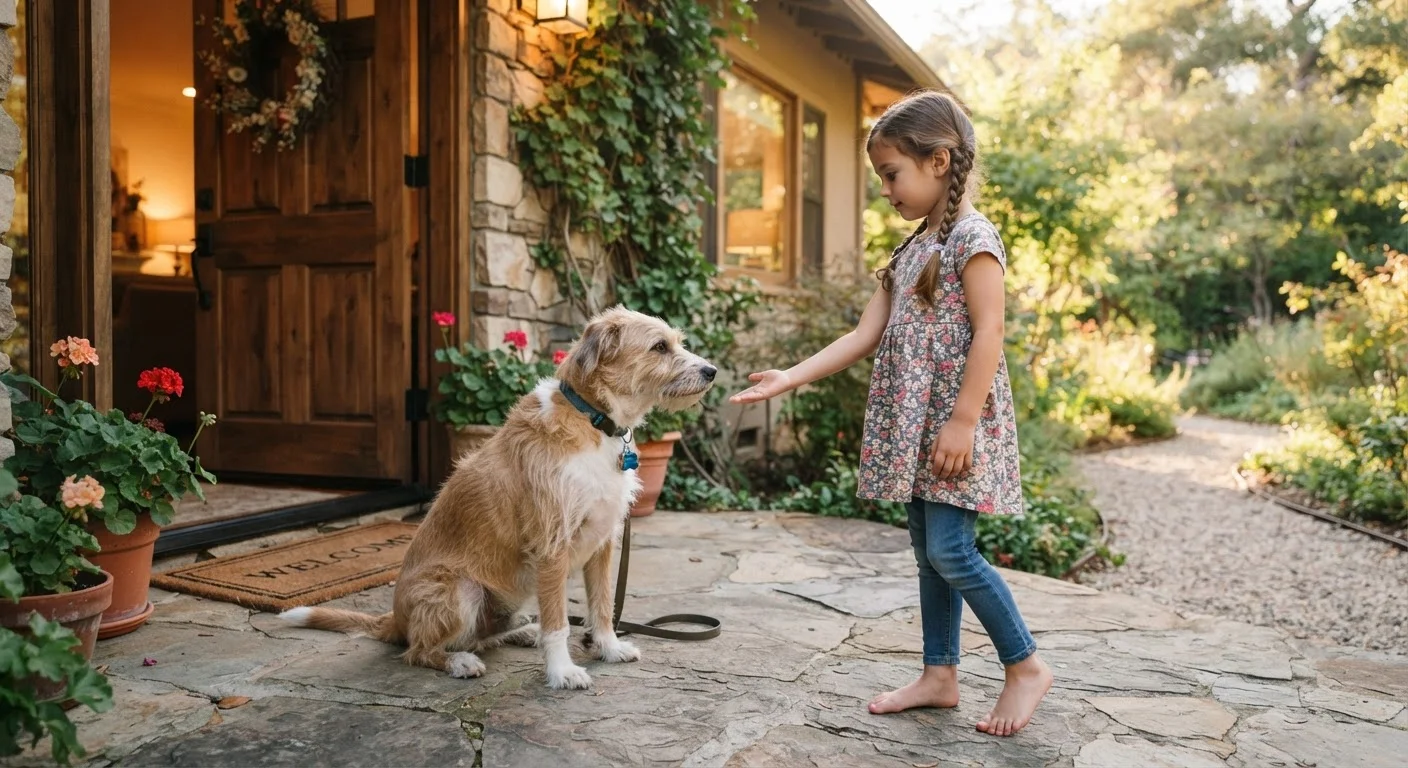
Keep the initial meeting short. Have children stand calmly and allow the dog to approach them, rather than rushing toward the dog. Let the dog sniff at its own pace. If the dog retreats or shows stiffness, give it space without forcing the interaction. Keep voices low and movements slow.
Once home, give the dog time to explore at its own pace while children remain calm and at a distance. The first day should be low-stimulus: fewer visitors, quieter routines, and minimal pressure to perform or bond on cue. For a detailed week-by-week settling guide, see what to do in the first two weeks with a family dog.
Setting Up a Safe Home Environment
A rescue dog needs to know it has somewhere to go when the world feels too loud or too unpredictable. The retreat space you prepared - a crate, a dog bed behind a baby gate - should be introduced as sacrosanct. Children must understand and consistently respect this boundary.
Feeding areas deserve similar protection. Resource guarding (becoming tense or defensive around food or prized objects) is common in dogs who experienced food scarcity or instability. Feed the dog in a space where children cannot approach the bowl, at least until the dog's behavior patterns are well understood.
Think about daily traffic flow: where do kids drop backpacks, where does homework happen, where does the dog nap? Mapping these patterns helps prevent accidental collisions and cornering - situations that can startle even a calm dog.
Use Baby Gates as Flexible Room Dividers
Baby gates aren't just for toddlers - they're one of the most practical tools for managing shared spaces in the early weeks of a rescue dog's transition. They allow the dog to see and hear the family while still having a buffer zone. As trust builds, you can gradually expand the dog's access to more rooms.
Teaching Children How to Interact With the New Dog
Children need practical, concrete guidance - not just "be gentle." Teach them to always ask an adult before approaching the dog, to extend a loose fist for the dog to sniff rather than reaching over the dog's head, and never to approach a dog that is eating, sleeping, or in its retreat space.
Age matters here. Toddlers lack the impulse control to follow nuanced instructions consistently, which is why adult supervision cannot be delegated to older siblings in the early weeks. Older children can take on more responsibility, but they still need coaching and check-ins.
For structured, age-appropriate guidance on building respectful behavior, our editorial team has put together practical approaches for teaching children to interact safely with pets. Making these lessons feel like normal household rules - rather than restrictions - tends to get better long-term buy-in from kids.
What to Watch for in the First Few Weeks
Stress signals in dogs are easy to miss if you don't know what to look for. Beyond obvious growling, watch for: whale eye (whites of the eyes showing), lip licking when not near food, yawning repeatedly, a tucked tail, stiffened posture, or the dog consistently moving away from interactions. These are communications, not misbehavior.
Equally important: watch for positive signs. A dog that seeks out a child's company voluntarily, relaxes into a loose body posture around the family, and eats and sleeps without anxiety is adjusting well.
If concerning behaviors persist or escalate - snapping, lunging, or extreme withdrawal - consult a certified professional dog trainer or veterinary behaviorist. This is not failure; it's responsible pet ownership. Early professional input is far easier to act on than problems addressed months later.
The transition period is temporary, and most families find that the investment of patience in the first weeks pays back in years of genuine companionship. If your household is also navigating a newer baby alongside the process, see our guide on introducing pets to a newborn at home for overlapping considerations.
Frequently Asked Questions
Many rescue advocates refer to the '3-3-3 rule': three days of feeling overwhelmed, three weeks to learn routines, and three months to feel truly at home. Every dog is different, and some take longer - especially those with trauma histories. Patience and consistency are the most reliable accelerators.
It can be, but it requires careful vetting of the dog's temperament and history with children. Ask the shelter specifically about the dog's behavior around small children, high-pitched sounds, and sudden movement. A thorough meet-and-greet before adoption is essential.
Key stress signals include a stiff body, tucked tail, flattened ears, lip licking, yawning out of context, showing the whites of the eyes (called 'whale eye'), and low growling. A dog displaying these signals needs space immediately - never punish these warnings, as they are important safety communication.
Age-appropriate involvement can help build a bond, but food bowl areas should remain adult-managed in the early weeks. Resource guarding - protecting food, toys, or resting spots - is common in dogs with uncertain pasts and should be assessed before children take on feeding duties.
A certified professional dog trainer or behaviorist is a worthwhile investment for households with young children, especially if the dog shows any anxiety or reactivity. Early guidance can prevent minor issues from becoming entrenched habits.
Establish the rule before the dog arrives and explain it in age-appropriate terms: the dog's space is like their bedroom - private and off-limits. Baby gates and crates with the door open can reinforce this physically, and consistent adult follow-through makes the boundary stick.
The content provided on our blog site traverses numerous categories, offering readers valuable and practical information. Readers can use the editorial team’s research and data to gain more insights into their topics of interest. However, they are requested not to treat the articles as conclusive. The website team cannot be held responsible for differences in data or inaccuracies found across other platforms. Please also note that the site might also miss out on various schemes and offers available that the readers may find more beneficial than the ones we cover.