

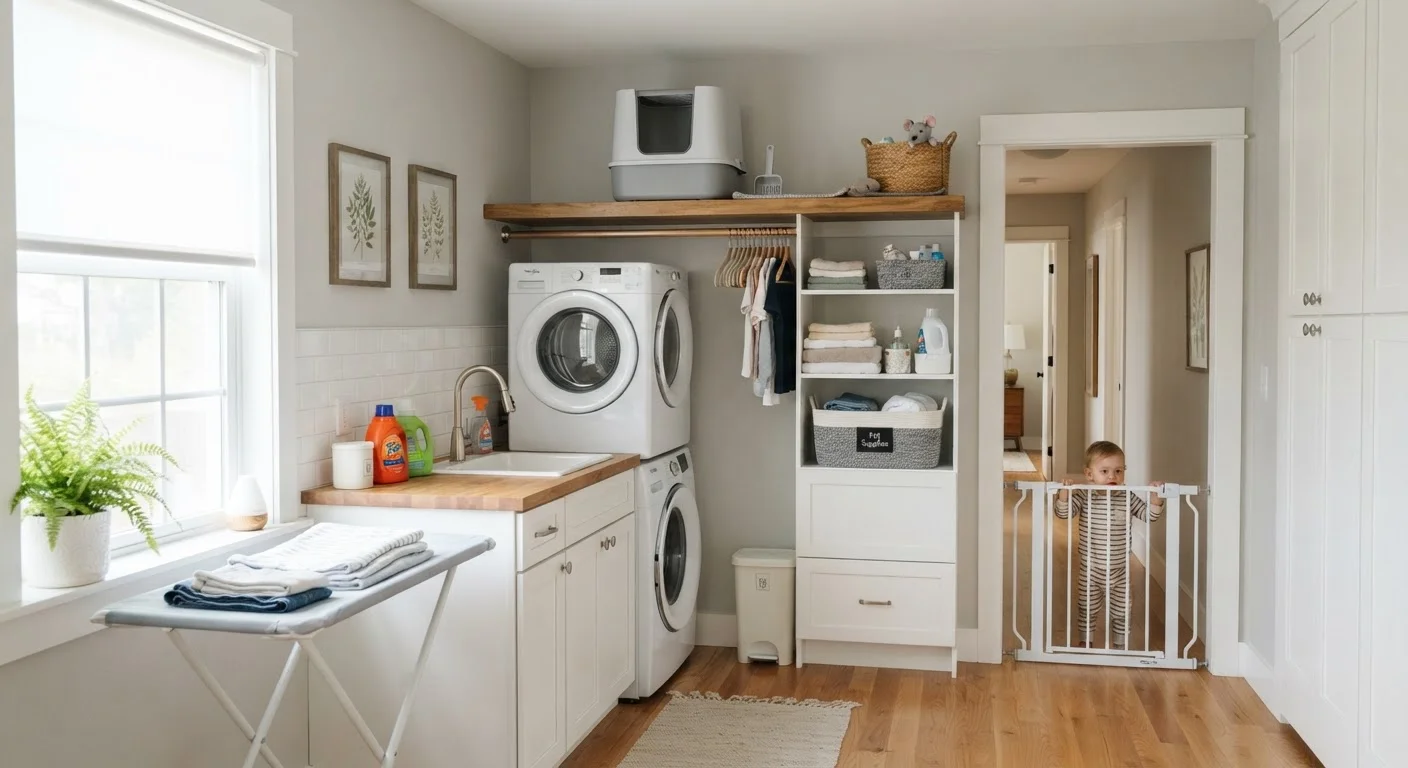
Why Litter Box Access Is a Real Safety Concern
For families with cats and toddlers, the litter box sits at an uncomfortable intersection of pet necessity and child safety. Toddlers are naturally curious and developmentally driven to touch, mouth, and explore - which makes an accessible litter box a genuine hazard, not just an aesthetic nuisance.
The primary health concern is Toxoplasma gondii, a parasite shed in cat feces that can cause toxoplasmosis. While healthy toddlers with typical immune function are unlikely to develop serious illness, the risk is not zero, and children with weakened immune systems face greater vulnerability. Beyond parasites, cat feces can carry bacteria such as Salmonella and Campylobacter. Clumping litter also poses an ingestion hazard - some formulas expand when wet and can be dangerous if swallowed in quantity.
These risks are manageable with the right habits and setup. See our overview of cats and crawling babies for a grounded look at what the evidence actually shows about cats and young children sharing space.
This article provides general health and safety information and is not a substitute for advice from your pediatrician or healthcare provider.
Best Practices for Litter Box Placement and Access Control
Where you put the litter box matters as much as how you maintain it. The goal is giving your cat reliable, stress-free access while eliminating unsupervised toddler access entirely.
Place the litter box in a room your toddler cannot enter unsupervised.
Physical separation is the most reliable safeguard. No product replaces a room your toddler simply cannot access on their own. This removes the risk entirely rather than reducing it.
Use a cat door or small-opening enclosure to give cats access while blocking toddlers.
Standard interior doors, when fully closed, can trap or distress cats - especially if access is inconsistent. A cat door sized for an adult cat but too small for a toddler's body offers a workable middle ground.
Scoop the litter box at least once daily and dispose of waste in a sealed container.
Toxoplasma gondii oocysts - the infectious form of the parasite - typically become infectious 1 to 5 days after being shed in feces. Daily scooping interrupts that window before the risk escalates.
Wash hands thoroughly with soap and water immediately after handling litter or the surrounding area.
Hand-to-mouth contact is the primary route by which children and adults are exposed to litter-borne pathogens. Handwashing before preparing food, before eating, and before touching a young child's face is a simple but highly effective barrier.
Choose a litter type with low dust and no scented additives when young children are in the home.
Fine-particle clay litters generate silica dust that can irritate young respiratory systems. Heavily scented formulas may also mask odors that signal a litter box needs cleaning, reducing how promptly caregivers respond.
For a broader look at how room-by-room planning can help, our guide on creating safe zones for pets and toddlers walks through practical approaches to dividing shared spaces without turning your home into an obstacle course.
Daily Hygiene Habits That Make the Biggest Difference
Products and placement help, but consistent habits are what actually keep families safe day to day. The good news: the most protective behaviors are also the simplest.
Keeping these routines consistent - even when life is hectic - is what separates a well-managed household from one where small risks accumulate. Our piece on how families accidentally undermine pet safety routines explores why even well-intentioned households sometimes let protective habits slide.
A Note for Pregnant Caregivers
Toxoplasmosis carries specific risks during pregnancy, including potential harm to a developing fetus. If you are pregnant, the general guidance is to avoid handling cat litter entirely and have another household member take over scooping duties. Always consult your OB-GYN or midwife for advice tailored to your situation - this is an area where professional guidance matters more than general tips.
Fitting Litter Box Safety Into Your Bigger Pet-Proofing Plan
Litter box management is one piece of a larger puzzle. Families who think holistically about shared pet-and-child spaces tend to maintain safer, less stressful households overall.
~40 million
Americans estimated to carry Toxoplasma gondii
According to the CDC, an estimated 40 million people in the U.S. may be infected with Toxoplasma gondii, though most healthy individuals show no symptoms.
1-5 days
Time for cat feces to become infectious
The CDC notes that Toxoplasma oocysts shed in cat feces typically take 1 to 5 days to sporulate and become potentially infectious - which is why daily scooping matters.
If you're working through a broader setup, our full pet-proofing walkthrough covers the spaces, hazards, and habits that matter most when pets and young children share a home. And for families thinking about related hygiene risks, cross-contamination risks from pet food is worth a read alongside this article.
“The combination of good hygiene and physical barriers - not just one or the other - is what makes a pet-friendly home reliably safe for young children.”
— American Academy of Pediatrics, U.S. pediatric health authority providing guidance on household pet safety
The content provided on our blog site traverses numerous categories, offering readers valuable and practical information. Readers can use the editorial team’s research and data to gain more insights into their topics of interest. However, they are requested not to treat the articles as conclusive. The website team cannot be held responsible for differences in data or inaccuracies found across other platforms. Please also note that the site might also miss out on various schemes and offers available that the readers may find more beneficial than the ones we cover.