

Why the First Two Weeks Matter More Than You Think
Whether you're bringing home a puppy or an adult dog, those first fourteen days are not just about excitement - they're about orientation. Dogs read their environment constantly, and everything your household does (or doesn't do) during this window sends signals about what life will look like going forward. If you haven't yet settled on whether a dog is right for your family, our complete guide to choosing a first family pet walks through temperament, space, and cost considerations first.
For families with children, the stakes are especially clear. Kids are unpredictable - they shriek, they run, they hug without warning. A dog that hasn't been given time and structure to decompress may react in ways that surprise everyone. Behavioral consultants commonly refer to the first two to three weeks as a decompression period, during which a dog is processing its new environment while potentially suppressing stress signals. Understanding this helps families respond thoughtfully rather than reactively.
If you're adopting from a shelter, the adjustment dynamics can differ meaningfully - the guide on introducing a rescue dog to a home with children covers those specific considerations in depth.
Before Your Dog Arrives: Setting the Stage
Preparation done before the dog walks through your front door pays dividends all fortnight long. Use the checklist in our realistic first-year pet checklist to manage costs without missing essentials.
What you will need
Walk through your home and identify zones ahead of time: where will the dog sleep, eat, and retreat to when overwhelmed? Designate one quiet space - a crate with a soft cover, or a gated corner - as the dog's sanctuary from day one. Children need to understand clearly that this space is off-limits to them, always.
The Retreat Space Rule - Repeat It Often
Reinforce with your children daily during the first two weeks: the dog's crate or bed is its private space, always. No petting it while it's resting there, no reaching in, no sitting beside it uninvited. Dogs that have a reliable retreat are far less likely to feel cornered - and cornered dogs are the ones most likely to react defensively.
Step-by-Step: The First Fourteen Days
Follow these steps in sequence. Skipping ahead - say, allowing roughhousing before the dog has shown consistent calm signals - can undo progress that takes weeks to rebuild.
Arrive quietly and skip the welcome party
When you first bring the dog home, resist the urge to invite neighbors or relatives over. Keep the household calm - ideally just your immediate family. Let the dog explore the main living areas on a loose leash, sniffing at its own pace. Avoid crowding, loud voices, or reaching over the dog's head.
Introduce children one at a time, seated and calm
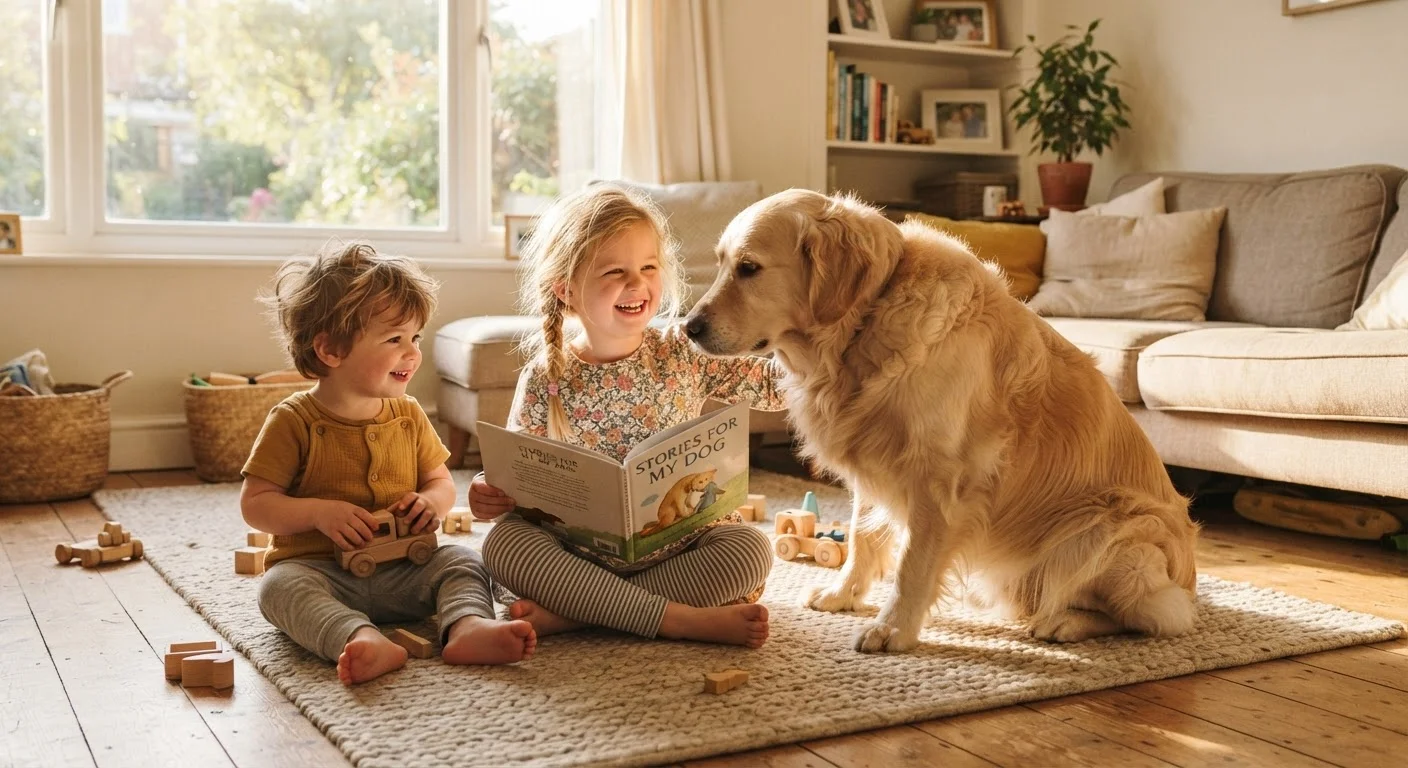
Have each child sit on the floor and allow the dog to approach them - not the other way around. If the dog moves away, that's information: it needs more time. Reward the dog with a treat for any calm, voluntary approach. Keep each introduction brief - under five minutes initially.
Establish a daily routine by day two
Dogs regulate their stress through predictability. By the second day, lock in consistent times for feeding, morning and evening walks, and sleep. Post the schedule somewhere visible for your children so they can participate in keeping it. Predictability signals safety to the dog and reduces anxious behavior.
Maintain supervised-only interactions for the full two weeks
An adult should be physically present - not just in the next room - any time the dog and children share a space during the first fortnight. Watch for stress signals in the dog: yawning, lip-licking, ears pinned back, tail tucked, or a hard stare. These precede snapping and should prompt a calm separation, not a correction.
Begin basic reinforcement training in short sessions
Starting simple cues like sit and stay during the first week builds communication and gives the dog a way to earn rewards through calm behavior. Keep sessions to three to five minutes. Children aged eight and older can participate with guidance, which also reinforces their role as someone the dog looks to - rather than fears or ignores.
Schedule a vet visit within the first seven days
A veterinary check in the first week confirms health status, updates vaccinations if needed, and gives you a professional relationship to draw on as questions arise. Mention any behaviors you've observed - even minor ones - so your vet can flag anything worth monitoring. This visit is also the right time to discuss parasite prevention appropriate for a household with children.
Debrief with your children at the end of each day
Spend two to three minutes each evening asking your kids what they noticed about the dog's behavior - what made it wag its tail, what made it move away. This builds empathy and observational skills, and keeps adults informed of any incidents that might otherwise go unreported. Children who understand dog body language become safer around all dogs, not just yours.
If you're navigating the simultaneous challenge of a young puppy and a toddler, the complete guide to raising a puppy and child together offers targeted support for that specific dynamic.
For broader home safety practices around pets and kids, the Pet Safety at Home hub is a useful ongoing reference.
The content provided on our blog site traverses numerous categories, offering readers valuable and practical information. Readers can use the editorial team’s research and data to gain more insights into their topics of interest. However, they are requested not to treat the articles as conclusive. The website team cannot be held responsible for differences in data or inaccuracies found across other platforms. Please also note that the site might also miss out on various schemes and offers available that the readers may find more beneficial than the ones we cover.