

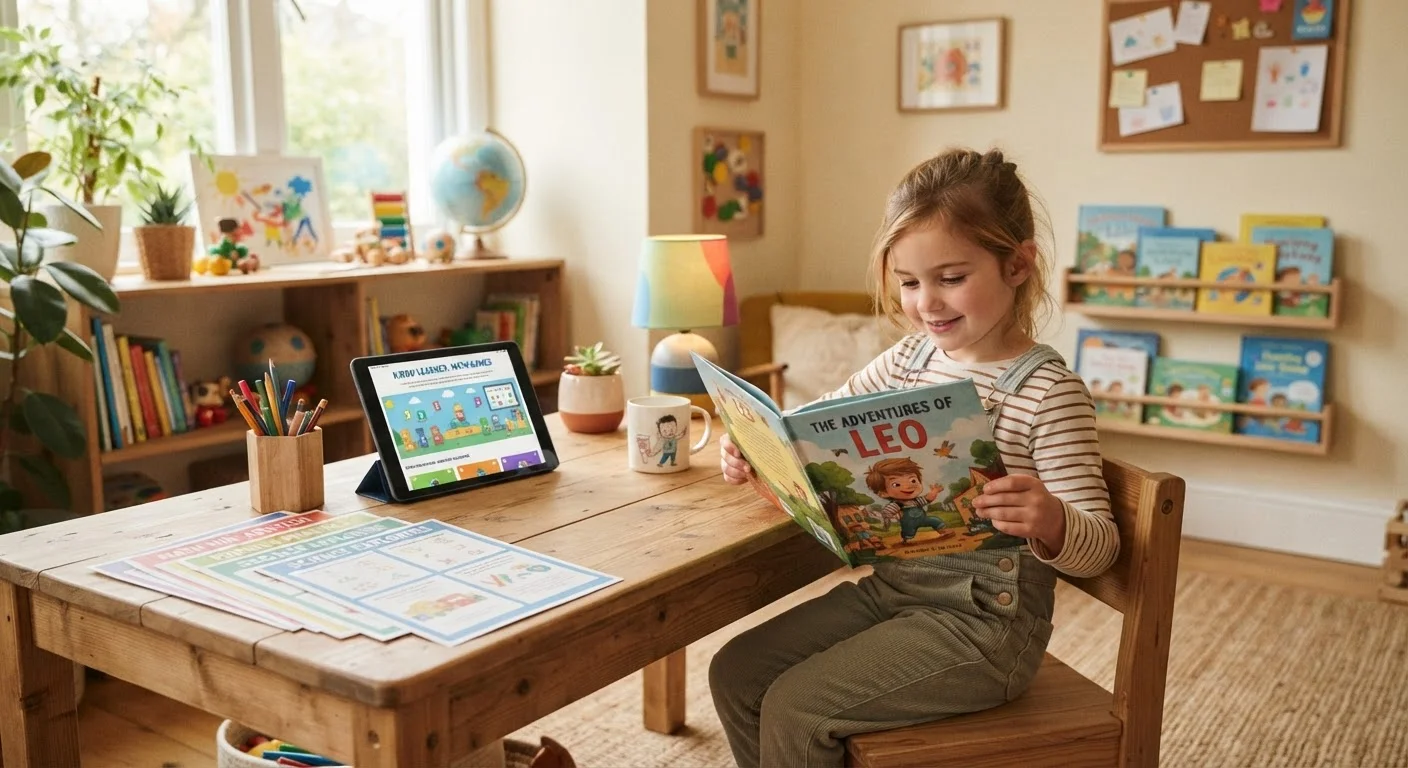
Why Free Resources Can Be Just as Effective
Many parents assume that supporting learning at home requires subscriptions, workbooks, or tutoring sessions. Research consistently shows, however, that what drives learning outcomes is engagement, consistency, and relevance - none of which require spending money. Well-designed free resources, when used with intention, can match or complement paid alternatives.
The key distinction is curation. The internet is saturated with educational content of wildly varying quality. Knowing where to look - and what markers of quality to trust - makes all the difference. Government education portals, established nonprofits, and university-backed platforms routinely offer free, curriculum-aligned materials that teachers themselves recommend.
If you're just beginning to map out your options, our guide to getting started with free educational websites walks through how to evaluate and organize what you find.
94%
US public libraries offering digital resources
According to the American Library Association, the vast majority of US public libraries now provide digital lending and online database access to cardholders at no charge.
3-4x
Retention boost from spaced practice
Cognitive science research consistently shows that spreading practice across multiple sessions can improve long-term retention significantly compared to massed single-session study.
70%+
Districts providing free platform access
Many US school districts have negotiated free student access to learning platforms - yet parent awareness of these accounts remains low, according to education technology surveys.
Free Digital Tools Worth Bookmarking
Several categories of free digital tools consistently earn strong reviews from educators and parents alike:
- Adaptive practice platforms: Sites that adjust question difficulty based on your child's responses help identify gaps without a teacher present. Many offer free tiers covering core math and reading skills from kindergarten through high school.
- Video-based explanations: Short instructional videos - particularly for math and science - allow children to re-watch explanations at their own pace, something a classroom rarely accommodates.
- Interactive simulations: Especially useful for science subjects, these let children experiment with concepts (circuits, ecosystems, physics) without equipment or materials.
- Reading and phonics tools: Structured literacy resources for early readers are widely available free through nonprofits focused on reading equity.
When assessing any digital tool, look for clear learning objectives, age-appropriate design, and transparent funding (nonprofit or government-backed sources tend to be ad-light and data-responsible).
When evaluating a free educational website, check who funds it first. Nonprofit and government-backed platforms are generally more curriculum-aligned and less likely to upsell or collect extensive child data.
Funding source is one of the strongest predictors of content quality and data practices - two things that matter significantly when children are the users.
Resist the urge to use too many tools at once. Pick one or two platforms per subject and stick with them long enough to see progress - typically four to six weeks - before adding anything new.
Platform-hopping creates novelty without depth. Consistent use of a single tool allows children to build familiarity with its format, reducing cognitive overhead and improving learning transfer.
Printable Resources: No Printer? No Problem
Printable worksheets, graphic organizers, and activity sheets remain among the most flexible free resources available. Reputable educational publishers and curriculum organizations make thousands of these available as PDF downloads, covering everything from handwriting practice to algebra review.
If you don't have a home printer, consider these no-cost alternatives:
- Public library printers: Most US public libraries offer low-cost or free printing for cardholders. A library card is free.
- School office: Many schools will print small quantities of educational materials for enrolled students on request.
- Digital annotation: Many printables can be completed directly on a tablet using a free drawing or annotation app - no paper needed.
For families working across multiple subjects, organizing downloaded PDFs into subject folders makes resources easy to retrieve. Even ten minutes of preparation on a Sunday can smooth out an entire week of learning sessions.
Community and Library Resources You May Be Overlooking
The US public library system is one of the most underused educational assets available to families. Beyond physical books, most library systems now provide cardholders with free access to:
- Digital e-book and audiobook lending platforms
- Online homework help and live tutoring services (often staffed by credentialed educators)
- Language learning software and test-prep databases
- Streaming educational video libraries
School districts frequently negotiate free access to learning platforms for enrolled students - log in to your district's parent portal or contact the school office to discover what's already available at no cost. Many families are unaware these accounts exist until a teacher mentions them.
Community organizations - including Boys & Girls Clubs, YMCAs, and faith-based groups - often run free after-school academic support programs. Local universities sometimes offer free tutoring through education-department practicum programs as well.
Building a Simple Routine Around Free Tools
Access to free resources is only half the equation. Without a lightweight structure, even excellent tools gather digital dust. Research on learning retention consistently supports shorter, more frequent practice over occasional marathon sessions - a principle sometimes called distributed practice or spaced repetition.
A practical starting framework for most school-age children:
- 15-20 minutes of focused reading (independent or read-aloud) on most evenings
- 10-15 minutes of math practice three to four times per week using an adaptive tool
- One exploratory session per week - a documentary, interactive simulation, or subject-linked activity that sparks curiosity
The goal is habit, not perfection. Missing a day is far less consequential than abandoning the routine entirely. Our article on building habits around free learning tools goes deeper on the strategies that help children make real progress rather than just filling time.
Subject-Specific Starting Points
Different subjects call for different approaches. Here's where free resources tend to be strongest, and how to make the most of them:
- Math
- Adaptive platforms and video explanations are particularly strong here. Look for tools that show worked examples step-by-step rather than just marking answers right or wrong.
- Reading & English
- Digital library access, free audiobooks, and structured phonics tools cover a wide range of ages. Comprehension improves most when children discuss what they read - even a brief conversation counts.
- Science
- Interactive simulations and museum websites (many major US science museums offer free online content) make abstract concepts tangible.
- History & Social Studies
- Primary source archives, including digitized documents and photographs, are freely available through government and university repositories. See our guide on making history feel relevant to disengaged children for practical ideas.
- Geography
- Mapping tools and satellite imagery are freely available and endlessly explorable. Our geography at home guide connects these tools to what children study in school.
For a broader view of subject-specific support across all core areas, explore our Subject-by-Subject Help hub, which covers targeted strategies and resources organized by topic.
The content provided on our blog site traverses numerous categories, offering readers valuable and practical information. Readers can use the editorial team’s research and data to gain more insights into their topics of interest. However, they are requested not to treat the articles as conclusive. The website team cannot be held responsible for differences in data or inaccuracies found across other platforms. Please also note that the site might also miss out on various schemes and offers available that the readers may find more beneficial than the ones we cover.