
Start here
Why Free Educational Websites Are Worth Your Time
Next
How to Evaluate a Free Learning Resource
Then
Types of Free Resources and What They're Good For
When you're ready
Setting Up a Simple Home Learning Routine
Final step
Common Mistakes to Avoid as a First-Time User
Why Free Educational Websites Are Worth Your Time
The sheer number of free educational websites can feel overwhelming - but the opportunity they represent is real. Public libraries, nonprofits, and education departments have collectively invested in making quality learning content accessible to every family, regardless of budget. The result is a landscape where a parent who knows what to look for can find solid math practice, reading comprehension exercises, science videos, and printable worksheets without spending a dollar.
This guide is your starting point. Rather than pointing you at a list of sites and wishing you luck, it walks you through how to approach free resources - so you can find, judge, and use them effectively for your child's specific needs. For a broader view of building a zero-cost learning environment at home, see our complete guide to free home learning tools.
How to Evaluate a Free Learning Resource
Not all free content is created equal. Before bookmarking a site or handing a tablet to your child, spend five minutes running through these checks:
- Who made it? Resources from universities, public broadcasters, nonprofits, or government education agencies tend to be more reliable than sites with anonymous authorship.
- Is it aligned to standards? Many reputable sites note which grade-level or curriculum standards their content meets - a strong signal of intentional design.
- What does it ask of your child? Active exercises, quizzes, and projects build skills better than passive video watching alone.
- How does it handle data and advertising? Check the privacy policy. Child-focused sites should comply with COPPA (Children's Online Privacy Protection Act) and avoid targeting ads at minors.
- Is there a cost hidden later? Some sites offer a free tier with meaningful content, then gate the rest. Know upfront what's genuinely free.
COPPA
The Children's Online Privacy Protection Act is a US law that restricts how websites can collect data from children under 13, requiring parental consent and limiting advertising targeting.
Curriculum alignment
When a resource is described as curriculum-aligned, it means the content is deliberately matched to the learning goals and grade-level expectations used in schools.
Adaptive learning
A feature of some interactive platforms that adjusts the difficulty of questions or tasks in real time based on how well the child is performing, helping them work at the right level.
Freemium model
A pricing approach where a platform offers some content for free but requires a paid subscription to unlock additional features or content - worth identifying before you commit time to a platform.
Digital literacy
The ability to find, evaluate, and use online information effectively and safely - a skill both parents and children develop over time when engaging with educational websites.
For a deeper look at what makes digital tools worth keeping, our article on evaluating free digital learning tools covers the full framework.
Types of Free Resources and What They're Good For
Free educational content comes in several distinct forms, each suited to different learning moments:
- Interactive platforms
- Web-based programs that adapt to a child's level, offer instant feedback, and track progress. Strong for math facts, spelling practice, and language skills where repetition and feedback matter.
- Video lessons
- Short instructional videos work well for visual learners and for subjects like science or history where seeing something demonstrated adds meaning. Many public broadcasters maintain large, free archives organized by subject and age.
- Printable worksheets and activity sheets
- Offline-friendly and great for younger children who benefit from writing by hand. Look for sources connected to schools or libraries for vetted content.
- E-books and digital libraries
- Your local library card often unlocks thousands of free e-books and audiobooks through apps - an underused resource for building reading habits without any extra cost.
- Subject-specific reference tools
- Glossaries, explainer pages, and reference guides help children (and parents) quickly understand specific concepts. Our English grammar terms reference is one example of this type of resource.
Your Local Public Library's Digital Portal
Most US public libraries provide free digital access to e-books, audiobooks, learning platforms, and databases. Log in with your library card number to explore what your local system offers at no cost.
State Department of Education Website
Every US state's education department publishes free resources, grade-level learning standards, and links to vetted educational materials - a reliable starting point for curriculum-aligned content.
PBS LearningMedia
A publicly funded digital resource library offering thousands of free videos, lesson plans, and interactives for PreK through grade 12, organized by subject and grade level.
Setting Up a Simple Home Learning Routine
The single most common reason free resources go unused is the absence of structure. A platform sitting in a browser bookmark does nothing; a brief, predictable daily routine turns it into genuine practice.
Start small. Even 15-20 minutes of focused, intentional work - at a consistent time each day - produces more learning than an occasional 90-minute session. Choose one subject and one platform to begin with, rather than launching five tools simultaneously.
- Pick a time that fits naturally around school hours, meals, and downtime.
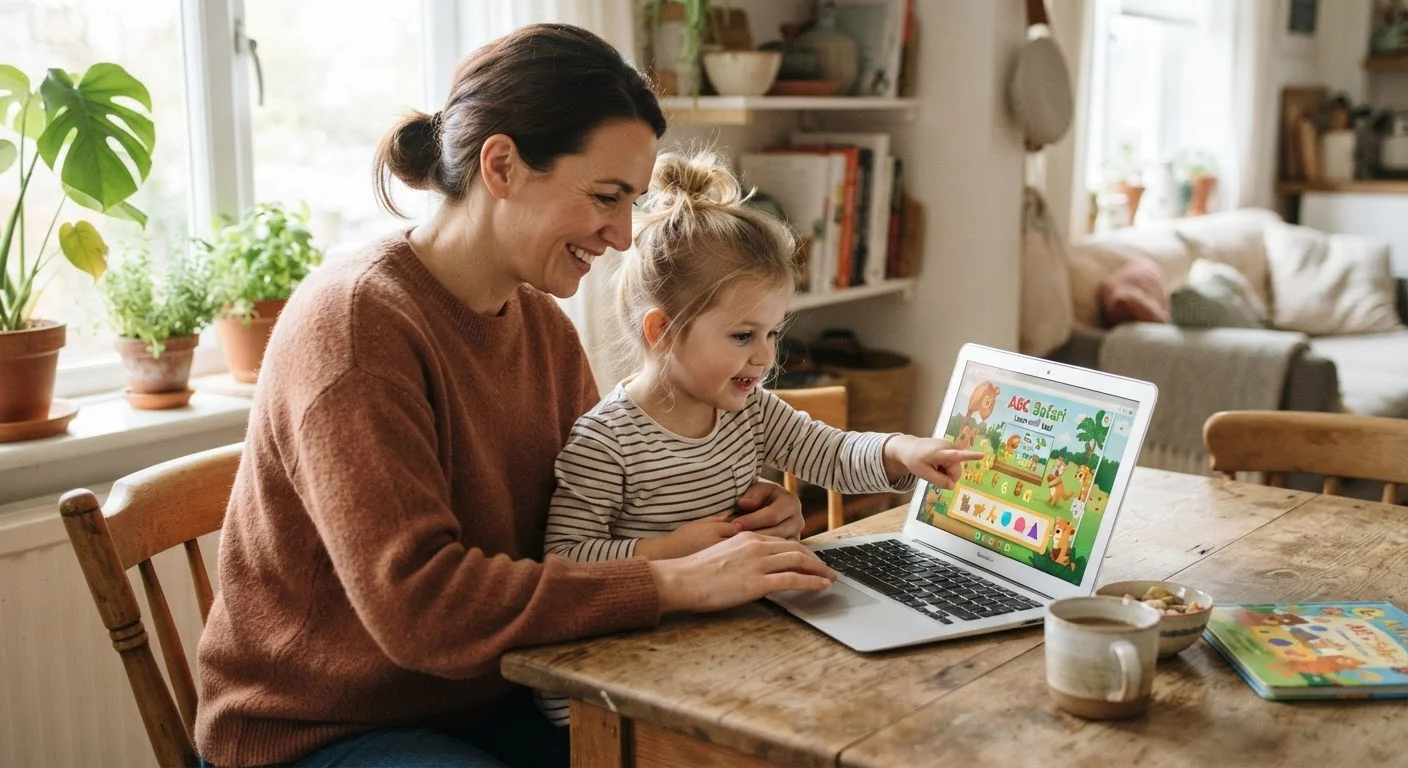
- Sit with your child for the first few sessions to understand the platform and answer questions.
- Celebrate effort and completion, not just correct answers.
- Review progress together weekly - most interactive platforms show what topics have been covered.
For guidance on building habits that make free resources genuinely effective over time, see our follow-up article: habits that help children actually progress.
Start With Your Library Card
Before exploring any third-party website, check what your local public library already provides digitally. Many US library systems offer free access to learning platforms, e-book collections, and educational databases - all verified, child-safe, and available the moment you log in with your library number. It's the most overlooked free resource most families already have.
Common Mistakes to Avoid as a First-Time User
Parents new to home learning with digital tools tend to run into the same handful of pitfalls. Knowing them in advance saves frustration:
- Starting with too many platforms at once. Pick one or two resources and use them consistently before adding anything new. Novelty doesn't equal learning.
- Treating screen time as a reward or punishment. When educational websites become a bargaining chip, children learn to rush through them rather than engage.
- Choosing based on what looks most impressive. A flashy interface can mask thin content. Go back to your evaluation checklist rather than trusting visual design alone.
- Ignoring your child's feedback. If a child consistently says a resource is boring or too hard, take that seriously. Engagement is a prerequisite for learning, not a nice-to-have.
- Expecting immediate results. Building skills through free resources takes time. Consistent, low-pressure practice over weeks matters far more than intensity over a single weekend.
Free educational websites are a genuinely powerful tool in any family's corner - and the learning curve for parents is shorter than you might think. Start with one resource, evaluate it honestly, and build from there.
Frequently Asked Questions
Many free educational websites are developed by nonprofits, universities, or government education departments and offer genuinely rigorous content. Quality varies widely, so evaluating each resource individually matters more than assuming paid always means better. Some paid platforms also offer free tiers that cover core content well.
Look for sites that are transparent about data collection, carry a privacy policy aligned with children's privacy laws (such as COPPA in the US), and don't rely on intrusive advertising. Reading the site's 'About' section and checking whether a school, library, or recognized educational body endorses it are good first steps.
Free resources exist for every age from preschool through high school. Some platforms span multiple grades, while others are designed for a specific range. Our <a href="/learning-at-home/free-learning-tools/a-quick-reference-guide-to-free-learning-platforms-by-age-group">platform-by-age-group guide</a> can help you quickly narrow options for your child's stage.
Major pediatric health organizations provide screen time guidance by age group, but educational use is generally treated differently from passive entertainment viewing. The quality of engagement matters as much as the duration. Consult your child's pediatrician if you have specific concerns about screen time for your child.
For younger children, supervised sessions are advisable both for safety and to reinforce learning through conversation. Older children can work more independently, though periodic check-ins help you stay aware of what they're doing and whether the resource is actually clicking for them.
Free resources are a valuable supplement to school learning but are not a substitute for professional tutoring or support services when a child is significantly struggling. If your child has an identified learning need, speak with their teacher or a specialist about appropriate interventions.
The content provided on our blog site traverses numerous categories, offering readers valuable and practical information. Readers can use the editorial team’s research and data to gain more insights into their topics of interest. However, they are requested not to treat the articles as conclusive. The website team cannot be held responsible for differences in data or inaccuracies found across other platforms. Please also note that the site might also miss out on various schemes and offers available that the readers may find more beneficial than the ones we cover.