

Why Habits Matter More Than the Tools Themselves
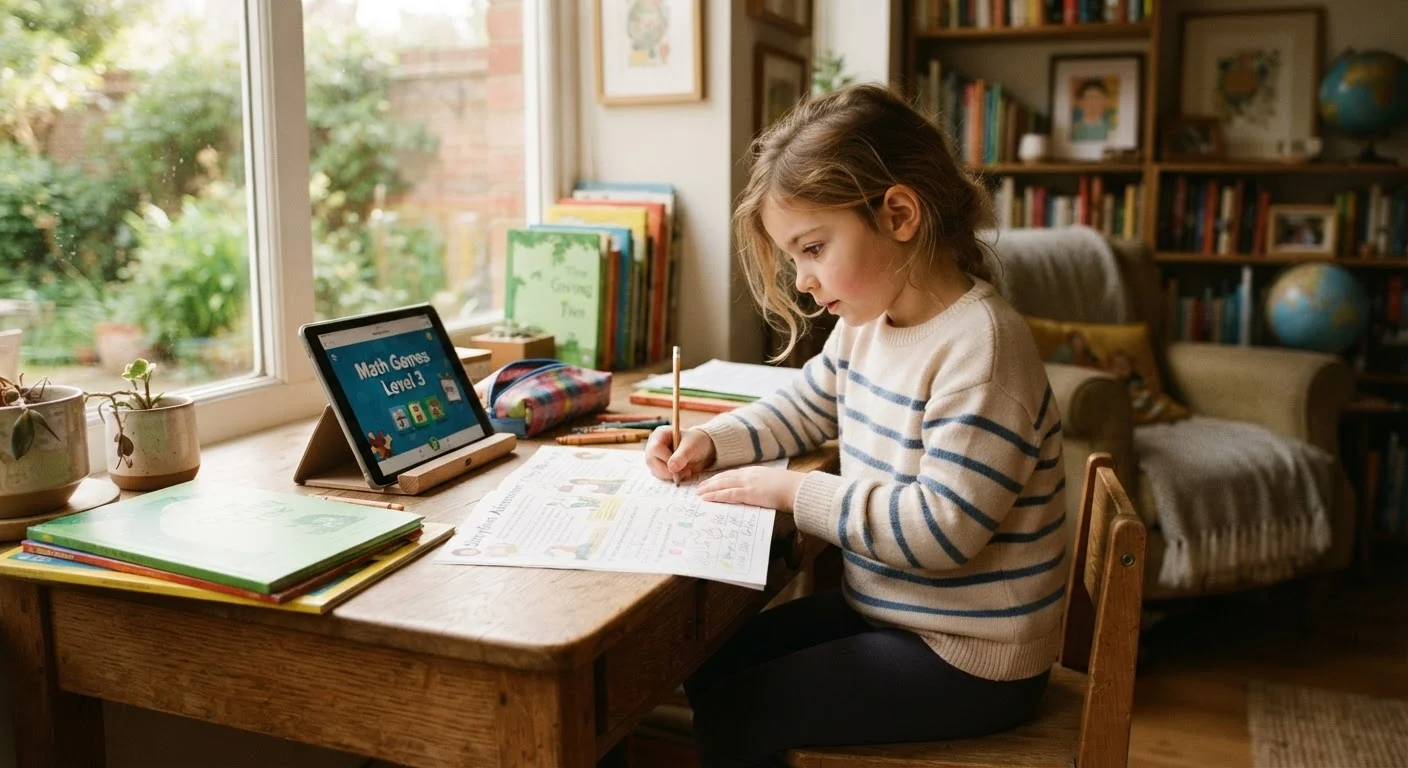
The free educational resources available to families today are genuinely impressive - interactive math platforms, phonics games, science video libraries, printable grammar exercises. But access alone doesn't translate into progress. A child who opens an app without direction and a child who sits down with a clear goal and a parent who checks in afterward are having fundamentally different experiences, even if they're using the same resource.
This is the central insight families need: the habit wrapped around the tool does most of the work. If you're looking for a clear overview of how to evaluate which free tools are worth your child's time, see our guide to free digital learning tools first. But once you've found resources that fit your child's needs, the practices below are what turn them into genuine learning.
Free Doesn't Mean Effortless
A free app or website is a tool, not a teacher. Without structure and follow-through, even the highest-quality free resource can become background noise. Think of your role as setting the conditions for the tool to work - choosing the right moment, defining the goal, and closing the loop afterward.
The Practices That Actually Make a Difference
These aren't abstract principles - they're concrete adjustments to how you set up and follow through on each session. Each one is small enough to start today and significant enough to compound meaningfully over weeks.
Set a specific learning goal before each session, not just a time limit.
Open-ended screen time with a learning app tends to drift into passive clicking. When a child knows they're aiming to complete five new vocabulary words or finish one math concept, they engage with purpose. A goal also gives you something concrete to discuss afterward, reinforcing retention.
Schedule learning sessions at the same time each day, even if they're short.
Consistency builds habit faster than duration. Research on habit formation consistently shows that a predictable cue - same time, same place - reduces the friction of starting. A 15-minute daily session compounds into genuine skill-building over weeks, while an occasional hour-long binge rarely sticks.
Ask one open-ended question after every session to close the learning loop.
Retrieval practice - recalling what you've just learned - is one of the most reliably effective learning strategies supported by cognitive science. A simple 'What's one thing that surprised you today?' prompts a child to actively reconstruct knowledge rather than let it evaporate.
Rotate between digital tools and printable resources to reduce screen fatigue.
Long stretches on any screen - even educational ones - can lead to fatigue and diminishing returns. Printable worksheets, library books, and hands-on activities provide cognitive variety and give eyes a genuine break. This also models to children that learning isn't synonymous with a device.
Celebrate process milestones, not just correct answers.
Children who are praised for effort and persistence - rather than outcomes - develop a more resilient approach to difficult material. When a free resource is used regularly, there will be sessions where a child struggles. Framing that as normal and valuable prevents discouragement from stalling progress.
Let the child choose between two or three pre-selected tools occasionally.
Giving children some agency over their learning builds intrinsic motivation - they're more likely to engage genuinely with a tool they've chosen. Pre-selecting a small pool of quality resources ensures the choice is always educationally sound while still feeling like autonomy.
For a broader look at how to build these practices into a daily structure, our article on setting up a free home learning routine walks through how to sequence tools across a week without it feeling like a second school day.
Start Today: Small Steps With Immediate Impact
You don't need to redesign your household routine to see improvement. The quick wins below are things you can act on before your child's next session - no prep, no cost, no special equipment.
Once these small habits feel natural, you'll find it easier to build toward the kind of study independence described in our guide on raising a self-directed learner. The goal isn't to manage your child's learning forever - it's to build the scaffolding they eventually won't need. For ideas on keeping the broader home environment organized and conducive to learning, the Study Skills & Habits hub is a useful starting point.
The content provided on our blog site traverses numerous categories, offering readers valuable and practical information. Readers can use the editorial team’s research and data to gain more insights into their topics of interest. However, they are requested not to treat the articles as conclusive. The website team cannot be held responsible for differences in data or inaccuracies found across other platforms. Please also note that the site might also miss out on various schemes and offers available that the readers may find more beneficial than the ones we cover.