

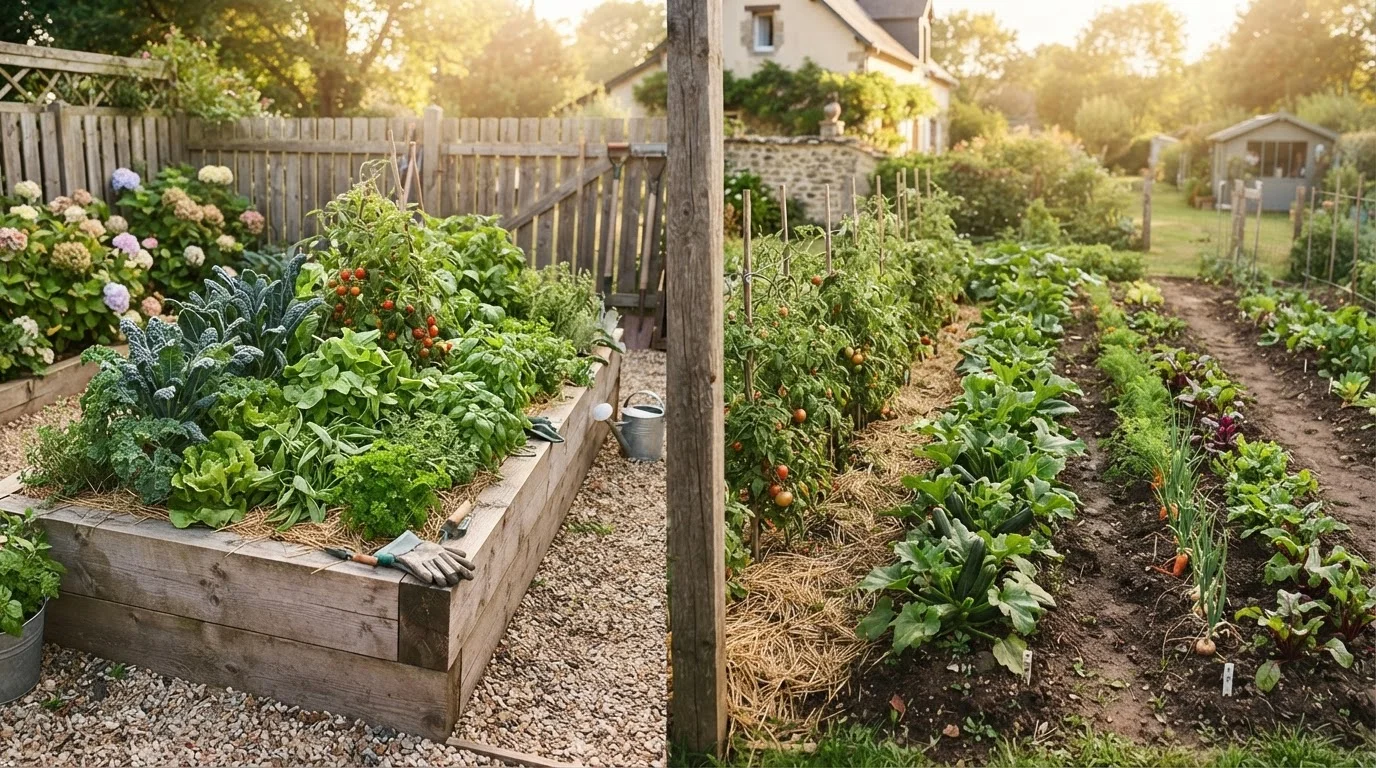
Option A
Raised Beds
The controlled, accessible, higher-upfront option.
Best for: Families dealing with poor native soil, limited mobility, or compact yards who want faster, more predictable results.
Option B
In-Ground Plots
The low-cost, scalable, traditional choice.
Best for: Gardeners with decent existing soil and space who want to grow at scale without a significant initial investment.
Understanding the Core Difference
At its simplest, the choice comes down to where your plants' roots grow. In-ground gardening means tilling or loosening the existing soil in your yard and planting directly into it. Raised beds are contained structures - typically framed in wood, metal, or composite material - filled with a soil mix you select or blend yourself.
Both methods can grow the same vegetables, herbs, and flowers. What differs is how much control you start with, how much you spend upfront, and how much ongoing effort each requires. If you're new to gardening, see our guide to starting a home garden on a tight budget for a broader foundation before committing to either approach.
| Criterion | Raised Beds | In-Ground Plots |
|---|---|---|
| Startup cost | Moderate to high (frames + fill) | Low (basic tools + compost) |
| Soil control | Full - you choose the mix | Limited by native soil quality |
| Drainage | Reliable; excellent by design | Varies with native soil |
| Scalability | Costly to expand | Easy and inexpensive to expand |
| Season length | Slightly longer; soil warms faster | Standard; depends on climate |
| Weed pressure | Lower initially; increases over time | Generally higher |
| Physical accessibility | High; adjustable working height | Requires bending and kneeling |
| Portability | Possible to disassemble | Permanent |
Upfront and Ongoing Costs
In-ground plots have a clear cost advantage at the start. If your soil is workable, you may need little more than a spade, a bag of compost, and seeds. Costs scale up only when you need to address specific problems like compaction or poor drainage.
Raised beds require purchasing or sourcing frame materials plus enough quality growing mix to fill the structure - and quality soil mix adds up quickly for anything larger than a few square feet. A single 4×8-foot bed filled 10-12 inches deep needs roughly 26-30 cubic feet of growing medium. Over multiple seasons, however, raised bed soil tends to stay loose and productive with lighter amendment, which can offset some early expense.
In-ground plots often need more compost added each season to combat compaction from foot traffic and rain. Over time, both approaches require ongoing soil care - just in different forms. Our article on annuals vs. perennials explores how plant selection also affects your long-term gardening costs.
Soil Quality, Drainage, and Pests
Soil quality is where raised beds often win decisively. If your yard has compacted clay, sandy soil that drains too fast, or soil of uncertain history (common in older urban properties), building a raised bed lets you start fresh with a mix suited to what you want to grow.
Drainage is also more predictable in a raised bed - water moves through the loose fill and exits at the bottom. In-ground plots in heavy clay soils can waterlog, stressing roots and inviting rot. If drainage is your main problem, a pre-season drainage check can help you understand whether amendments might solve it before you invest in frames.
Raised beds offer a modest advantage against some soil-borne pests. Lining the bottom with hardware cloth can deter burrowing rodents. Slugs and certain crawling insects may be slightly less prevalent, though they are by no means excluded. Neither method provides complete pest protection on its own.
A Note on Soil Contamination
If your home was built before the 1980s or your yard has a history of industrial or commercial use, testing your native soil for lead and other contaminants is a sensible precaution before growing edibles in-ground. Many county cooperative extension offices offer affordable soil testing. If contamination is found, raised beds with a solid or mesh bottom barrier are widely recommended by garden educators as a practical way to isolate your growing mix from affected ground.
Space, Scale, and Flexibility
In-ground plots scale easily - extending a row or expanding a plot takes only labor, not new materials. If you want to grow a large quantity of food, in-ground gardening is generally the more practical path. It also suits irregular yard shapes better, since you're simply working with what's there.
Raised beds excel in small or awkward spaces. A compact bed on a patio, along a fence line, or in a narrow side yard can produce a surprisingly generous harvest. For gardeners interested in maximizing a tight footprint, pairing raised beds with a grid-based planting approach is worth exploring - our piece on square foot gardening explains how this works in practice.
One practical note: whichever method you choose, starting smaller than you think you need is almost always the right call. A well-tended 4×8 raised bed or a 100-square-foot in-ground plot will teach you far more - and cost less - than an overly ambitious first season. When you're ready to plan what goes in, our comparison of seeds vs. seedlings can help you keep that first planting budget realistic.
The content provided on our blog site traverses numerous categories, offering readers valuable and practical information. Readers can use the editorial team’s research and data to gain more insights into their topics of interest. However, they are requested not to treat the articles as conclusive. The website team cannot be held responsible for differences in data or inaccuracies found across other platforms. Please also note that the site might also miss out on various schemes and offers available that the readers may find more beneficial than the ones we cover.