

Why Road Trips With Kids Fail (And What to Do Instead)
Most family road trip disasters trace back to the same few mistakes: no structure, unrealistic time estimates, and treating kids as passive passengers rather than participants. The families who consistently describe smooth drives aren't the ones with the newest minivans - they're the ones who planned the human side of the trip as carefully as the route.
Road trips are one of the most cost-effective ways to travel with children. There are no baggage fees, no security lines, and the car becomes a controllable environment. But that environment needs to be managed, not just survived. The strategies below reflect what experienced family road-trippers actually do differently.
For context on keeping overall costs in check, see our guide on stretching a road trip budget without cutting the fun.
The Practices That Actually Move the Needle
These aren't vague tips - each one addresses a specific failure point that derails family drives.
Schedule stops every 90-120 minutes, not just when someone complains.
Children's tolerance for confinement is genuinely lower than adults', and waiting for a meltdown to stop is reactive. Proactive stops reset moods, allow physical movement, and give everyone - including the driver - a mental break. They also make the overall drive safer.
Pack a dedicated snack bin stocked before you leave home.
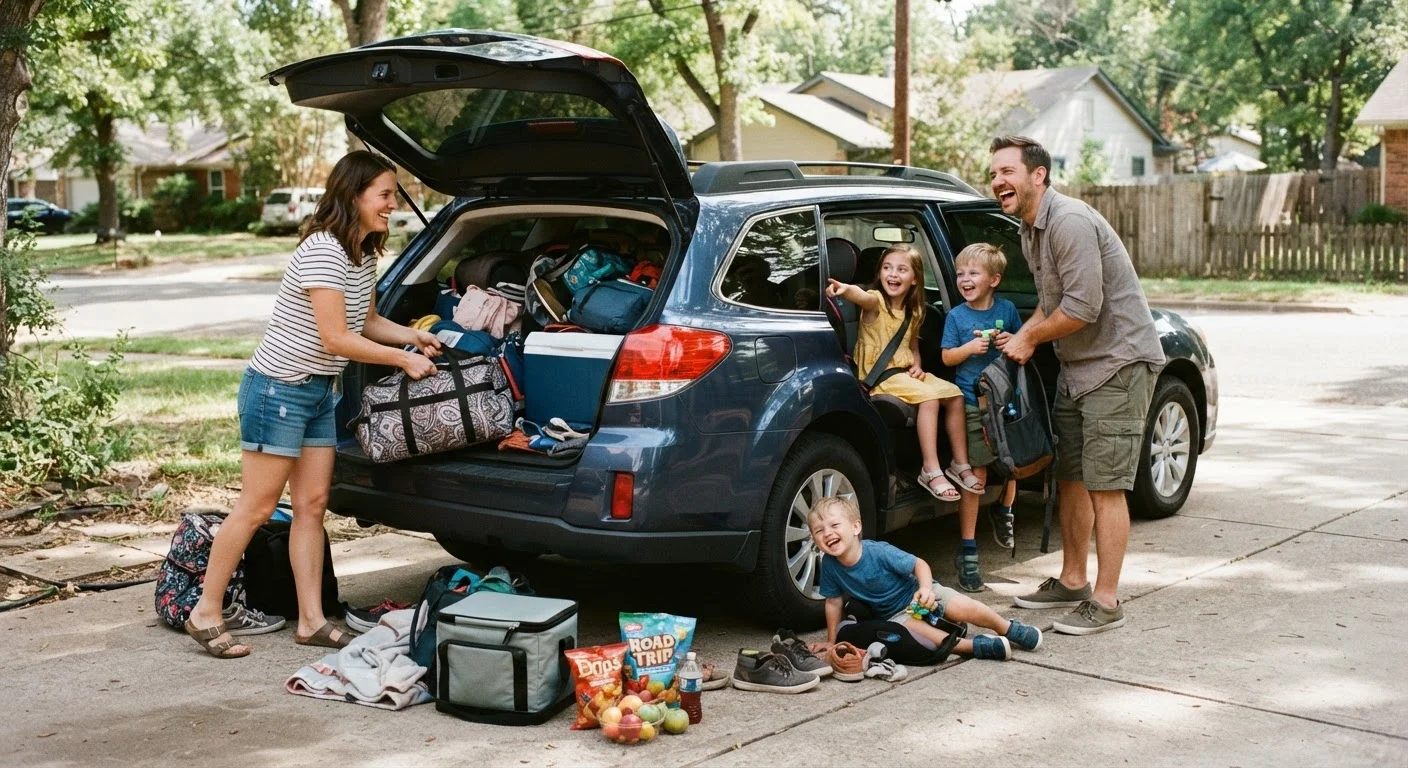
Highway gas stations and fast food add up fast - a family of four can easily spend $40-$60 on a single unplanned food stop. A stocked cooler with sandwiches, cut fruit, and drinks keeps costs predictable and means you're not hunting for food when everyone's already hungry and irritable.
Give each child a specific job for the trip.
Kids who feel useful are less likely to disengage into boredom and more likely to cooperate. Roles create structure and a sense of ownership over the journey, which reduces the 'are we there yet' spiral.
Drive during natural sleep windows when possible.
For families with children under six, a drive that overlaps with nap time or starts near bedtime converts otherwise difficult hours into quiet ones. This also allows adults to cover ground without the need for constant entertainment.
Build a car kit before every trip, not during packing chaos.
Motion sickness remedies, a change of clothes per child, wet wipes, a basic first-aid kit, and a bag for waste are the core items that prevent a minor incident from becoming a major detour. Having these pre-packed and always in the car removes them from the pre-trip decision load.
Set realistic daily driving targets, not optimistic ones.
Mapping software estimates drive time without children's stop frequency in mind. A route that looks like six hours often becomes eight to nine hours for a family. Overestimating distance leads to rushed stops, skipped meals, and a stressed-out driver pushing past their limit.
Quick Actions Before You Leave the Driveway
The hour before departure sets the tone for everything that follows. Use it deliberately.
If you're planning a longer multi-day drive through a region like the Southwest, our Southwest family road trip guide covers route-specific logistics and free public land stops worth building in.
Safety, Sanity, and Knowing Your Limits
Driver fatigue is the underappreciated risk on family road trips. Adults often push through tiredness to hit a destination rather than stopping - and that's when accidents happen. Agreeing on a stopping rule before the trip (for instance, pulling over whenever the driver feels drowsy rather than waiting for a scheduled stop) is a non-negotiable safety practice. Review family car safety essentials to make sure your vehicle and your passengers are properly prepared before heading out.
It's also worth having a brief, calm conversation with older children about what to do if something goes wrong on the road. Our piece on teaching children what to do after a breakdown or minor crash offers age-appropriate approaches to that conversation.
Finally, if your road trip is part of a bigger trip involving extended family, the coordination challenges multiply quickly. See how other families handle it in our guide to making multi-generational travel work without blowing the budget.
The content provided on our blog site traverses numerous categories, offering readers valuable and practical information. Readers can use the editorial team’s research and data to gain more insights into their topics of interest. However, they are requested not to treat the articles as conclusive. The website team cannot be held responsible for differences in data or inaccuracies found across other platforms. Please also note that the site might also miss out on various schemes and offers available that the readers may find more beneficial than the ones we cover.