

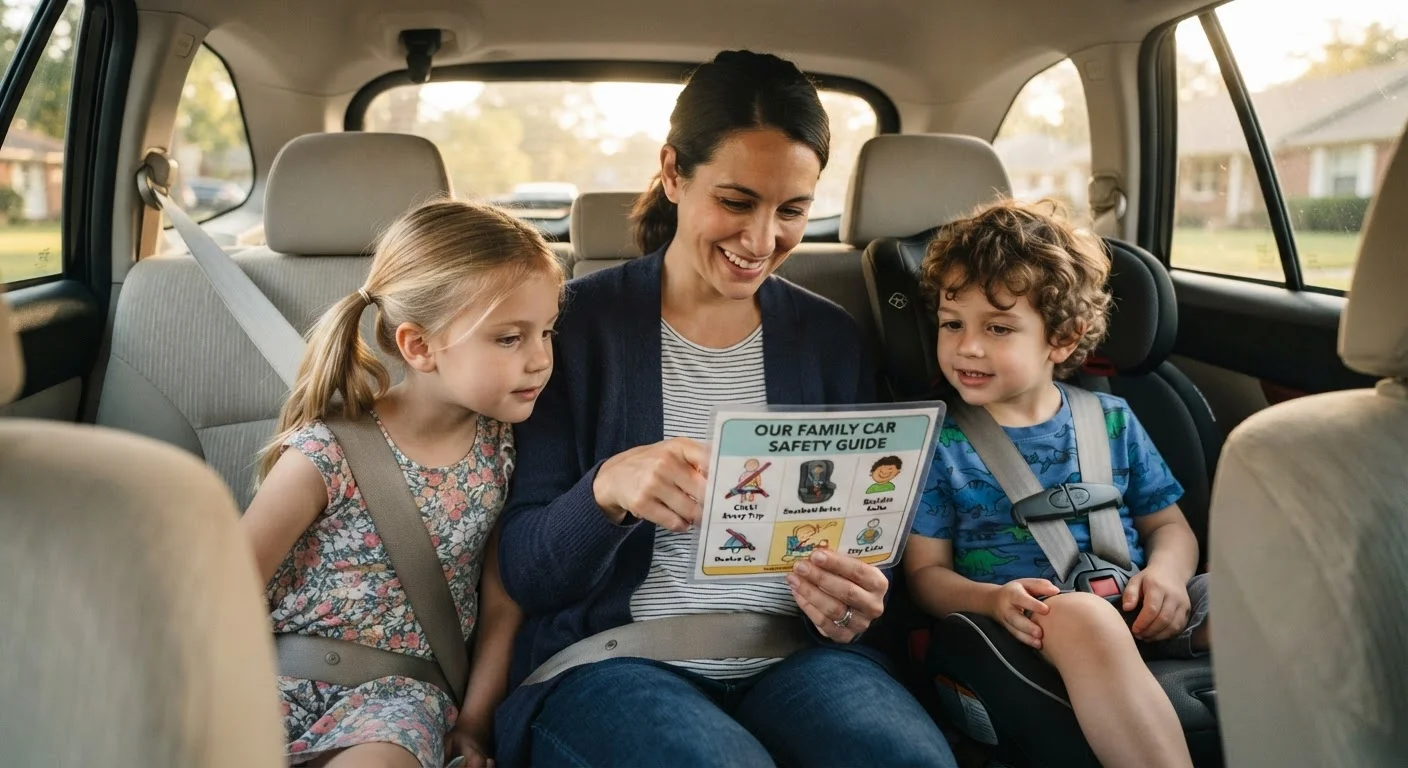
Why This Conversation Is Worth Having
Most parents prepare the car for emergencies - a well-stocked emergency kit is a great start - but far fewer prepare the children inside it. In a real breakdown or minor collision, a frightened child who opens a door toward traffic or freezes when a parent needs help can unintentionally make a stressful situation more dangerous.
The good news is that children are capable of learning clear, calm procedures when those procedures are taught plainly and revisited regularly. You do not need a dramatic rehearsal. A few relaxed conversations - timed around car rides, not crises - go a long way. Think of it the same way you approach a fire drill at school: the goal is a familiar, rehearsed response, not fear.
Before you begin, it helps to have the basics sorted on your end too. A pre-drive safety walkthrough before longer trips reduces the chance of an emergency in the first place, and knowing you have thought ahead makes it easier to project calm when talking with your kids.
Keep the Tone Reassuring, Not Alarming
Children pick up on parental anxiety. If you approach this topic calmly and matter-of-factly, they are far more likely to receive it that way too. Emphasise that breakdowns are inconvenient but manageable, and that the family has a plan. Confidence - not fear - is the goal of every practice conversation.
What to Teach, by Age
Tailor the detail to your child's developmental stage. Overloading a five-year-old with every scenario is counterproductive; leaving a twelve-year-old with only vague instructions wastes their capacity to genuinely help.
Ages 4-7: Two Non-Negotiable Rules
Focus on exactly two things: stay buckled and stay in the car unless a grown-up says otherwise, and do not open the door toward the road. Use simple, repetitive language. Role-play it as a game - "what do we do if the car stops suddenly?" - so the response becomes automatic.
Ages 8-11: Understanding the Sequence
Children this age can absorb a short sequence of events: the car stops or there is a bump, the grown-up checks everyone is okay, you wait calmly, you listen for instructions. Introduce the idea that hazard lights and staying visible to other drivers are important. Explain what a safe distance from the road looks like if you do need to exit - away from the lane, never on the traffic side.
Ages 12 and up: Becoming a Genuine Helper
Older children can learn to call for help if a parent is incapacitated. Practise dialling 911, giving a location (street name, nearest landmark, direction of travel), and describing what happened calmly. Show them where the roadside assistance number is stored in your phone or written in the glove compartment. Understanding basic car maintenance concepts - like what a flat tyre looks and sounds like - also helps them report accurately to emergency services.
How to Practise Without Scaring Anyone
Framing matters enormously. Present this as a family skill - something smart families do - rather than a scary possibility. Here are practical ways to make the learning stick without raising anxiety.
Start with a calm, matter-of-fact conversation
Choose an ordinary moment - a routine errand, not right after a scary news story. Say something like: "We've talked about what to do at school if there's a fire drill. Did you know families have plans too?" Keep the tone practical, not alarming.
Teach the non-negotiable rules first
Before any other detail, make sure every child knows: stay buckled, stay in the car, and wait for instruction. These three rules cover the highest-risk behaviours - a child stepping into live traffic is the most preventable serious danger in a roadside emergency.
Walk through the sequence for your child's age group
Use the age bands described in the previous section to choose the right level of detail. For younger children, one or two steps is enough. For older children, walk through the full chain: car stops → hazard lights on → assess injuries → call for help → wait safely.
Practise making an emergency call
For children aged 8 and up, run through dialling 911 (without actually calling). Practise what to say: your name, that you need help, the road name or nearest landmark, and whether anyone is hurt. Repeat this a few times until it feels routine, not stressful.
Show them where emergency information lives in the car
Point out the roadside assistance number (insurance card, app, or written note), a simple first-aid kit, and any emergency contacts stored in your phone. Make this a brief, practical tour - not a lengthy lecture. Knowing where things are reduces panic when seconds matter.
Review and repeat at low-key moments
Ask quick scenario questions on regular car rides every few weeks. "What's our rule if the car breaks down?" does not require a long answer - a short correct response is the goal. This spaced repetition builds automatic recall without turning safety into an anxiety-producing topic.
After you have worked through the steps a few times, try a low-stakes verbal quiz on an ordinary car ride: "If the car got a flat tyre right now, what's the first thing you'd do?" Light, conversational repetition reinforces the lesson far better than a single formal session.
You might also talk about what a vehicle emergency fund covers and why grown-ups plan for it - giving older children broader context that emergencies, while inconvenient, are manageable and planned for.
The content provided on our blog site traverses numerous categories, offering readers valuable and practical information. Readers can use the editorial team’s research and data to gain more insights into their topics of interest. However, they are requested not to treat the articles as conclusive. The website team cannot be held responsible for differences in data or inaccuracies found across other platforms. Please also note that the site might also miss out on various schemes and offers available that the readers may find more beneficial than the ones we cover.