

Where the Money Actually Goes on a Road Trip
Most families underestimate road trip costs before they leave and overestimate them once they're home - because the trips that feel expensive usually had one or two fixable cost leaks, not an inherently unaffordable premise. The three categories that reliably consume the budget are fuel, food, and lodging. Everything else - entry fees, souvenirs, activities - typically runs a distant fourth.
Understanding this matters because it points you toward the right interventions. Cutting one $180 hotel night has more impact than skipping three gas station coffees. Swapping two restaurant dinners for cooler meals saves more than negotiating over a campground fee. For a structured look at how to estimate totals honestly before departure, see Building a Family Travel Budget That Holds Up in the Real World.
Prices and Availability Change
Fuel prices, campground fees, and lodging rates vary by region and season. The strategies here are durable principles, but always verify current costs before finalizing your budget. For a fuller picture of how to build honest travel estimates, see The Real Math Behind Family Travel Budgets.
Proven Practices for Keeping Costs Down
The strategies below aren't about deprivation - they're about redirecting spending toward what your family actually values. A trip where you sleep in a great tent spot, eat well from a cooler, and spend three hours at a free canyon overlook can feel more memorable than a trip twice the price spent chasing paid attractions.
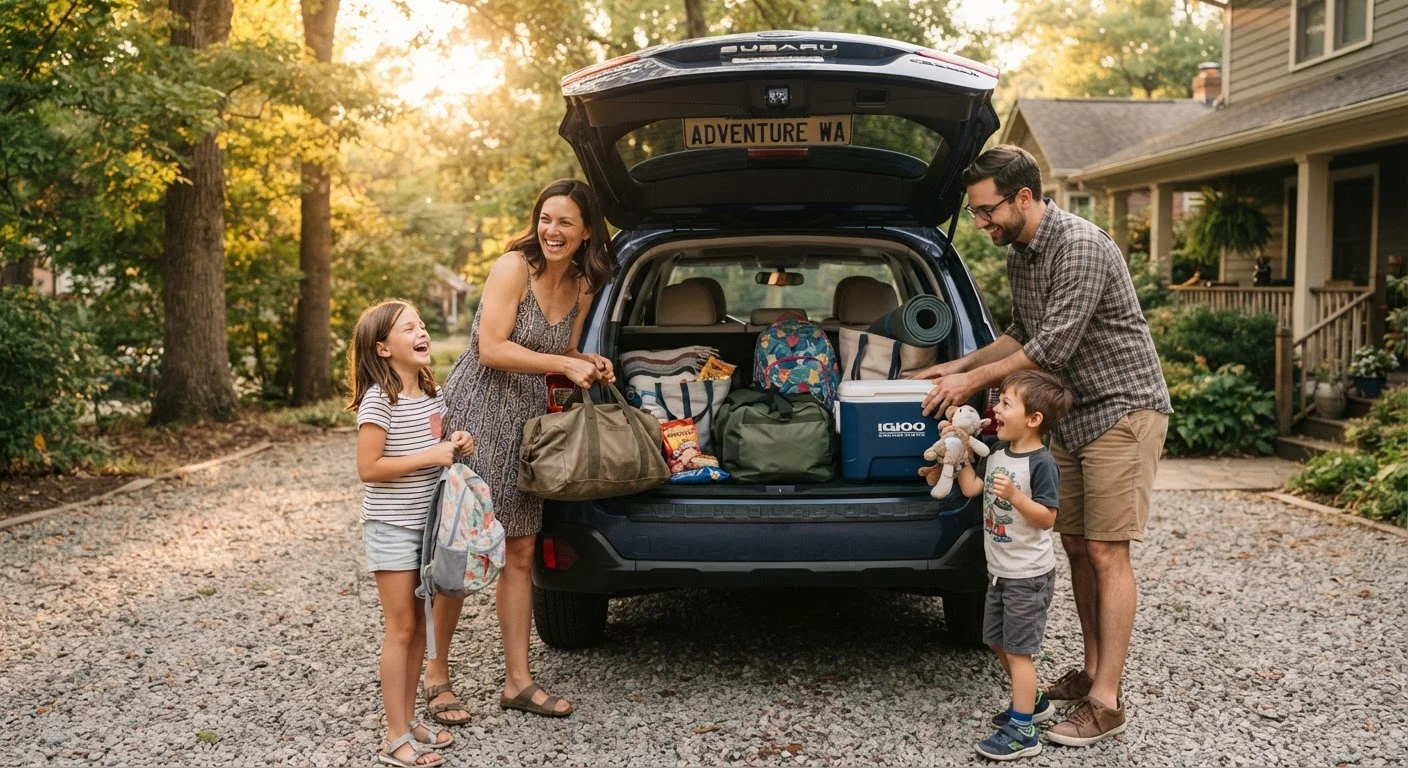
Pack a loaded cooler and plan grocery stops instead of relying on restaurants.
Food is often the second-largest road trip expense after fuel. A family of four eating sit-down meals three times a day can easily spend $150 or more daily. Cooler meals - sandwiches, fruit, yogurt, leftovers - cut that figure dramatically without sacrificing nutrition or enjoyment.
Maintain proper tire pressure and drive at steady highway speeds to reduce fuel consumption.
Under-inflated tires and aggressive acceleration both increase fuel use noticeably. On a long trip, these inefficiencies compound across hundreds of miles. Keeping tires inflated to the manufacturer's specification and using cruise control on flat highways are two of the simplest fuel savers available.
Use public lands, state parks, and campgrounds as overnight alternatives to hotels.
Hotel costs for a family of four in popular corridors can exceed $150-$200 per night. State park campgrounds often charge $20-$45 per site. Many national forests and Bureau of Land Management areas allow free dispersed camping, making them attractive for families with basic gear.
Plan your route around free or low-cost attractions rather than paid theme parks.
National parks, state parks, historic sites, nature trails, and public beaches provide genuine experiences at low or no cost. Paid attractions - aquariums, indoor play centers, water parks - can add $30-$60 per person per visit, ballooning quickly for larger families.
Do a thorough vehicle check before departure to avoid costly mid-trip repairs.
A breakdown on the road can cost hundreds in towing and repairs - far more than preventive maintenance. Oil, coolant, belts, brakes, and tires should all be inspected before a long drive. This also reduces the chance of safety incidents in unfamiliar areas.
Set a firm daily spending target and track actual expenses each evening.
Without a daily budget, small purchases - gas station snacks, impulse stops, convenience upgrades - accumulate invisibly. Reviewing what you actually spent each night gives you a real number to adjust against the next day, rather than discovering a shortfall at trip's end.
Quick Wins You Can Act on Now
A few of these changes take less than ten minutes to implement and start paying off on the very next driving day. Start here before working through the bigger planning decisions.
For practical advice on keeping kids content during long stretches - which directly affects how many impulse stops you make - see Road Trips With Kids: What Actually Makes Them Work.
The Mindset That Makes It Sustainable
“The best road trips aren't the most expensive ones - they're the ones where you felt the most freedom. And financial stress is the fastest way to lose that feeling.”
— Travel Smart Editorial Team, Family travel research and planning editors
Budget road tripping works best when the family agrees on the trade-offs upfront. One paid splurge per trip - a single admission-fee destination, a nicer overnight stop - tends to land better than daily small expenses that nobody particularly values. Discuss the plan before you leave so that every spending decision on the road feels like a choice rather than a restriction.
Families who travel the budget destinations circuit repeatedly often report that trip-planning itself becomes a skill - you get faster at identifying free anchors, better at estimating fuel legs, and more confident about what your family actually needs versus what's marketed at you along the way.
Before every trip, also run through a vehicle readiness check - not just for safety, but because breakdown costs are the single most unpredictable budget threat on any long drive. The cost and safety readiness checklist covers what to review before loading the family in.
The content provided on our blog site traverses numerous categories, offering readers valuable and practical information. Readers can use the editorial team’s research and data to gain more insights into their topics of interest. However, they are requested not to treat the articles as conclusive. The website team cannot be held responsible for differences in data or inaccuracies found across other platforms. Please also note that the site might also miss out on various schemes and offers available that the readers may find more beneficial than the ones we cover.