

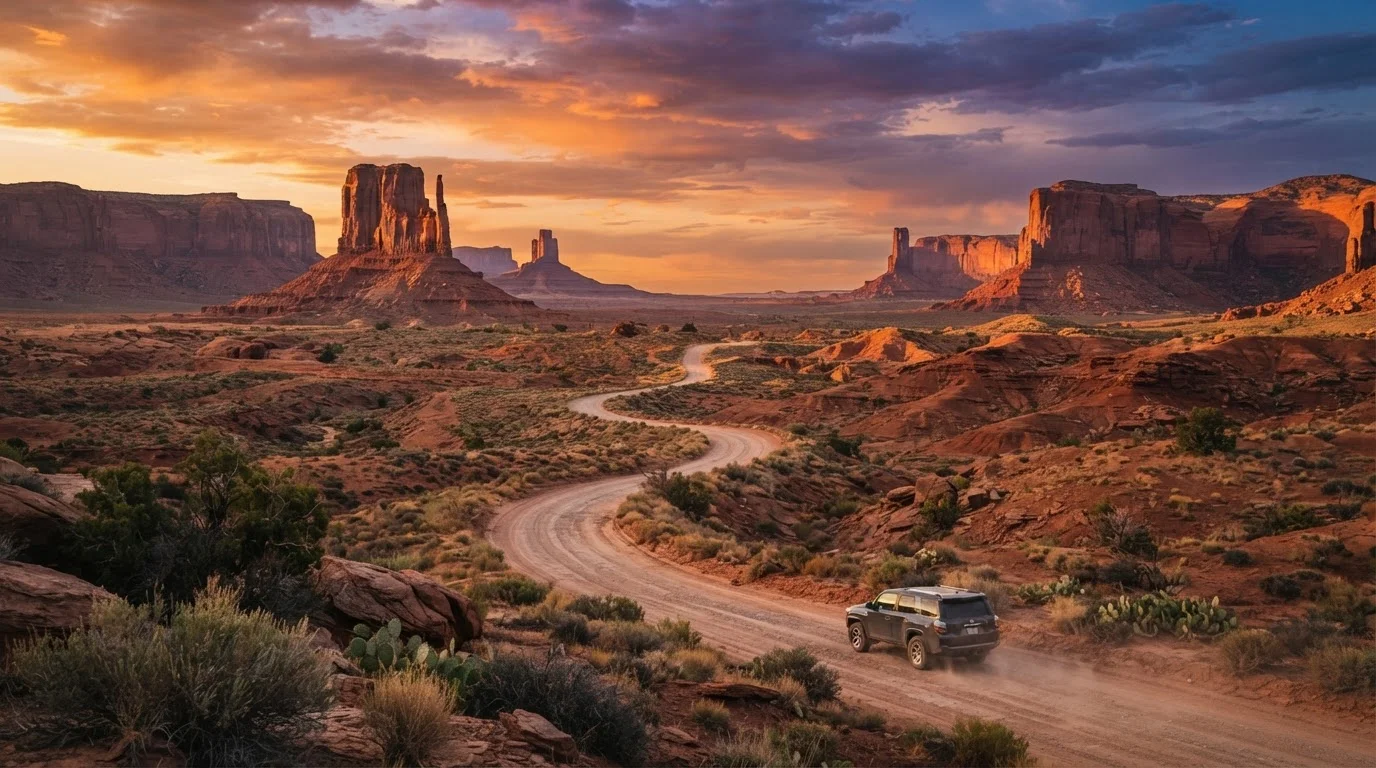
Why the Southwest Works for Budget-Minded Families
The American Southwest - roughly spanning Utah, Arizona, New Mexico, and Nevada - offers something rare: world-class natural scenery that is largely publicly owned and accessible at low or no cost. Arches, Zion, the Grand Canyon's North Rim, White Sands, and dozens of lesser-known Bureau of Land Management (BLM) sites can fill two weeks of itinerary without paying admission at most stops.
The region also rewards a driving trip specifically. Distances between landmarks are long but scenic, gas stations are spaced predictably along major routes, and most highways are well-maintained. Families who enjoy varied landscapes - slot canyons, alpine forests, high desert - can cover genuinely different terrain without backtracking.
For broader context on what makes Southwest family road trips work logistically - from snack strategy to stop timing - see our guide to road trips with kids. And if you want a full framework for managing overall trip costs, the Family Travel Savings Playbook covers budgeting from flights to food.
The Pass Math Is Usually Simple
At $80, the America the Beautiful pass covers entrance at the Grand Canyon ($35 per vehicle), Zion ($35), and Bryce Canyon ($35) - three parks that together cost $105 without it. Most Southwest loops visit six or more qualifying sites, making the pass one of the clearest cost wins in family travel planning.
What You'll Need Before You Go
A little pre-trip preparation prevents the most common cost overruns on Southwest road trips.
What you will need
Campsite reservations at popular parks like Zion and the South Rim of the Grand Canyon fill months in advance, especially for summer. Book these first - they anchor the rest of your itinerary. For everything else, BLM dispersed camping (free, no reservation required, 14-night limit per site) offers a genuine alternative.
Planning the Route Step by Step
The steps below assume a 10-14 day trip originating from a Southwest gateway city such as Las Vegas, Phoenix, or Albuquerque. Adjust mileage and timing to fit your family's driving tolerance - most families with young children do best capping daily driving at 3-4 hours.
Secure Your America the Beautiful Pass
The America the Beautiful Interagency Annual Pass ($80 at time of writing, valid for 12 months) covers entrance fees at all federal lands managed by the National Park Service, Forest Service, Bureau of Land Management, and others. For a family visiting three or more national parks in a single trip, this pass typically pays for itself within the first two stops.
Purchase it at the first park entrance booth you reach, or in advance through the USGS store online. The pass admits the pass holder and up to three additional adults; children under 16 always enter federal parks free.
Map a Logical Loop, Not an Out-and-Back
A loop route reduces backtracking and fuel costs significantly. A classic Southwest family loop might run: Las Vegas → Zion National Park → Bryce Canyon → Capitol Reef → Canyonlands/Arches → Monument Valley → Grand Canyon South Rim → Sedona → back to Phoenix or Las Vegas. This keeps driving directional and covers distinctly different landscapes.
Prioritize morning arrival at heavily visited sites like Arches and Zion - both use timed-entry permits during peak months, so confirm current permit requirements before your trip on the relevant park's official website.
Book Campgrounds and Motels at Anchor Stops
Identify your three or four must-see parks and reserve overnight stays at those locations first. Popular campgrounds at Zion, Bryce Canyon, and the Grand Canyon South Rim routinely book out months ahead during summer and fall color season. Use recreation.gov for NPS campground reservations.
For nights between anchor stops, plan around BLM land or first-come, first-served campgrounds. Identifying these spots in advance using free BLM mapping tools (available at blm.gov) prevents scrambling at the end of a long driving day.
Choose Shoulder Season Dates Where Possible
Mid-April through late May and September through October offer the best balance of manageable crowds, moderate temperatures, and full facility access across most Southwest parks. Summer (June-August) brings extreme heat at lower elevations - temperatures regularly exceed 105°F in canyon country - which limits how much time young children can safely spend outdoors during midday hours.
Spring wildflower season in particular adds visual payoff with no extra cost.
Pack for Self-Sufficiency
A well-stocked vehicle reduces dependence on tourist-area pricing for basics. Key items: a quality cooler with ice or a 12V electric cooler, a camp stove and basic cookware, a water filter or purification tablets (water at remote BLM sites is not potable), a basic first-aid kit, and enough sunscreen and electrolyte supplies for the full trip. Cell signal is unreliable in much of the Southwest - download offline maps before leaving any major city.
For additional ideas on free and low-cost activities at family destinations, including lesser-known parks and festivals across the region, check our dedicated guide. If you're weighing a city-based trip instead, free family experiences in major US cities offers a useful contrast.
Keeping Costs Under Control on the Road
The Southwest's biggest cost traps are restaurant meals in tourist towns, last-minute lodging, and entrance fees at multiple parks. Each is avoidable with modest planning.
Food: Stock a cooler with breakfast and lunch staples - eggs, bread, deli items, fruit - and budget for one sit-down dinner every two or three days. Towns like Moab and Sedona have noticeably higher restaurant prices than comparable stops elsewhere; cooking at a campsite saves $40-$80 per meal for a family of four.
Lodging: Alternate between campgrounds and budget motels (helpful for laundry and showers). Free dispersed BLM camping is widely available throughout the region and legal with standard low-impact practices.
Fuel: Fill up in larger towns before entering remote stretches. Prices at isolated gas stations inside or near park boundaries can run $0.50-$1.00 per gallon higher than regional averages. See our road trip budget strategies for a fuller breakdown of fuel and overnight cost management.
More ways to save on travel costs for families are covered in our Travel Savings hub, and family travel planning tips rounds out the practical logistics.
The content provided on our blog site traverses numerous categories, offering readers valuable and practical information. Readers can use the editorial team’s research and data to gain more insights into their topics of interest. However, they are requested not to treat the articles as conclusive. The website team cannot be held responsible for differences in data or inaccuracies found across other platforms. Please also note that the site might also miss out on various schemes and offers available that the readers may find more beneficial than the ones we cover.