

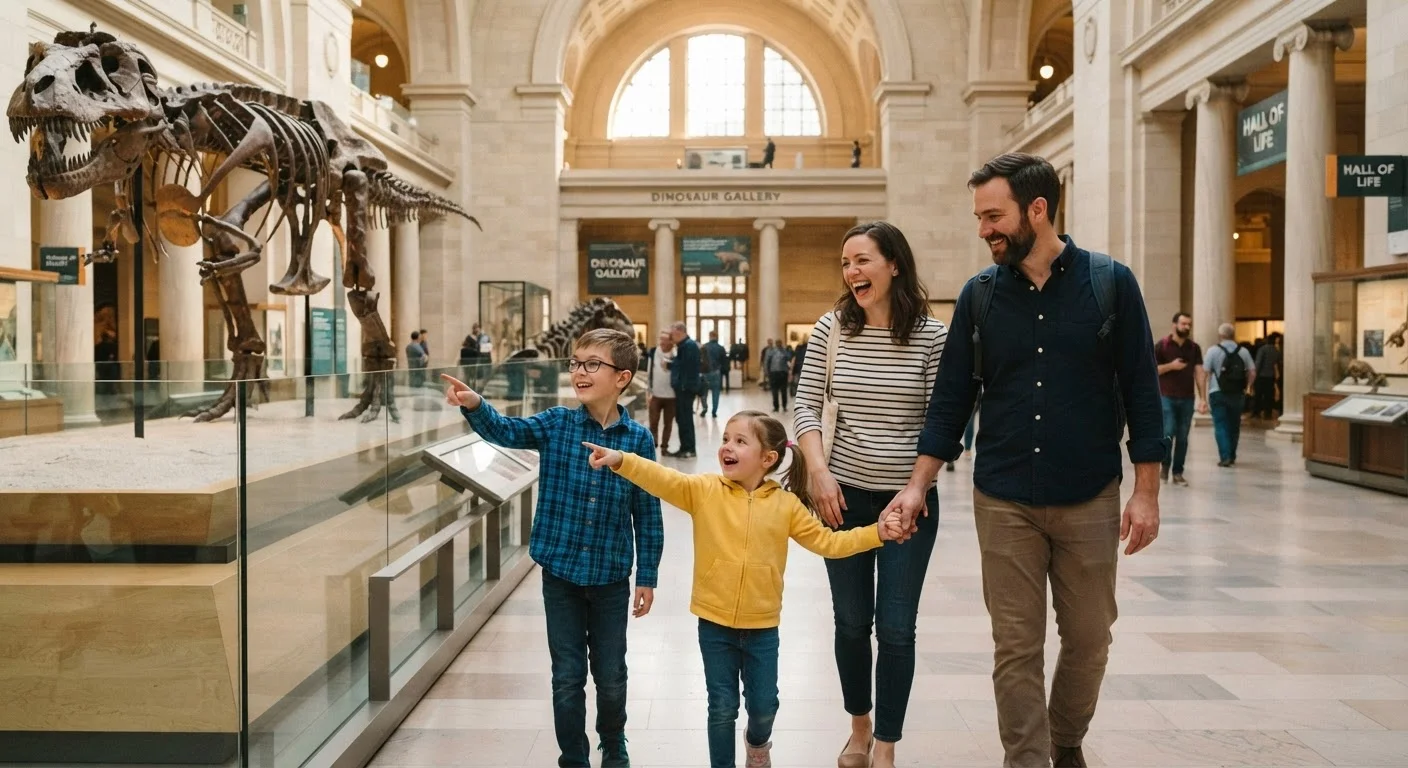
Why Big Cities Deserve a Second Look from Budget Families
Cities have a reputation for being expensive family destinations - and in some ways, that reputation is earned. Lodging, transportation, and meals can add up fast. But the activity layer of a city trip is often far more affordable than families expect, especially when you know where to look.
Many of America's most celebrated cultural institutions - the Smithsonian museums in Washington, D.C., the Art Institute of Chicago, the National Mall - charge nothing for general admission. Major urban parks like Balboa Park in San Diego or Millennium Park in Chicago function as free, all-day entertainment hubs. Public beaches, botanical gardens, waterfront promenades, and free neighborhood festivals round out a calendar that can keep kids engaged without a large daily spend.
The key distinction: free activities take more planning upfront but deliver real savings. A family of four skipping two mid-tier museum admission fees could save $60-$80 before lunch. See our complete family travel savings playbook for how to build this kind of budgeting into your full trip plan.
Washington, D.C. - The Smithsonian System
The 19 Smithsonian museums and galleries spread across the National Mall are free to enter, year-round, for every visitor. That includes the National Air and Space Museum, the National Museum of Natural History, the National Zoo, and the National Museum of African American History and Culture (though the latter requires timed-entry passes, available free online). For families, this is genuinely one of the best deals in American travel - multiple full days of world-class exhibits at zero admission cost.
Complement museum visits with the National Mall itself: two miles of walkable green space, monuments, and memorials. Pack lunch to keep food costs controlled.
The Smithsonian's 19 free institutions can fill several full days without spending a dollar on admission.
Chicago - Millennium Park and Free Museum Days
Millennium Park is a 24-acre public space in the heart of downtown Chicago with free admission always. The Crown Fountain, the Jay Pritzker Pavilion (which hosts free summer concerts), and the iconic Cloud Gate sculpture are all accessible without charge. Adjacent to the park, the Chicago Cultural Center offers rotating free exhibits.
Chicago also operates a formal free museum days program through the Chicago Park District, giving city residents - and in some cases visitors - free access to institutions like the Field Museum, Shedd Aquarium, and Adler Planetarium on rotating designated days. Confirm current schedules directly with each institution before your trip.
Chicago's free museum day program can eliminate admission costs at some of the city's highest-profile institutions.
San Diego - Balboa Park's Free Institutions
Balboa Park is one of the most family-friendly public spaces in the country. The park itself is free to walk, and several of its museums offer free admission on a rotating Tuesday schedule (one museum per Tuesday, per San Diego County resident - verify eligibility and current schedules at the park's official site). The park's gardens, outdoor performance spaces, and playgrounds are free every day.
San Diego's beaches - Coronado, Pacific Beach, La Jolla Cove - are also free public access. Parking costs vary and can be significant in peak season; arriving early or using public transit helps.
Balboa Park combines free outdoor space with rotating free museum access, making it an all-day family destination.
New York City - Free Parks, Libraries, and Public Landmarks
New York has a reputation as one of the most expensive US cities, and some of that reputation is accurate. But its public infrastructure is extensive and free. Central Park, Prospect Park, and the High Line cost nothing. The Staten Island Ferry offers harbor views - including views of the Statue of Liberty - at no charge. The New York Public Library's main branch on Fifth Avenue is free to visit and frequently hosts family programming.
Many of the city's paid attractions offer free or reduced admission on specific days or evenings - the Museum of Modern Art, for example, has had recurring free Friday evening hours, though policies change. Always verify directly with the institution.
The Staten Island Ferry provides a free harbor experience that rivals paid tourist boat tours in terms of views.
Boston - The Freedom Trail and Public Green Spaces
Boston's 2.5-mile Freedom Trail is a self-guided walking route through 16 historically significant sites - most of which are free or low-cost to enter. The route includes the Boston Common (America's oldest public park), the Old State House, Paul Revere's house, and the Bunker Hill Monument. It's a genuinely substantive history experience that works well for school-age children.
The Museum of Science and the New England Aquarium are paid, but both offer discounted rates for children under 3, and the Museum of Science has periodic community free days. Boston also has a strong network of public beaches accessible by MBTA (public transit) for families without a car.
The Freedom Trail is a free, walkable history lesson that covers 16 significant sites across 2.5 miles.
Philadelphia - Art, History, and the Avenue of the Arts
Philadelphia punches well above its weight for free family attractions. The Philadelphia Museum of Art offers pay-what-you-wish admission on the first Sunday of each month. Independence National Historical Park - which includes Independence Hall and the Liberty Bell Center - is free, managed by the National Park Service. The Reading Terminal Market is a free-to-enter public market where families can graze affordably.
The Barnes Foundation and the Philadelphia Zoo are paid institutions, but the concentration of free offerings in Center City means a family can have a full two-day itinerary with minimal admission spending. For broader context on how destination costs can surprise you, see why cheap destination doesn't always mean affordable family trip.
Philadelphia's concentration of free National Park Service sites makes it one of the most budget-friendly history destinations in the US.
Making the Most of What These Cities Offer
The cities covered here aren't exhaustive - they're representative of the kinds of free infrastructure that major US metros tend to offer. Once you start looking for this pattern, you'll find it in most large American cities: at least one flagship free museum, a significant public park, a historic district worth walking, and a waterfront or civic gathering space that costs nothing to enjoy.
A few practical notes: free admission days at paid institutions book up quickly - check the institution's website well in advance and confirm policies before you travel, as schedules change. City visitor passes can reduce costs for families planning multiple paid attractions in a short window, but run the numbers first; they don't always pencil out for families with young children who move at a slower pace.
Check Library Cards for City Perks
Many US public library systems offer cardholders free or discounted passes to local museums, zoos, and cultural institutions. If you're visiting a city where a family member has (or can obtain) a library card, this is worth checking before you pay full admission. Some cities also have reciprocal programs with out-of-town library cardholders.
For a different angle on affordable family destinations, the national parks as a family travel strategy article is worth reading alongside this one - public lands and urban free attractions serve different family needs and often complement each other on a longer trip.
The content provided on our blog site traverses numerous categories, offering readers valuable and practical information. Readers can use the editorial team’s research and data to gain more insights into their topics of interest. However, they are requested not to treat the articles as conclusive. The website team cannot be held responsible for differences in data or inaccuracies found across other platforms. Please also note that the site might also miss out on various schemes and offers available that the readers may find more beneficial than the ones we cover.