

Why National Parks Hold Up as a Budget Travel Choice
For families weighing travel costs, national parks present a straightforward value proposition: a single entry fee unlocks days of activities - hiking, wildlife watching, ranger programs, and scenic drives - that would cost multiples of the park fee if purchased separately as commercial experiences. An $80 America the Beautiful annual pass covers all NPS fee sites for a full year, effectively removing per-park entry costs for families who visit more than two or three sites in a 12-month stretch.
That math gets even better for families with a fourth grader. The NPS Every Kid Outdoors program provides a free annual pass to qualifying students, and the program extends to accompanying family members traveling in the same vehicle. It's one of the more underused benefits in family travel - worth checking at nps.gov before planning any trip.
Beyond entry, the cost structure of a park visit stays relatively lean. Ranger-led talks, Junior Ranger booklets, guided nature walks, and interpretive exhibits are included. Families aren't constantly paying to do the next thing, which is a meaningful difference from theme parks or resort destinations where additional charges accumulate quickly.
400+
Sites in the US National Park System
The NPS manages over 400 sites nationally, including monuments, seashores, battlefields, and historic sites in addition to traditional scenery parks.
$80
Annual America the Beautiful pass cost
A single annual pass covers entry for one vehicle at all NPS fee-charging sites for 12 months, replacing per-visit fees that can reach $35 per vehicle.
5-6
Free entrance days per year at NPS sites
The National Park Service typically designates five to six fee-free days annually, announced in advance at nps.gov.
What the Experience Actually Delivers
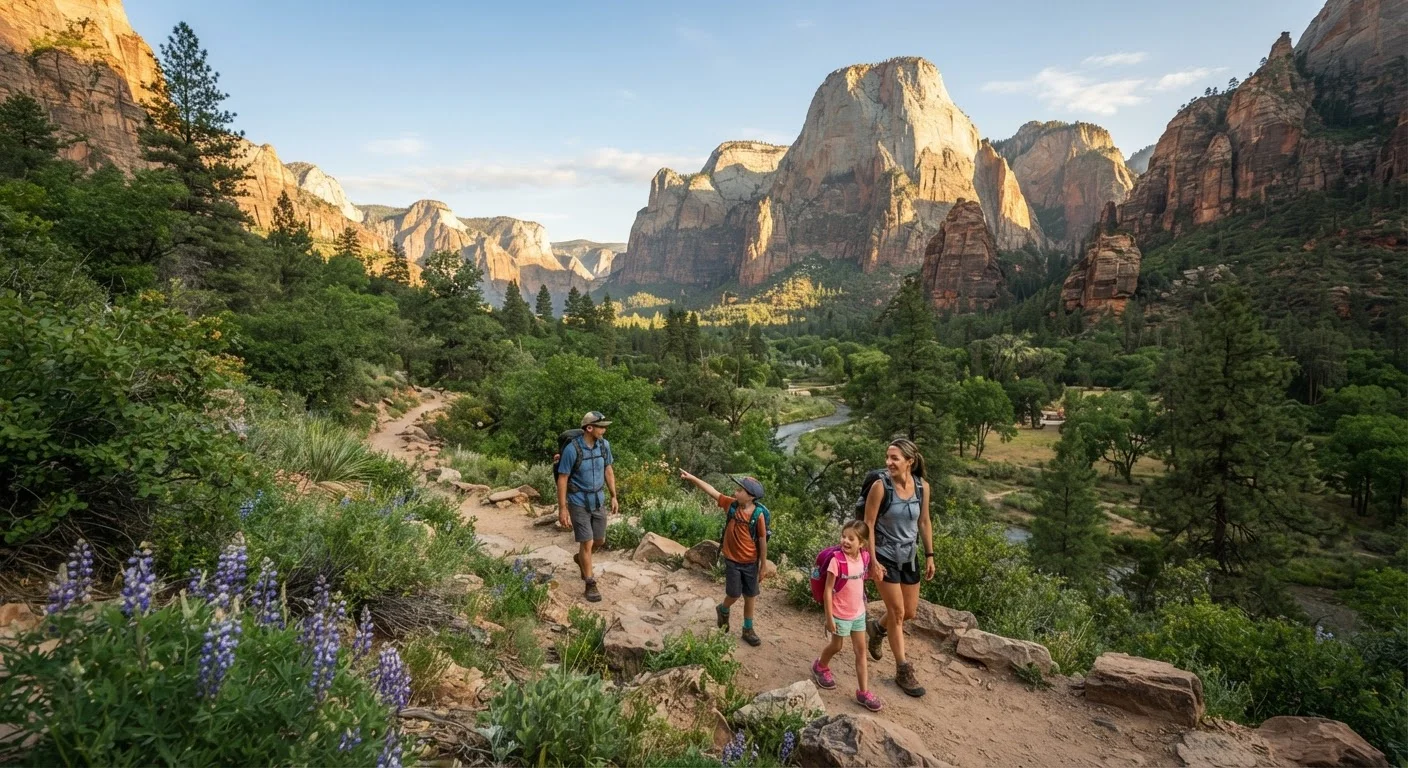
The argument for national parks isn't purely financial - it's that the dollar-per-experience ratio is difficult to match. A family hiking a canyon rim, watching bison in a meadow, or stargazing in a designated dark sky park is having an experience that requires very little money but substantial memory. Research on family travel consistently suggests that novel, shared physical experiences contribute more to lasting family connection than passive entertainment - though every family's preferences differ.
The Junior Ranger program is worth singling out. Available at most parks, it gives children a structured activity booklet tied to the specific park they're visiting. Completing it earns an official badge and a brief ceremony with a ranger. For younger kids especially, this transforms a hike into a mission - and parents tend to notice the difference in engagement.
Families traveling with multiple generations will find that most parks accommodate a wide range of physical abilities. Paved paths, accessible visitor centers, and shuttle systems in parks like Zion and Acadia mean grandparents and toddlers can participate in the same trip, even if their specific routes diverge. For more on planning trips that work across age groups, see our guide to multi-generational travel on a budget.
Planning Tactics That Keep Costs Down
Timing matters more in national parks than at most destinations. Peak summer season at high-profile parks like Yellowstone, Grand Canyon, and Great Smoky Mountains brings crowded trailheads, full campgrounds booked months out, and higher prices for nearby lodging. Visiting in May or October - shoulder season for most parks - typically means thinner crowds, cooler temperatures in high-elevation parks, and greater accommodation flexibility near park gates.
Lodging is often the largest variable in a park trip's total cost. Frontcountry campgrounds within park boundaries usually run $15-$30 per night and keep the family inside the experience rather than commuting from a distant town. Sites at popular parks should be reserved early through recreation.gov - some fill within minutes of the booking window opening. For families weighing campground versus traditional lodging tradeoffs, our camping vs. budget hotels guide covers the practical considerations in detail.
Free entrance days - typically five to six annually - are announced on nps.gov and can meaningfully reduce the cost of a one-time visit. If a family isn't planning multiple park trips, aligning a visit with a free day is a sensible move. For more ideas on structuring a low-cost family trip, the Travel Savings hub covers broader strategies across flights, lodging, and activities.
Honest Trade-Offs to Consider
National parks aren't a frictionless choice. The most popular parks have become significantly more crowded in recent years, and timed-entry reservation systems - now used at parks including Rocky Mountain, Arches, and Glacier - add a planning layer that requires advance attention. Families who prefer spontaneous travel may find this constraining.
Remote parks can also mean long drives to groceries, medical care, or reliable cell service. That's a real logistical factor, not a deterrent, but one worth accounting for with young children or travelers with health considerations.
Families who prefer more structure, urban amenities, or indoor activities may find that a national park trip requires more preparation than they want. Low-cost family experiences in major US cities offer a different but equally valid budget-travel alternative for families whose interests run toward museums, festivals, and walkable neighborhoods. And for families open to exploring closer to home, state parks often provide comparable natural scenery with fewer planning hurdles and lower overall costs.
The bottom line: for families willing to plan a few months ahead and comfortable with outdoor activity, national parks remain one of the most reliable ways to deliver a high-impact trip on a controlled budget.
Frequently Asked Questions
Entry fees vary by park, but many charge between $15 and $35 per vehicle for a 7-day pass. The America the Beautiful annual pass costs $80 and covers all NPS fee sites for one year, making it cost-effective for families visiting more than two or three parks.
Yes. The National Park Service designates several fee-free days each year, typically around national holidays and events like National Public Lands Day. Dates are published in advance on the NPS website at nps.gov.
Every Kid Outdoors is a federal program that provides fourth-grade students with a free annual pass to NPS sites, along with other federal lands. The pass covers the student and accompanying passengers in a personal vehicle. Families can obtain it through the nps.gov website.
Frontcountry campsites typically range from around $15 to $30 per night, significantly less than comparable lodging options. Sites must be reserved in advance through recreation.gov, and popular parks fill up months ahead. Flexibility on dates improves availability.
Most parks have paved paths, short loop trails, and accessible visitor centers appropriate for toddlers and young children. The Junior Ranger program is designed for kids as young as age 4 and provides structured, age-appropriate engagement throughout the visit.
State parks often have lower entry fees and less crowding, which can make them appealing. National parks, however, tend to offer more visitor infrastructure, ranger programming, and iconic landscapes. See our <a href="/travel-smart/budget-destinations/state-parks-as-a-budget-travel-alternative-to-national-parks">comparison of state parks as a budget alternative</a> for a fuller breakdown.
The content provided on our blog site traverses numerous categories, offering readers valuable and practical information. Readers can use the editorial team’s research and data to gain more insights into their topics of interest. However, they are requested not to treat the articles as conclusive. The website team cannot be held responsible for differences in data or inaccuracies found across other platforms. Please also note that the site might also miss out on various schemes and offers available that the readers may find more beneficial than the ones we cover.