

Our Verdict
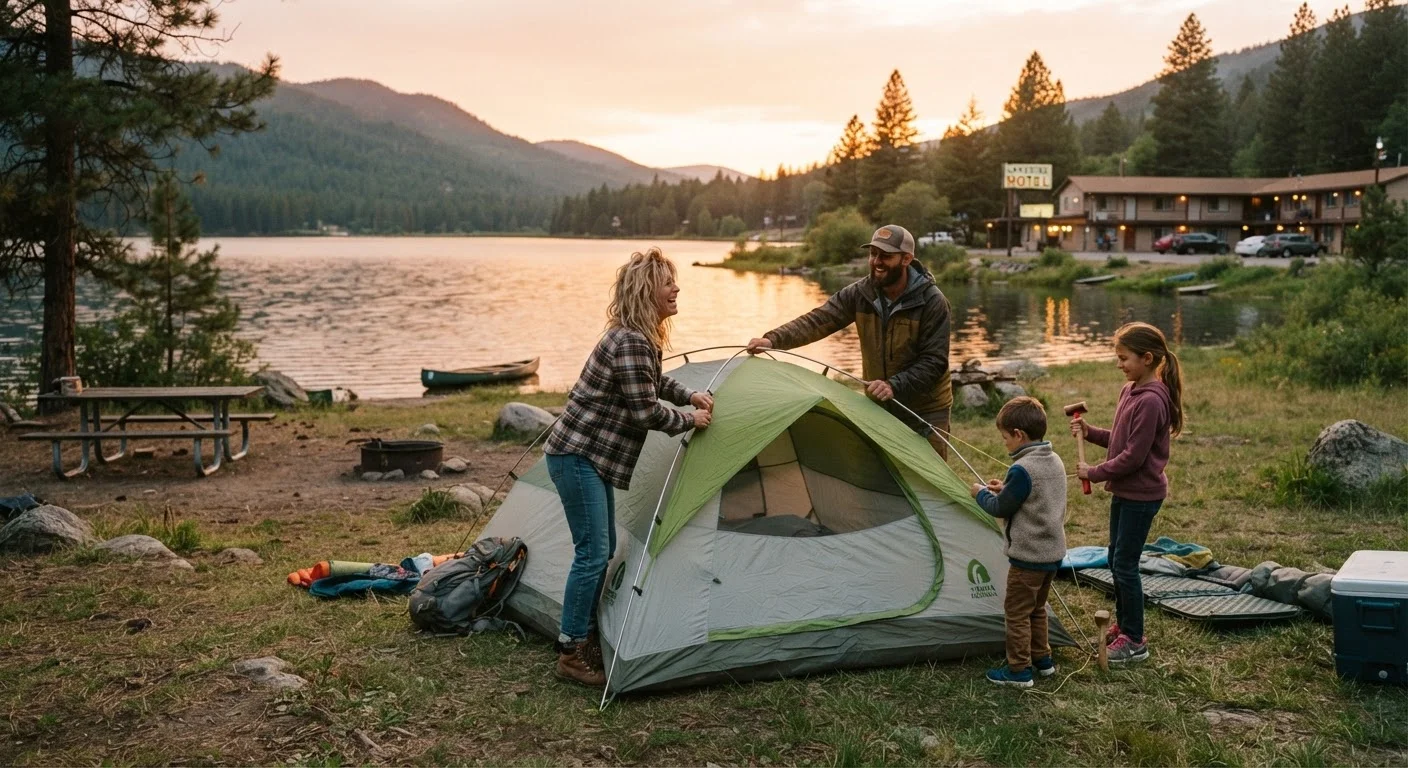
Neither camping nor budget hotels universally wins - each suits a different type of trip and family. Camping delivers more immersive outdoor experiences at a lower nightly cost, making it strong for longer trips and families who enjoy nature. Budget hotels work better when your destination isn't near campgrounds, your kids are young, or you simply want to arrive and rest without setup.
| Best for | Recommended |
|---|---|
| Families planning multi-night outdoor adventures | Camping |
| Families with toddlers or kids who need reliable sleep environments | Budget Hotels |
| Trips lasting five or more nights with a tight overall budget | Camping |
| Short urban or theme park trips where proximity matters | Budget Hotels |
The Core Cost Difference
On a pure nightly basis, camping wins by a significant margin. Most developed campgrounds in US state and national parks charge between $20 and $50 per night - and that rate covers your entire family group, not per person. Budget hotels, meanwhile, typically range from $80 to $150 per night for a room that fits four, and that's before parking fees, resort fees, or the continental breakfast that costs extra despite sounding free.
That gap compounds quickly. A five-night camping trip might run $150-$200 in site fees. The equivalent in budget hotel rooms could easily reach $500-$700 once taxes are added. For families stretching a limited travel fund, that difference can mean an extra day of travel or money freed up for activities. If you want to understand where family travel budgets tend to leak, our piece on hidden costs on family trips breaks down what to watch for at both lodging types.
The catch with camping is upfront gear. A functional tent, sleeping bags, a camp stove, and a cooler can total $300-$600 if you're starting from scratch. That investment only makes sense if your family will camp more than once or twice - but for repeat travelers, the math favors camping fairly quickly.
| Camping | Budget Hotels | |
|---|---|---|
| Typical nightly cost (family of 4) | $20-$50 per site | $80-$150 per room |
| Upfront investment required | $300-$600 in gear (if starting out) | None beyond booking deposit |
| Bathroom access | Pit toilets to flush facilities (varies) | Private in-room bathroom |
| Climate control | None (tent) or limited (hookup sites) | Reliable A/C and heat |
| Setup effort | 30-60 minutes on arrival | Check in and you're done |
| Best trip length | 3+ nights (cost advantage grows) | 1-3 nights (shorter stays) |
| Kid suitability | Better for school-age kids | Works for all ages including toddlers |
| Proximity to nature | High - often inside parks | Varies widely by location |
Comfort, Logistics, and the Reality of Traveling with Kids
Camping's appeal largely depends on the ages of your children and your family's tolerance for variables. Kids who are old enough to help set up a tent, use a pit toilet without drama, and sleep in a sleeping bag are generally fine camping. Families with toddlers or infants face a more complicated calculus - nap schedules, temperature regulation, and middle-of-the-night bathroom trips are harder to manage under canvas.
Budget hotels solve the comfort baseline reliably. Climate control, a real bathroom, and a bed with a pillow are things most adults take for granted until they don't have them. If your family is already managing a long drive or flight to reach your destination, the last thing some parents want is to then build a campsite before they can sit down.
That said, camping at a well-developed campground - one with flush toilets, potable water, and electric hookups - narrows that comfort gap considerably. These sites exist in abundance across the US, particularly in state parks, which often offer comparable scenery at lower cost than their federal counterparts. If structured camping appeals to your family, the camping vs. holiday parks comparison explores how different levels of campground development affect comfort and price.
Matching Lodging to Your Destination
Your destination shapes this choice more than almost anything else. If your trip centers on a national park, state forest, or coastal recreation area, camping is often the most practical and affordable option - and in some remote areas, the only affordable one. Hotels near popular parks can be pricier than the parks themselves, particularly during peak season.
Urban destinations and theme park areas shift the equation. Campgrounds near major cities or major attractions are rarer and can be inconveniently located, meaning more driving. In those cases, a budget hotel close to your activities may save time and gas even if the nightly rate is higher. For a direct comparison of destination-type trade-offs, see how coastal towns stack up against theme park resorts for budget-focused families.
If your family loves national parks as a travel strategy, camping inside or adjacent to the park is generally the most cost-effective way to stay close to the scenery without a long daily commute from a distant hotel.
Making the Right Call for Your Family
A few practical questions help clarify the decision. First, how long is your trip? The longer the stay, the more camping's lower nightly rate compounds into real savings. Second, do you already own camping gear, or would you need to buy or rent it? Renting equipment from outfitters is an option many families overlook - it reduces the upfront cost without committing to gear storage. Third, what does your destination actually offer in terms of campsite quality?
Budget hotels make the most sense for shorter trips, destination-heavy itineraries where you'll be out most of the day, or when family members have health or mobility considerations that make outdoor sleeping impractical. For longer outdoor-focused trips, camping's cost advantage is hard to argue with - provided your family is on board.
For families still exploring which lodging format fits best across different trip types, the vacation rentals vs. hotel rooms comparison adds another option worth considering, particularly for stays of a week or more. More general strategies for cutting travel costs are covered in our Travel Savings hub.
The content provided on our blog site traverses numerous categories, offering readers valuable and practical information. Readers can use the editorial team’s research and data to gain more insights into their topics of interest. However, they are requested not to treat the articles as conclusive. The website team cannot be held responsible for differences in data or inaccuracies found across other platforms. Please also note that the site might also miss out on various schemes and offers available that the readers may find more beneficial than the ones we cover.