

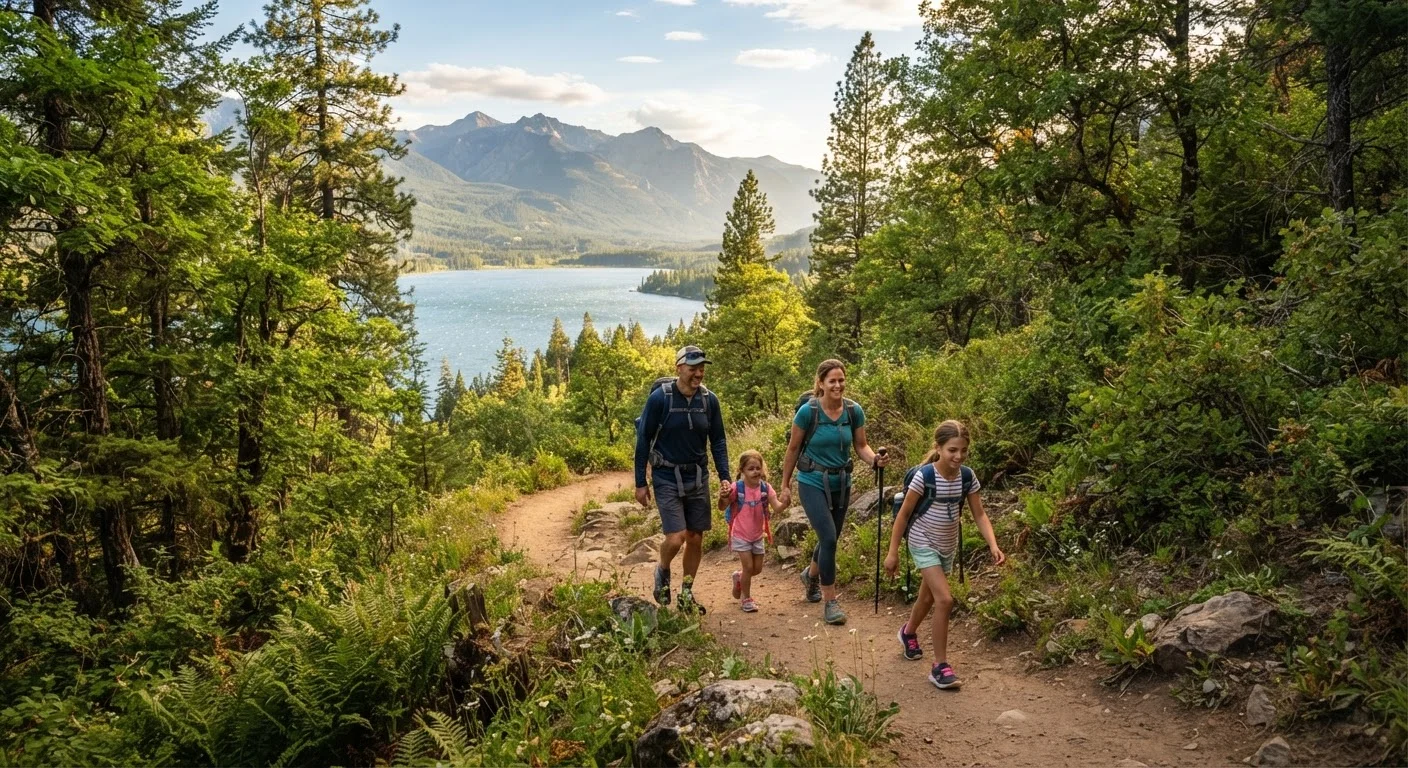
Why State Parks Deserve a Second Look
For budget-conscious families, national parks carry obvious appeal - sweeping landscapes, ranger programs, and name recognition. But that recognition comes with real costs: entry fees commonly run $35 per vehicle, popular campgrounds book out months in advance, and peak-season crowds can undercut the experience. State parks operate on a different scale. Day-use fees frequently fall between $5 and $15 per vehicle, annual passes often cost less than a single national park entry, and reservation windows are typically shorter - making spontaneous trips far more realistic.
That cost gap matters across an entire trip. A family of four visiting multiple sites over a week can realistically save $100 or more in entry and camping fees alone by routing through state parks instead of federal ones. For more on combining these savings with free local activities, see our guide on free and low-cost family activities at popular destinations.
What State Parks Actually Offer
The assumption that state parks are a lesser substitute doesn't hold up geographically. Several deliver scenery and ecological variety that rivals anything federally managed. A few worth knowing about by region:
- Northeast: Baxter State Park (Maine) encompasses over 200,000 acres, including Maine's highest peak, Katahdin - the northern terminus of the Appalachian Trail. Day fees and camping rates run significantly below comparable federal parks.
- Southeast: Cumberland Island National Seashore aside, Georgia's Cloudland Canyon State Park offers dramatic sandstone gorges, waterfalls, and tent camping for families, typically under $30 a night.
- Midwest: Illinois Beach State Park and Indiana Dunes State Park (distinct from the national park next door) both offer lakefront access at accessible prices.
- West: Anza-Borrego Desert State Park in California is the largest state park in the contiguous US - over 600,000 acres - with free primitive camping available throughout most of it.
- Mountain West: Kodachrome Basin State Park in Utah sits close to Bryce Canyon but charges a fraction of the entry fee, with its own striking sandstone spires and reliable campsite availability.
These aren't consolation prizes. They're legitimate destinations that happen to cost less. If you're weighing overnight options, our comparison of camping vs. holiday parks for families covers the comfort-versus-cost trade-offs in detail.
Practical Planning Tips
State park systems vary considerably in how they're managed, so a few planning habits help avoid surprises:
- Buy the annual pass early. Most states sell a park pass for $50-$80 that covers day-use entry at all state parks for a year. If you plan even two or three visits, the math usually works in your favour.
- Check reservation windows. Unlike some national park campgrounds that open months ahead, state parks often open reservations 3-6 months out. Some accept walk-ins - useful for flexible families.
- Verify amenities before booking. State park campgrounds range from full hook-ups with bathhouses to primitive sites with no water. Matching site type to your gear and comfort level matters. Our article on camping vs. budget hotels can help you decide which setup suits your family.
- Confirm current fees and rules. Hours, fees, and fire regulations change seasonally. Always verify directly with the park or your state's official parks website before travelling.
State parks are one piece of a broader budget travel strategy. For a full picture of how national parks compare on value, see national parks as a family travel strategy. And if your family is choosing between different trip types entirely, the breakdown on coastal towns vs. theme park resorts is worth reading before you commit.
More travel savings strategies are available through the Travel Savings hub.
The content provided on our blog site traverses numerous categories, offering readers valuable and practical information. Readers can use the editorial team’s research and data to gain more insights into their topics of interest. However, they are requested not to treat the articles as conclusive. The website team cannot be held responsible for differences in data or inaccuracies found across other platforms. Please also note that the site might also miss out on various schemes and offers available that the readers may find more beneficial than the ones we cover.