

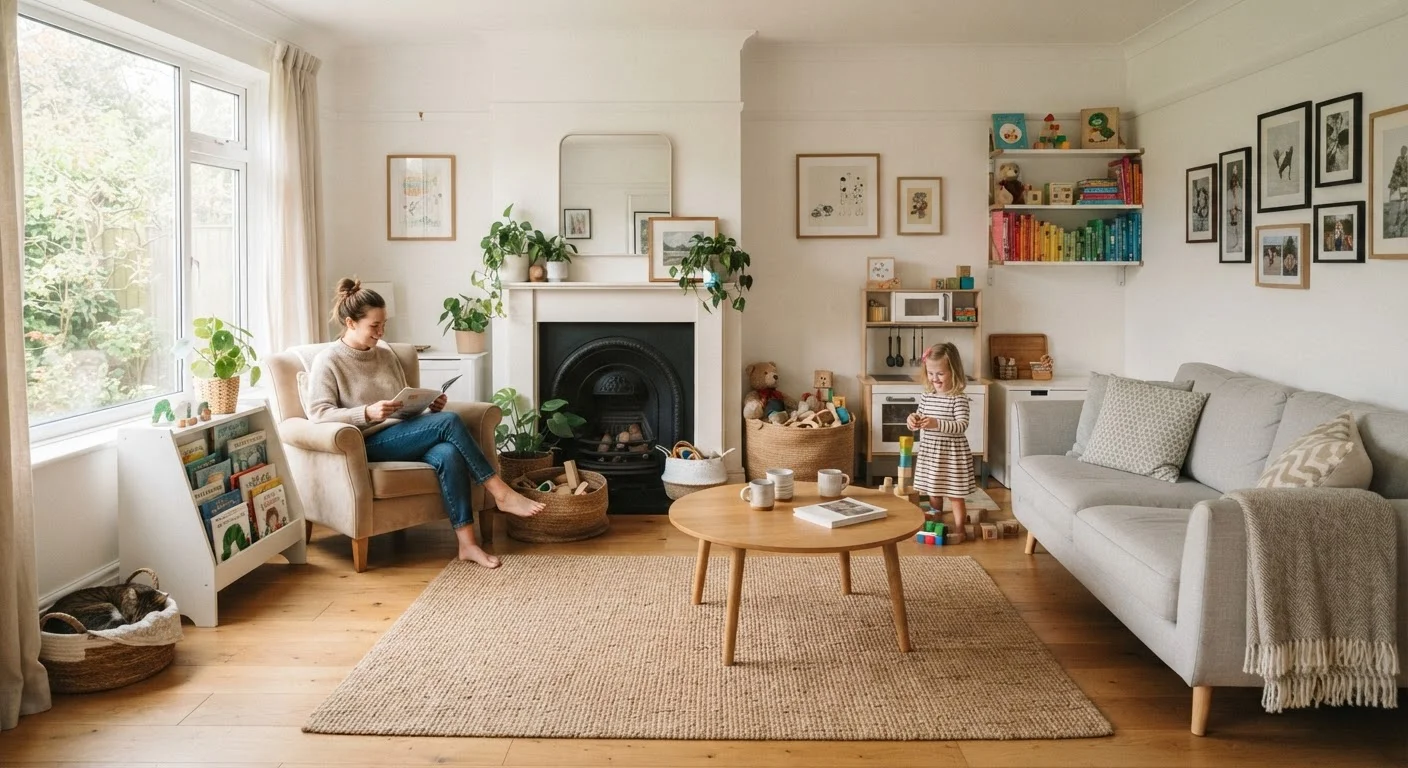
Why Most Tidying Strategies Stop Working
Most families tidy reactively - picking up what's visible and stuffing it somewhere convenient. The result is clutter that migrates constantly, surfaces that clear only to refill, and a lot of time spent searching for things. The problem usually isn't effort; it's the absence of a clear system for where things live.
Without defined homes for activities and the items that support them, every family member makes their own judgment call about where to put something down. Those individual decisions pile up into collective disorder. The Zone Method addresses this at the root by removing the guesswork entirely.
If you're just getting started and the overall clutter feels overwhelming, it helps to read an introduction to home organization before diving into zone design.
How to Identify Your Home's Natural Zones
Begin by observing rather than organizing. For a few days, notice where your family actually does things - not where you wish they did them. Where does homework really happen? Where do shoes actually land? Where is mail placed before it's dealt with? These honest observations reveal your home's natural activity patterns.
Once you have a picture of real behavior, group those activities into categories. Common zones for families include:
- Entry and exit: shoes, bags, keys, outerwear, and mail
- Meals and food prep: the kitchen and adjacent dining area
- Schoolwork or home office: a desk, table, or counter with supplies nearby
- Play or creative projects: toys, art supplies, and building materials
- Relaxation and media: seating, books, remotes, and blankets
- Laundry and cleaning: products, baskets, and folding space
Notice that zones follow activities, not just rooms. Your kitchen may contain both a meal-prep zone and a homework zone if that's where kids genuinely do their work. Fighting that reality usually fails; designing around it usually succeeds.
Start With Your Most Chaotic Spot
Rather than trying to zone your entire home at once, pick the single area that causes the most daily friction - often the entryway, kitchen counter, or living room floor. Define and set up that one zone completely before moving to the next. A single working zone builds confidence and demonstrates the method quickly.
For the entryway specifically - one of the highest-traffic zones in any home - see practical strategies for managing entry chaos.
Setting Up Each Zone Without Spending Money
A zone has three components: a location, a boundary, and storage for the items used there. None of these require new purchases to establish.
Location is wherever the activity naturally happens. Confirm or adjust this based on your observations, not an idealized floor plan.
Boundary makes the zone visible and distinct. A rug edge, the back of a couch, a shelf unit, or even a line of masking tape on a shelf can signal where one zone ends and another begins. Physical cues help every family member - especially younger children - recognize the zone at a glance.
Storage keeps zone-specific items in that zone. Use boxes, baskets, or bins you already own. A zone works when everything needed for that activity is within arm's reach of where the activity happens, and nothing unrelated lives there.
When a zone consistently overflows, that's useful feedback: either the zone needs more storage capacity, or it's holding items that belong somewhere else. Resist the urge to add more containers before diagnosing which problem you're solving.
If wall space and vertical surfaces are underused, tapping vertical storage potential can extend a zone upward without consuming floor space.
Making Zones Work for the Whole Family
A zone system only holds if every household member uses it. The most common reason family organization systems collapse is that they were designed by one person and imposed on everyone else.
Include your family in the setup conversation. Explain the purpose of each zone in plain terms - "This is where all school stuff lives, so we always know where to find it" - and ask for input. Children are more likely to return items to a zone they helped name or decorate.
Keep the return step simple enough for the least organized person in your household to do it independently. If putting something away requires three decisions or moving through two rooms, it won't happen consistently. The easier the return, the more reliably the zone stays functional.
For households where different family members have genuinely different habits, strategies for organizing around differing preferences can help bridge the gap without conflict.
40%
Of household items rarely or never used
Research from professional organizing associations has consistently found that a large share of what families store is seldom accessed, contributing to zone overflow and visual clutter.
30 min
Average time families spend searching for misplaced items weekly
Surveys on household time use suggest families lose meaningful time each week looking for items that lack a consistent home - a problem zone-based systems are designed to eliminate.
Maintaining Zones Over Time
Zones need occasional maintenance, not constant management. The most effective habit is a short daily reset - five to ten minutes where everyone returns items to their zone before a fixed point, such as after dinner or before bed. This prevents small drift from compounding into full disorder.
Every few months, review whether each zone still reflects real behavior. A schoolwork zone that was once at the kitchen table may need to move if a child now prefers their bedroom desk. Updating zones proactively prevents the frustration of a system that no longer fits family life.
Pair the Zone Method with household agreements about what enters the home. Simple rules like the one-in, one-out approach reduce the volume of items competing for zone space, making each zone easier to maintain long-term.
Frequently Asked Questions
There is no fixed number. Most families find that identifying five to ten activity-based zones covers the main categories of daily life, such as meals, schoolwork, play, and relaxation. Start with the areas that feel most chaotic and build from there.
Yes - zones are especially useful in small spaces because they prevent multipurpose rooms from becoming catch-all dumping grounds. A single room can hold two or three clearly defined zones, each with its own storage and purpose, without requiring extra square footage.
Involve children in setting up zones so they feel ownership. Use simple visual cues like labeled bins, colored tape on a shelf edge, or a designated basket for their zone. Keep the return step simple enough that a child can do it independently.
Not exactly. Decluttering reduces the number of items you own, while the Zone Method organizes what you keep. The two work well together - zones are easier to maintain when they hold only the items genuinely used in that activity.
Zones are meant to be revised. Set a reminder every few months to review whether each zone still reflects how your family actually uses that space. Shifting a zone is faster than reorganizing a whole room from scratch.
No. The Zone Method is a thinking framework first. You can begin by simply deciding which activities belong where and moving existing items accordingly. Storage products may help later, but they are not required to start.
The content provided on our blog site traverses numerous categories, offering readers valuable and practical information. Readers can use the editorial team’s research and data to gain more insights into their topics of interest. However, they are requested not to treat the articles as conclusive. The website team cannot be held responsible for differences in data or inaccuracies found across other platforms. Please also note that the site might also miss out on various schemes and offers available that the readers may find more beneficial than the ones we cover.