

Why Paper Clutter Is a Different Kind of Problem
Unlike toys or clothes, paper arrives uninvited - every single day. Mail slots, school backpacks, grocery bags, and coat pockets all funnel documents into your home faster than most families realize. Because individual sheets seem small and temporary, paper rarely gets the same attention as physical clutter. It stacks, migrates, and reproduces.
The root issue is usually a missing decision point: paper lands somewhere and stays there because no one has made a clear rule about where it belongs. Before reaching for folders and bins, it helps to understand the distinction between decluttering and organizing. As our guide on decluttering vs. organizing explains, organizing paper you don't need to keep is work that will undo itself within weeks. Start by reducing volume, then create homes for what remains.
The room-by-room approach below treats each space according to the type of paper it attracts and the decisions required there.
The Entryway: Stop Paper Before It Spreads
The front door is where paper control either begins or collapses. Mail that makes it past the entryway without a decision tends to settle permanently on the nearest flat surface. A small, deliberate setup at this threshold changes everything.
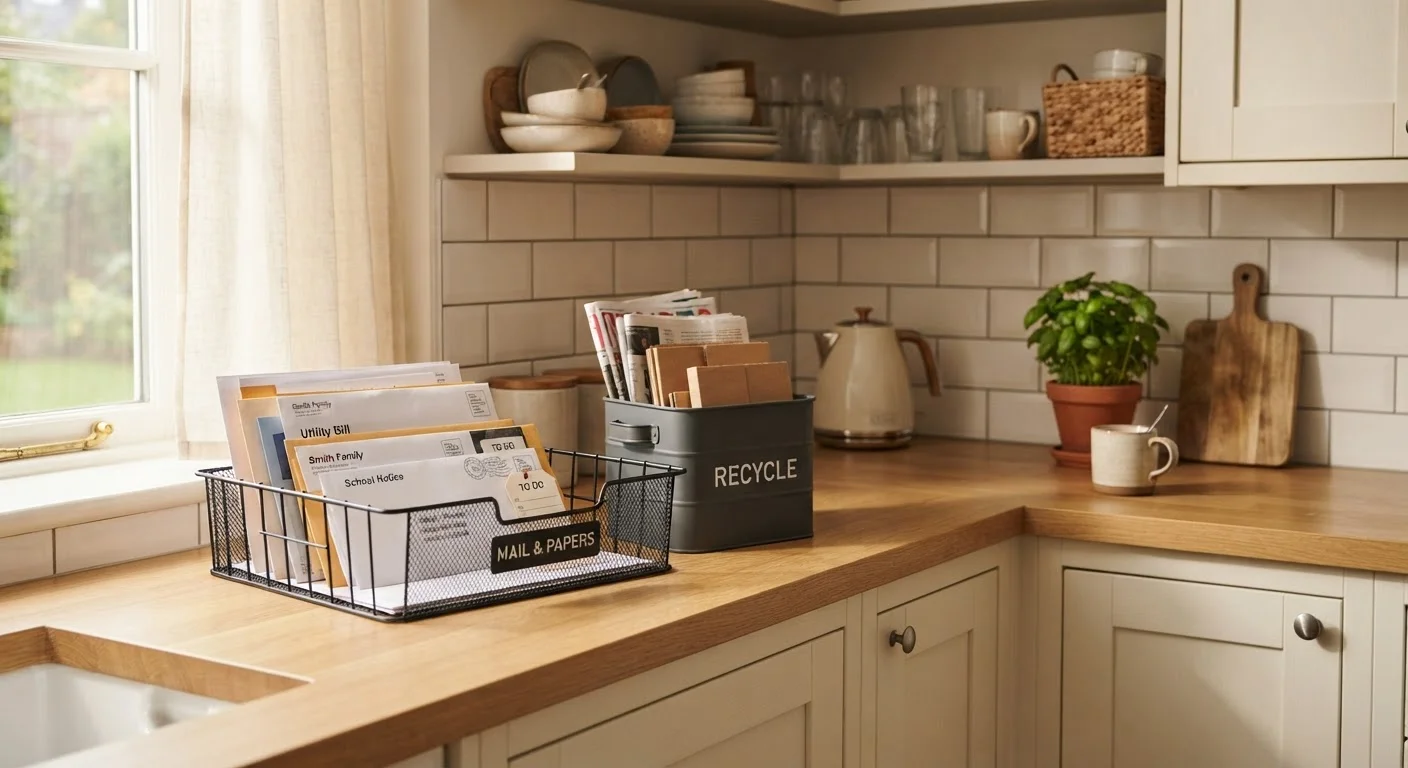
Set up a simple three-slot system - or three labeled trays stacked vertically - right where mail enters the house. Label them: Act (bills to pay, RSVPs to send, forms to complete), File (documents to keep long-term), and Recycle. Junk mail and envelopes should be separated and recycled immediately, before anything is set down. This single habit eliminates the largest category of household paper at the source.
Sort mail standing over the recycling bin - before you set anything down. If you never give junk mail a resting place, it never becomes clutter.
The moment paper is set on a surface, it tends to stay there. Making the recycling bin part of the sorting action removes the default of 'I'll deal with it later.'
Opt out of catalogs and marketing mail at the source using the DMAchoice mail preference service maintained by the Data & Marketing Association. Reducing inbound volume is more effective than managing it after it arrives.
Reducing paper at the source is the highest-leverage action in any paper management plan - less incoming paper means less sorting, filing, and decision fatigue for the whole family.
If wall space allows, a small wall-mounted pocket organizer keeps trays off surfaces entirely and makes the system visible to every family member who walks in the door.
The Kitchen: Taming the Command Center
The kitchen is where paper goes to disappear into piles. Coupons, takeout menus, sticky notes, school calendars, and permission slips all gravitate here because it's where the family spends time together. The goal isn't to eliminate paper from the kitchen - it's to give it a defined, small footprint.
Choose one spot - a single wall pocket, a clipboard, or a magnetic pad on the refrigerator - for active papers only: things that need attention this week. Everything else leaves the kitchen entirely. A shared family calendar (paper or digital) can absorb most of what ends up as loose notices. When a notice comes in, transfer the relevant date immediately and recycle the paper.
For families managing school logistics alongside household admin, the systems described in our article on organizing shared spaces for different family habits offer practical ways to build a setup everyone will actually use.
Kids' Rooms and Backpacks: School Papers Under Control
School-age children generate a remarkable volume of paper: worksheets, artwork, newsletters, permission slips, and progress reports arrive weekly. Without a clear system, these pile up on floors, desks, and kitchen counters indiscriminately.
Give each child a single designated folder in their backpack - often called a "communication folder" - with two sides: Needs Parent Attention and For the Child to Keep. This one tool, when used consistently, channels school paper to exactly where decisions get made.
At home, each child benefits from a simple desktop inbox where school papers land when the backpack is unpacked. Pair this with a brief daily habit of reviewing it together. For building the wider organizational habits that support this, see our guide on organization habits that help children manage schoolwork.
For artwork and keepsake papers, a single accordion folder or a magazine box per school year - labeled and stored - prevents sentimental clutter from taking over. Involve the child in choosing what to keep; this builds decision-making skills alongside tidiness.
The Home Office or Filing Area: Building a Simple System
Not every home has a dedicated office, but every home needs at least a small filing zone - even one drawer or a portable file box. This is where the "File" tray from your entryway eventually empties.
A functional filing system for most families requires only a handful of categories: Financial (tax returns, pay stubs, bank statements), Legal & Identity (birth certificates, passports, insurance policies), Medical (vaccination records, major diagnoses, EOBs), Home (warranty cards, appliance manuals, repair records), and Current Year Active (documents you're actively referencing). General guidance suggests keeping tax-related documents for several years and permanent records (legal, identity) indefinitely - but retention needs vary by situation, so consult official sources such as the IRS website for specifics applicable to your circumstances.
Going paperless wherever possible cuts incoming volume dramatically. Opting for electronic statements, e-notices from schools, and digital receipts removes paper from the system before it enters your home. This is the highest-leverage change most families can make.
Maintaining the System: Habits That Stick
Even a well-designed paper system collapses without a regular reset. A weekly ten-minute paper session - not a monthly marathon - is what keeps backlogs from forming. Pick a consistent time: Sunday evening, or whenever the week's mail and school papers have accumulated. Empty the Act tray, file what belongs in File, and recycle the rest.
Preventing paper clutter from returning is ultimately about household agreements, not just physical systems. If one person sorts while others pile, the system doesn't hold. The principles in our article on household rules that keep clutter from returning apply directly here: shared, simple rules outlast individual effort every time.
If children's paper and bedroom clutter remain a recurring challenge even after implementing these strategies, the cycle of accumulation is worth examining more closely. Our piece on why kids' bedroom clutter keeps coming back addresses why tidying alone often fails and what structural changes actually hold up.
Paper clutter is manageable, but it requires a decision framework, not just more storage. Give paper a place to land, a place to be reviewed, and a place to go - and the piles stop forming on their own.
The content provided on our blog site traverses numerous categories, offering readers valuable and practical information. Readers can use the editorial team’s research and data to gain more insights into their topics of interest. However, they are requested not to treat the articles as conclusive. The website team cannot be held responsible for differences in data or inaccuracies found across other platforms. Please also note that the site might also miss out on various schemes and offers available that the readers may find more beneficial than the ones we cover.