

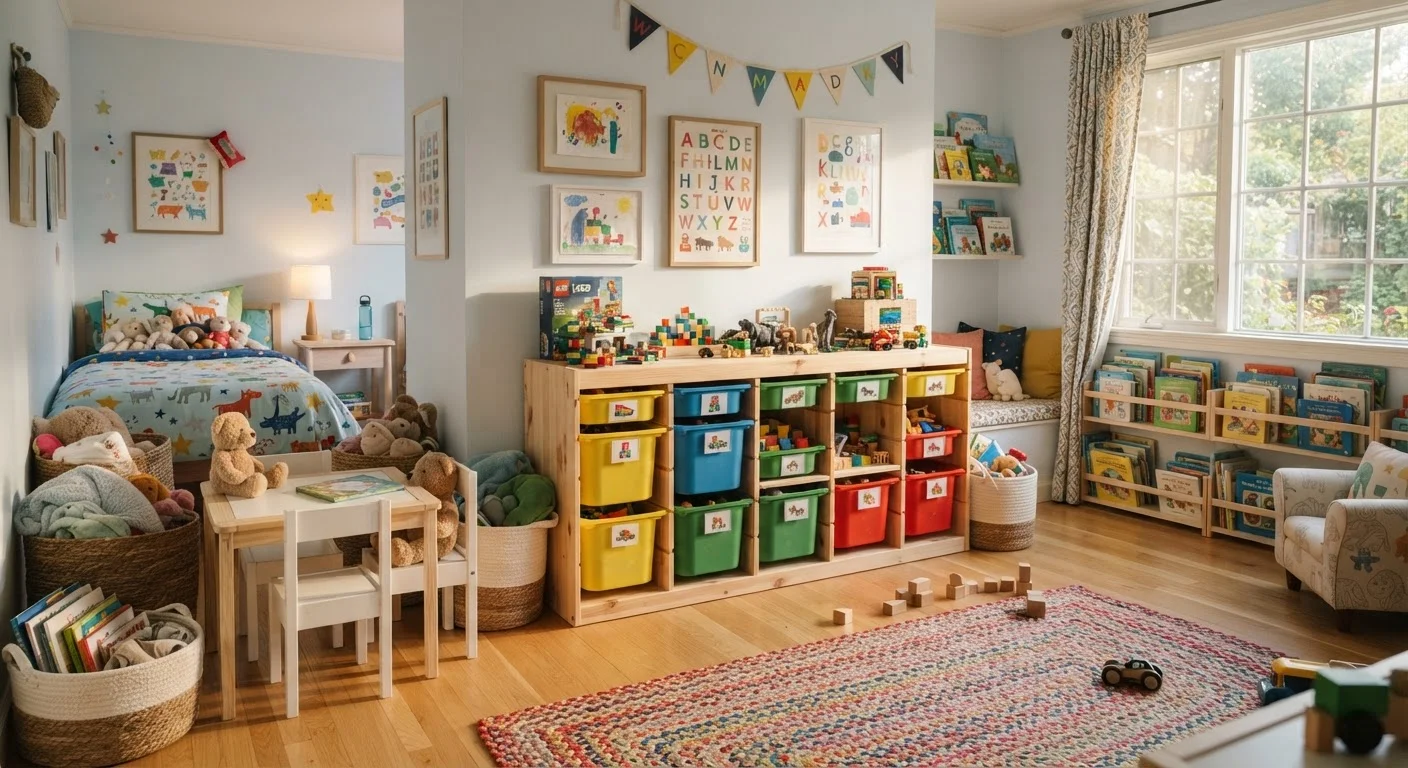
Why Kids' Rooms Are Clutter Magnets
Children's bedrooms collect clutter faster than almost any other room in the house - and the problem rarely fixes itself after a single tidy session. Understanding why the mess keeps returning is the first step toward breaking the cycle for good.
Part of the explanation is developmental. Young children genuinely haven't built the mental habits needed to automatically put things back where they belong. But the bigger culprit is usually the system (or lack of one) adults put in place. As our explainer on what clutter actually is makes clear, mess is rarely just about having too many things - it's about things not having a clear, usable home.
Below are the most common mistakes families make when tackling kids' bedroom clutter, along with practical ways to avoid them.
Organizing before decluttering, so storage fills right back up.
Why it happens: Parents want a quick visual win, so they rush to bins and baskets before reducing the actual volume of items in the room.
Using storage systems that are too complicated for kids to maintain on their own.
Why it happens: Adults design the system with adult logic - labeled sub-categories, lids that need two hands, or shelves that are too high to reach independently.
Relying on periodic big clean-ups instead of small daily habits.
Why it happens: Tidying feels like a chore to batch and get over with, so families wait until the room is overwhelming before addressing it.
Not involving the child in setting up or maintaining the system.
Why it happens: It's faster for an adult to organize the room alone, and children's input can feel unpredictable or slow the process down.
Keeping every item that enters the room without a regular review.
Why it happens: Toys, books, and craft supplies accumulate through birthdays, holidays, and everyday purchases with no corresponding outflow.
Building Systems That Actually Last
One-time clean-outs feel satisfying, but the rooms that stay tidy are the ones backed by a repeatable routine. Think in terms of daily resets - a 10-minute end-of-day tidy that returns items to their designated spots - rather than weekend overhauls that undo themselves by Tuesday.
Avoid Storing Items Kids Have Outgrown
Holding onto outgrown toys or clothes 'just in case' is one of the fastest ways to overwhelm a storage system. Once a bin is overfull, children stop using it - everything gets dumped on the floor instead. Set a simple rule: if it hasn't been touched in three months and no longer fits the child's age or size, it's a candidate for donation or passing along to another family.
It also helps to think beyond the bedroom itself. Clutter migrates, and organizing shared spaces with different family habits in mind is just as important as what happens behind a bedroom door. When the whole household operates on compatible systems, items are less likely to drift and pile up in the wrong rooms.
Finally, guard against the most common sequencing error: organizing before decluttering. Buying bins and baskets for a room that still holds too many items just moves the problem around. The difference between decluttering and organizing matters - and the order in which you do each one matters even more. Once the excess is gone, simple household agreements like a one-in, one-out rule can prevent the cycle from starting again.
The content provided on our blog site traverses numerous categories, offering readers valuable and practical information. Readers can use the editorial team’s research and data to gain more insights into their topics of interest. However, they are requested not to treat the articles as conclusive. The website team cannot be held responsible for differences in data or inaccuracies found across other platforms. Please also note that the site might also miss out on various schemes and offers available that the readers may find more beneficial than the ones we cover.