

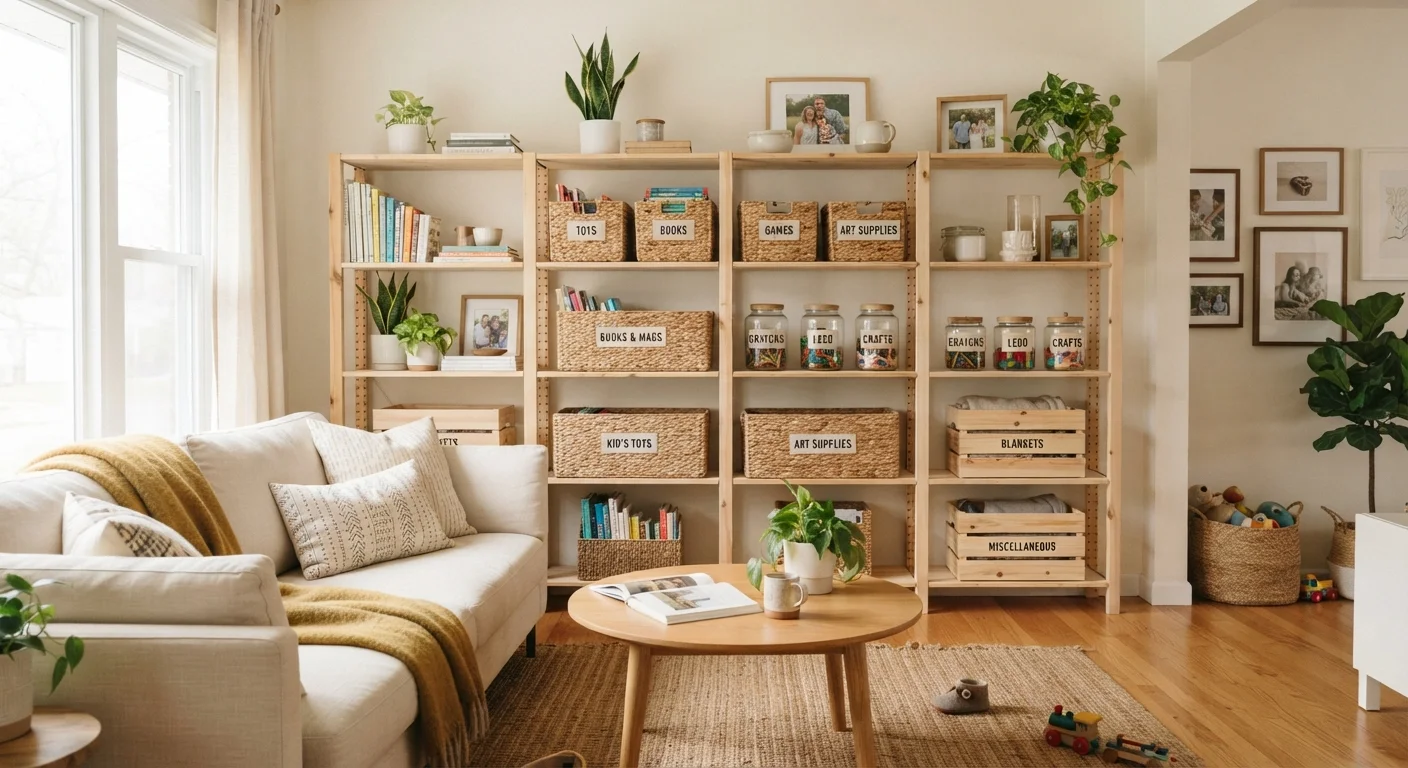
Why Organization Myths Cost Families Real Money
Walk through any home goods store and the message is clear: getting organized requires an investment. Matching bins, labeled baskets, drawer dividers - the implication is that without them, your home will stay chaotic. That message sells products, but it doesn't reflect how organization actually works in real family homes.
Many families spend time and money chasing an aesthetic they've seen online, only to find their spaces revert to disorder within weeks. The problem usually isn't a lack of willpower or the wrong color of storage bin - it's that common organizing advice is built on myths that don't hold up under everyday family life.
Understanding which beliefs are fiction - and what actually works - can save families both frustration and real dollars. For a deeper look at how the sequence of organizing versus decluttering matters, see our guide on decluttering vs. organizing.
Myth
You need matching containers and a cohesive aesthetic for your home to be truly organized.
Fact
Visual uniformity is a design preference, not a functional requirement. Consistent habits and clear systems matter far more than matching labels.
The popularity of color-coordinated storage on social media has made matching bins feel like a prerequisite for organization. In practice, a clearly designated spot for every item - regardless of what it looks like - is what keeps spaces functional. Mismatched containers with clear purposes outperform beautiful bins with no system behind them. Families on a tight budget can repurpose what they already own: shoeboxes, yogurt containers, and gift bags all work perfectly well as dividers and holders.
Myth
Decluttering is a one-time weekend project - once done, you're set.
Fact
Decluttering is an ongoing habit. New items enter the home constantly, so regular small purges are more effective than rare large ones.
The appeal of the "big weekend sort" is understandable, but families accumulate new belongings continuously through purchases, gifts, and hand-me-downs. A single intensive session can feel satisfying, but without regular maintenance - even just 10-15 minutes weekly - clutter tends to return within months. Building small, consistent habits (like a quick shelf check before a grocery run) is more sustainable than relying on an annual overhaul.
Myth
You should buy storage solutions first, then organize around them.
Fact
Purchasing storage before decluttering often means buying containers for items you'd have discarded anyway - a direct waste of money.
This is one of the costliest organizing mistakes families make. Without knowing how much you actually need to store - and what shape or size those items are - any storage purchase is essentially a guess. The practical sequence is: sort and remove what you don't need first, then measure what remains, then find appropriately sized containers. This approach reduces purchases, avoids misfit storage, and often reveals you need far less than expected.
Myth
A professional organizer is necessary to achieve lasting results.
Fact
Professional organizers offer valuable expertise, but lasting organization depends on household habits - which families can build themselves.
Hiring a professional organizer can be genuinely helpful for particularly complex situations, like downsizing or a home office setup. However, no outside expert can maintain a system that the family hasn't adopted as their own. The most effective organizing approaches are those the people living in the space actually understand and follow daily. Many families achieve lasting results by starting small - tackling one drawer or one shelf - and building from there rather than attempting a whole-home transformation.
Myth
More storage space means a more organized home.
Fact
Additional storage often encourages accumulation rather than solving disorganization. The real issue is usually volume of belongings, not a shortage of space.
Adding shelving, renting a storage unit, or converting a spare room into storage can feel productive, but these measures frequently delay the harder decision: reducing what you own. When families address the volume of belongings first, they often discover their existing space is adequate. Storage additions can be useful, but they work best after, not instead of, meaningful decluttering.
Building Systems That Stick for Every Family Member
Even after separating myth from fact, families often stumble because their systems are designed for one tidy person, not the whole household. An elaborate labeling scheme that only one parent understands will fail every time. Organization that works long-term is simple enough for kids to follow, flexible enough for different habits, and forgiving enough to survive a busy week.
80%
Of clutter is from disorganization, not lack of space
Home organization research commonly cites that the majority of household clutter stems from poor systems rather than insufficient storage capacity.
40%
Of housework time attributed to clutter-related searching
Studies on household time use suggest a significant share of domestic effort goes toward locating misplaced items rather than actual cleaning or maintenance.
Start by identifying where things consistently land - not where you wish they'd go. If backpacks always end up by the front door, that's where hooks belong. Working with natural tendencies rather than against them dramatically reduces the effort needed to maintain order. Our article on organizing shared spaces for different family habits explores this in practical detail.
On a limited budget, repurposed containers - shoeboxes, glass jars, cardboard dividers - are often just as effective as dedicated storage products. The low-cost organizing approaches compared article walks through specific options. Avoiding the myth that expensive equals effective also applies beyond the home - the same critical thinking helps when evaluating grocery budgeting myths that drain household finances.
Don't Buy Storage Before You Declutter
Purchasing bins, baskets, or shelving units before sorting through your belongings is the single most common organizing mistake that wastes family money. You cannot know what storage you need until you know what you're keeping. Declutter first, measure what remains, then - and only then - consider what storage is genuinely needed.
The content provided on our blog site traverses numerous categories, offering readers valuable and practical information. Readers can use the editorial team’s research and data to gain more insights into their topics of interest. However, they are requested not to treat the articles as conclusive. The website team cannot be held responsible for differences in data or inaccuracies found across other platforms. Please also note that the site might also miss out on various schemes and offers available that the readers may find more beneficial than the ones we cover.