

Start here
Why Meal Planning Is Worth Your Time
Next
Building Your First Weekly Template
Then
Shopping Smarter Without Spending More
Finally
Keeping It Flexible and Realistic
Why Meal Planning Is Worth Your Time
Meal planning has a reputation for being complicated - color-coded binders, elaborate spreadsheets, costly subscription apps. In reality, the core idea is simple: decide what your family will eat before you're standing hungry in front of an open refrigerator. That small shift in timing is what makes the difference.
Research consistently links structured meal planning to lower grocery spending, reduced food waste, and healthier eating patterns for families. When you know what's coming, you buy what you need, use what you buy, and rely less on expensive convenience foods or last-minute takeout. For families managing a tight budget, those savings add up quickly.
If you're also thinking about how your household manages money more broadly, our family budgeting guide for beginners covers how to build your first household budget alongside your meal plan.
Meal template
A loose weekly framework that assigns a food category (like "bean dish" or "pasta night") to each day, rather than a specific fixed recipe, so you have structure without rigidity.
Pantry staples
Shelf-stable, versatile ingredients - such as canned beans, oats, rice, and canned tomatoes - that form the backbone of many budget-friendly meals and reduce last-minute shopping trips.
Food waste
Edible food that is purchased but not consumed, either because it spoils or is discarded. Meal planning helps reduce food waste by matching purchases more closely to what a family will actually eat.
Batch cooking
Preparing larger quantities of food in a single cooking session so that meals or components are ready to use across multiple days, saving time and effort during busy weeknights.
Seasonal produce
Fruits and vegetables that are naturally harvested during a particular time of year. Buying in-season typically means lower prices and better flavor compared to out-of-season options.
Building Your First Weekly Template
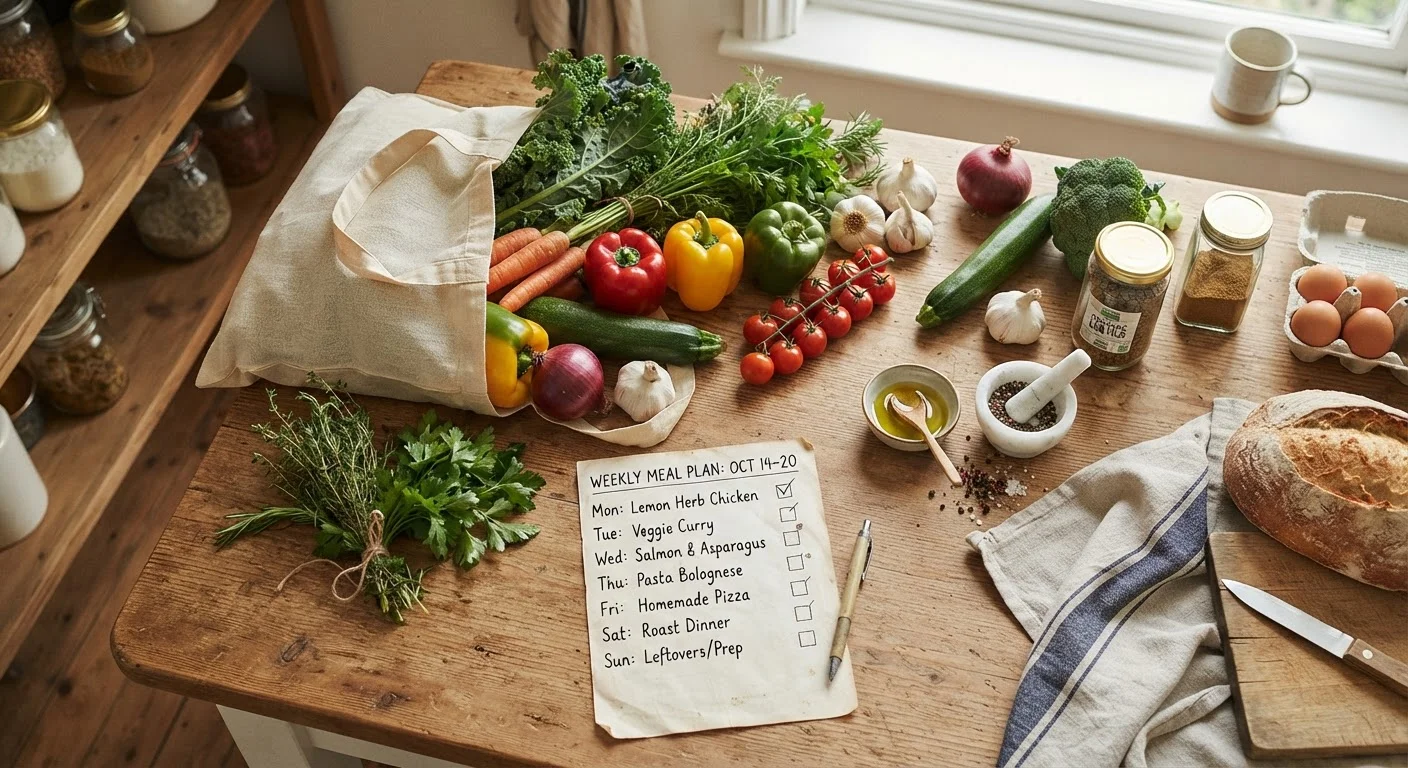
Rather than planning every meal from scratch each week, start with a loose weekly template - a structure that assigns a general category to each night rather than a fixed recipe.
- Monday: Bean or lentil dish (budget-friendly protein)
- Tuesday: Taco or wrap night (flexible with whatever protein or vegetables are on hand)
- Wednesday: Pasta or grain bowl
- Thursday: Leftovers or a simple soup
- Friday: Eggs or breakfast-for-dinner
- Weekend: One slightly more involved meal, one easy fallback
This structure isn't a rigid schedule - it's a decision-making framework. On a given week, "pasta night" might be spaghetti; the next week it might be a rice and vegetable stir-fry. The template simply reduces the number of choices you have to make under pressure.
Once you have a template, write down three to five go-to meals your family already enjoys and regularly rotate those. Building on familiar favorites before expanding your repertoire keeps planning sustainable. If you want to stretch those meals further, our guide on batch cooking for busy families shows how one afternoon of cooking can cover several weeknight dinners.
Shopping Smarter Without Spending More
A meal plan is only as useful as the shopping list it generates. Once you've mapped out the week, write a single categorized list - produce, proteins, pantry staples, dairy - before you go to the store. This reduces impulse purchases and the forgotten ingredients that send you back mid-week.
A few practical habits that help:
- Check what you already have before writing the list. Many families discover half-used grains, canned goods, or frozen vegetables that can anchor a meal.
- Build around versatile staples - eggs, dried beans, canned tomatoes, oats, and frozen vegetables are affordable, nutritious, and work across many recipes.
- Plan by season when possible. Seasonal produce is generally cheaper and more flavorful. If you're interested in growing some of your own, our beginner's home garden guide is a practical starting point even for small spaces.
Save Time with a Running Staples List
Keep a short list of pantry staples - like dried lentils, canned tomatoes, oats, and frozen peas - that you simply restock whenever they run low. Treating these items separately from your weekly meal-specific list means you'll rarely start a week without the building blocks of a quick, affordable meal.
For a deeper look at dietary patterns that keep costs low while supporting long-term health, see our article on affordable eating patterns for families.
Keeping It Flexible and Realistic
The most common reason meal planning fails isn't lack of effort - it's building a plan so rigid that one unexpected evening derails the whole week. Life with kids is unpredictable. A good plan accounts for that.
Build in at least one "free night" or leftover night per week. Keep one or two quick-assembly meals - like eggs and toast, or a bean quesadilla - ready for evenings that go sideways. And give yourself permission to swap meals around. If Thursday's soup works better on Tuesday this week, that's fine.
Also consider looping your family into the process. Asking each person to nominate one meal per week, even young children, builds buy-in and reduces mealtime friction. It doesn't need to be a formal process - a quick conversation while driving or at breakfast is enough.
The goal of meal planning isn't perfection. It's a modest weekly structure that makes balanced eating a little easier, a little cheaper, and a lot less stressful. Start small, refine as you go, and remember that a plan you actually follow is always better than an ideal one you abandon by Wednesday.
This article is for general informational and educational purposes only and is not a substitute for personalized nutrition or medical advice. Please consult a qualified healthcare professional or registered dietitian for guidance specific to your family's health needs.
Frequently Asked Questions
For most families, a first planning session takes 20-30 minutes. Once you have a few go-to meals and a template you like, it often takes as little as 10-15 minutes per week. The time investment pays off in fewer last-minute decisions and less food waste.
Starting with just dinners is perfectly reasonable and much less overwhelming. Once that feels manageable, you can layer in lunches or breakfasts. Many families find that planning only the evening meal is enough to meaningfully reduce stress and spending.
Plan for a base meal that most family members will accept, then add simple modifications - a side dish, a topping option, or a protein swap. Involving kids in choosing one or two meals per week often increases their willingness to eat what's served.
Yes - in fact, meal planning is one of the most effective tools for stretching a limited grocery budget. Building meals around affordable staples like dried beans, lentils, eggs, oats, and seasonal produce can significantly lower per-meal costs.
Checking what's on sale or in season before finalizing your plan is generally more budget-friendly. Build a flexible template first, then fill in specific proteins or vegetables based on what offers good value that week.
Vary seasonings, cuisines, or cooking methods rather than always swapping entire recipes. Taco Tuesday can feature chicken one week and black beans the next. Introducing one new recipe per month keeps things fresh without overwhelming the routine.
The content provided on our blog site traverses numerous categories, offering readers valuable and practical information. Readers can use the editorial team’s research and data to gain more insights into their topics of interest. However, they are requested not to treat the articles as conclusive. The website team cannot be held responsible for differences in data or inaccuracies found across other platforms. Please also note that the site might also miss out on various schemes and offers available that the readers may find more beneficial than the ones we cover.