

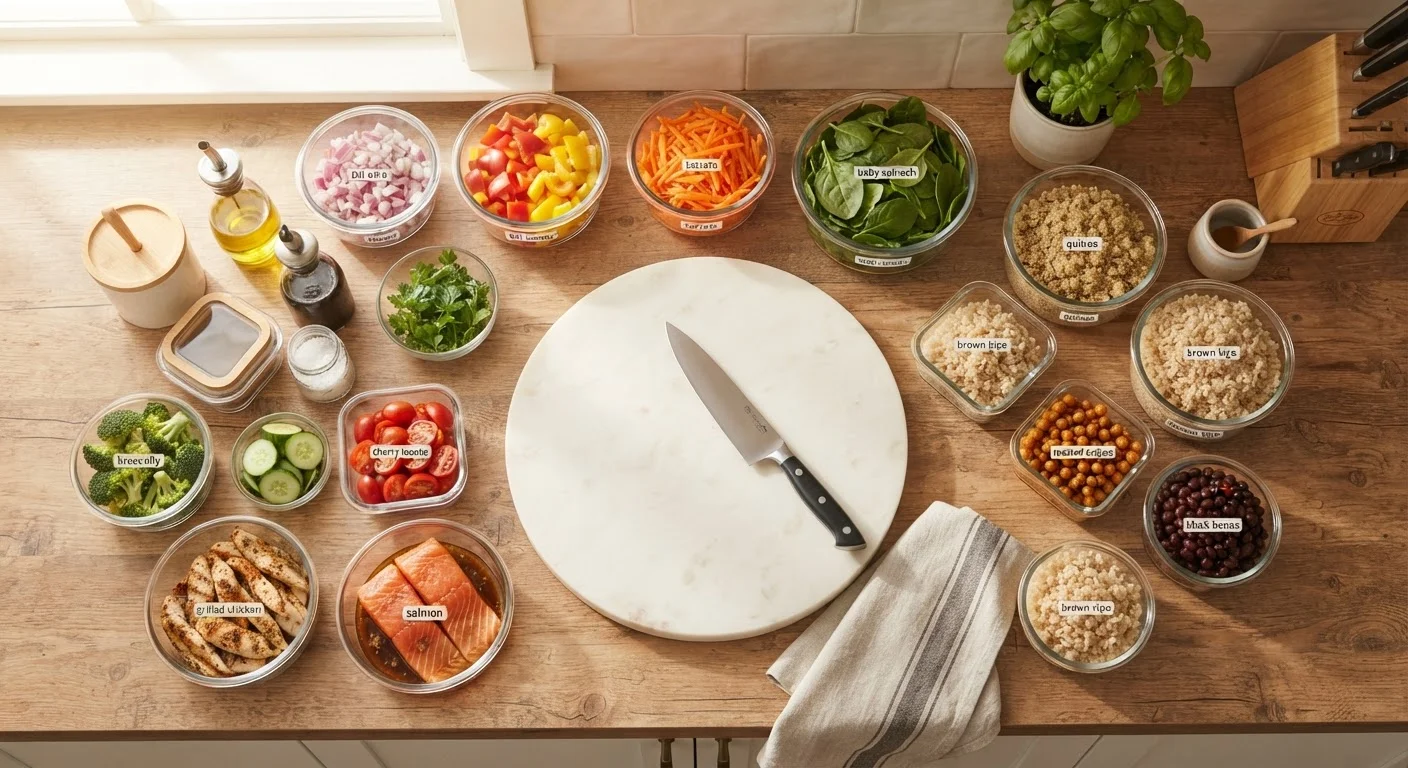
Why Batch Cooking Works for Busy Families
Weeknight dinner stress is one of the most consistent pain points families report - not because anyone lacks cooking ability, but because time and mental energy are genuinely scarce after school pickups, work, and homework. Batch cooking addresses this by shifting the effort to a single, planned block of time rather than distributing it across five evenings when everyone is already tired.
The approach is straightforward: spend two to three hours on a weekend afternoon preparing base components - a grain, a protein, roasted vegetables - that can be mixed and matched into different meals throughout the week. Unlike rigid meal prep that locks you into specific dishes, this flexible method respects the reality that appetites and schedules change. It also connects directly to family budgeting goals, since buying larger quantities of fewer ingredients and wasting less food typically reduces the weekly grocery bill over time.
Start Smaller Than You Think
If a full batch-cooking session feels overwhelming, begin with just two components - a grain and a protein. Even that modest effort can save 30 minutes or more on busy weeknights. Build from there as the habit becomes comfortable for your family.
Batch cooking isn't an all-or-nothing commitment. Even prepping a single component - a pot of rice, a tray of roasted vegetables - saves meaningful time. Start where your schedule allows and build from there.
What You'll Need Before You Start
Success depends less on fancy equipment than on having the right basics ready. A large baking sheet, a stockpot, and airtight containers cover the essentials for most batch sessions. Labeling containers with the date prepared helps you track freshness without guessing throughout the week.
What you will need
A loose weekly plan is genuinely helpful before your cooking session begins. You don't need a rigid schedule, just a rough sense of which nights call for something quick versus when you have a few extra minutes to assemble. Consider keeping your kitchen organized so components are easy to find - home organization strategies can help create systems that make weeknight assembly faster and less stressful.
Large baking sheet or roasting pan
Roasts multiple trays of vegetables or proteins simultaneously, saving significant oven time.
Large stockpot
Cooks big batches of grains, soups, or beans that can be portioned throughout the week.
Airtight storage containers
Keeps prepped food fresh in the refrigerator or freezer and makes grab-and-go meals quick.
Slow cooker or Instant Pot
Allows hands-off cooking of proteins or beans while you handle other prep tasks.
Kitchen scale or measuring cups
Helps portion ingredients accurately, especially useful when cooking for varying family sizes.
Step-by-Step: Your Batch Cooking Session
The steps below are designed to guide you through a complete two-to-three-hour session, from planning through storage. Each step includes time-saving notes specific to families juggling multiple responsibilities at once.
Food Safety Comes First
Cooked foods should be cooled to room temperature within two hours before refrigerating, and most batch-cooked items should be consumed within four to five days. Proteins like cooked chicken or ground meat are generally safe for up to four days in the refrigerator. When in doubt about whether a stored food is still safe, discard it - foodborne illness is not worth the risk.
Plan your batch around flexible base components
Before you shop, decide on three to four "building block" ingredients that can be combined in different ways across multiple meals. A reliable starting lineup might include: a whole grain (brown rice, quinoa, or pasta), a versatile protein (ground turkey, hard-boiled eggs, or canned beans), and two to three roastable vegetables (sweet potatoes, broccoli, bell peppers). This flexible approach means Monday's grain bowl can become Thursday's stir-fry without cooking anything new. If you're newer to this process, our family meal planning guide walks through how to build a weekly template before you even open the refrigerator.
Shop with your batch list, not a recipe list
Batch cooking and smart grocery shopping are closely linked. Rather than buying ingredients for five separate recipes, you're buying larger quantities of fewer items - which is typically more economical and reduces mid-week trips to the store. Produce that roasts well (root vegetables, cruciferous vegetables, squash) tends to be among the most cost-effective per serving. For families navigating tighter grocery budgets, keeping meals nutritious on a tight budget offers evidence-informed ways to maintain dietary quality without overspending.
Set up your kitchen before you start cooking
Clear your counter space, set out all containers, and gather your tools before turning on a single burner. Pre-portion spices and sauces into small bowls so you're not scrambling mid-cook. Preheat your oven and read through every component you plan to make. This five-minute setup step prevents the chaotic mid-session search for a lid or colander that can derail the whole afternoon.
Cook in parallel, not in sequence
The key to finishing in two to three hours is running multiple components simultaneously. A practical flow: start your grain on the stovetop, load vegetables onto a sheet pan in the oven, and use that hands-off time to prep your protein. If you have a slow cooker, put beans or a chicken breast in before you start anything else. Work from longest cook time to shortest - not the reverse. Grains and dried beans take 45-60 minutes; most roasted vegetables are done in 20-30 minutes; a sautéed protein may take only 10-15.
Cool, portion, label, and store
Once each component is cooked, spread it in a single layer on a clean baking sheet or large plate to cool more quickly - this keeps food out of the temperature "danger zone" (40°F-140°F) faster. Once cooled, portion into containers sized for your family's typical serving. Label each container with the contents and the date prepared. Most cooked proteins and grains keep safely for four to five days refrigerated; roasted vegetables are generally best within three to four days.
Assemble meals during the week in under 15 minutes
With batch components ready, weeknight assembly becomes combining rather than cooking. Reheat grain and protein, add a sauce or seasoning, and serve with prepped vegetables. Rotate flavor profiles across the week - a simple cumin-lime dressing on Tuesday, a soy-ginger sauce on Wednesday - so the same base ingredients don't feel repetitive. Parents who find themselves eating whatever's leftover or skipping meals entirely may find this approach particularly helpful; our article on eating well when you're always last to sit down offers realistic strategies for those moments.
This article is for general informational and educational purposes only. It is not intended as medical or dietary advice. Families with specific nutritional needs or health conditions should consult a qualified healthcare professional or registered dietitian.
The content provided on our blog site traverses numerous categories, offering readers valuable and practical information. Readers can use the editorial team’s research and data to gain more insights into their topics of interest. However, they are requested not to treat the articles as conclusive. The website team cannot be held responsible for differences in data or inaccuracies found across other platforms. Please also note that the site might also miss out on various schemes and offers available that the readers may find more beneficial than the ones we cover.