

Eating Well Doesn't Require a Premium Budget
Many families assume that healthy eating is a luxury - reserved for households with extra time and money. But the evidence tells a different story. Decades of nutritional research suggest that the dietary patterns most consistently linked to long-term health are built around foods that are, by and large, affordable: vegetables, legumes, whole grains, eggs, and modest amounts of animal protein.
This article isn't about a specific diet plan or eliminating entire food groups. It's about recognizable patterns of eating - flexible frameworks that busy, budget-conscious families can shape to their own tastes, schedules, and cultural traditions. For a practical foundation, our family meal planning starter guide walks through the basics of building a weekly template without expensive tools.
Below are five eating patterns - grounded in nutrition research - that are both genuinely health-supportive and realistic on a family budget. As always, this is general health information; speak with a registered dietitian or your family's healthcare provider for guidance tailored to your household's specific needs.
Mediterranean-Style Eating
The Mediterranean dietary pattern - emphasizing vegetables, legumes, whole grains, olive oil, fish, and moderate dairy - is one of the most studied eating frameworks in nutrition science. It's consistently associated with reduced risk of cardiovascular disease and other chronic conditions, according to research published in major peer-reviewed journals.
For families, this pattern is practical: dried lentils, canned chickpeas, seasonal vegetables, and eggs are all Mediterranean staples. Fish doesn't have to mean fresh salmon - canned sardines and tuna are cost-effective, nutritionally dense options. Olive oil, used in modest amounts, is widely available at reasonable prices. See protein sources compared by cost and nutrition for a helpful breakdown.
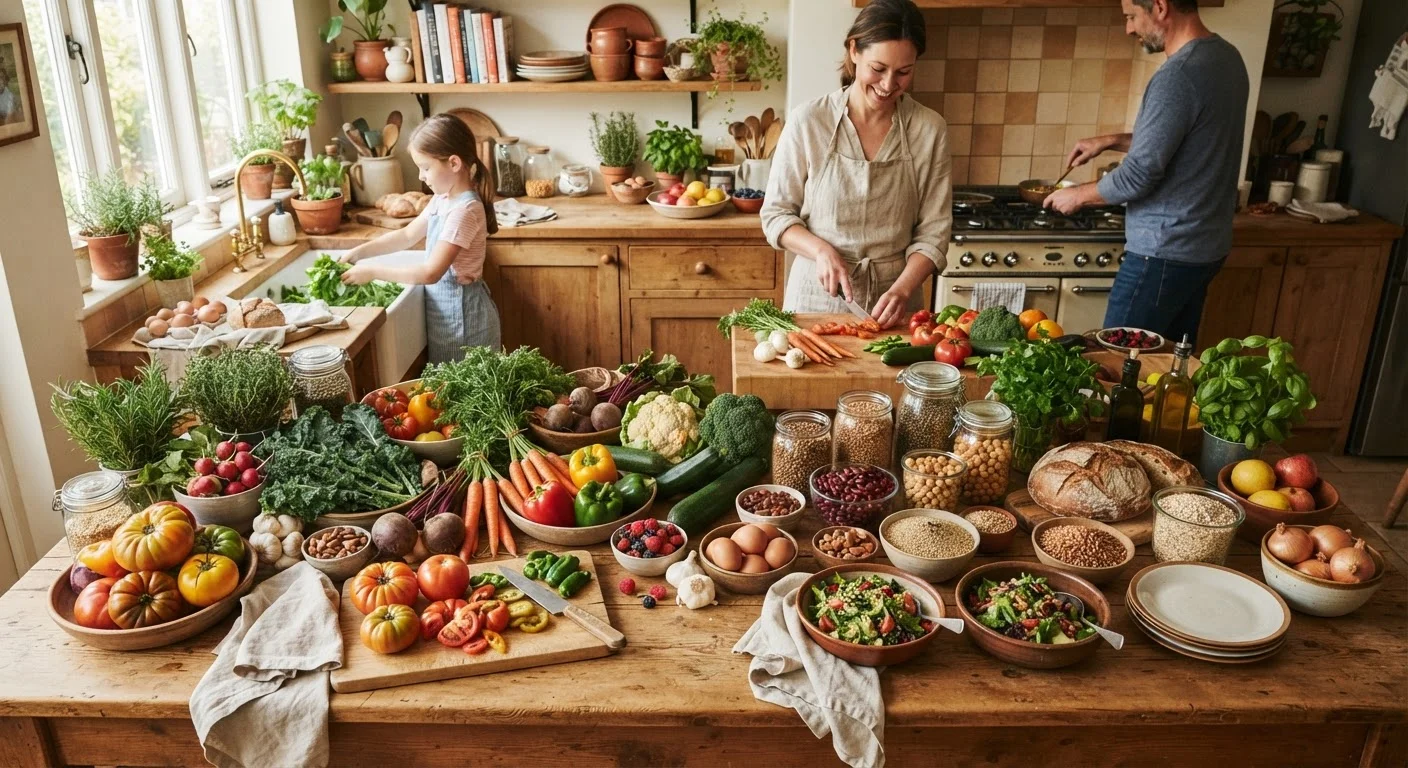
Mediterranean eating is built on affordable staples - legumes, grains, and vegetables are its foundation.
Plant-Forward Eating (Without Going Fully Vegetarian)
Plant-forward eating simply means that most of each plate comes from plant sources - vegetables, legumes, whole grains, nuts, and seeds - with animal products playing a supporting rather than starring role. This isn't a prescription to eliminate meat; it's a gradual shift in proportion.
Research from institutions including the Harvard T.H. Chan School of Public Health suggests that even partial shifts toward plant-based eating patterns are associated with health benefits. From a budget perspective, the math is straightforward: a pound of dried black beans costs a fraction of a pound of ground beef and stretches further. Families don't need to commit to a label - just gradually filling more of the plate with plants is a meaningful step. Our pantry staples guide lists the plant-based basics worth keeping on hand.
Shifting toward more plants - even partially - can benefit health and reduce grocery costs meaningfully.
The DASH Eating Pattern
Developed by the National Heart, Lung, and Blood Institute, the DASH (Dietary Approaches to Stop Hypertension) pattern was originally designed to support healthy blood pressure. It emphasizes fruits, vegetables, whole grains, low-fat dairy, and limits sodium and saturated fat.
For families, DASH is notably unglamorous - and that's a strength. Its core foods are staples: oatmeal, brown rice, bananas, carrots, low-fat milk, and beans. The sodium reduction aspect encourages cooking more from scratch, which generally costs less than packaged alternatives. This pattern fits naturally into a household that already cooks regularly. Check our article on where grocery money actually goes for insight into where budget shifts can make a real difference.
DASH's core foods - oats, beans, fruit, and vegetables - are among the most affordable in any grocery store.
Flexitarian Eating
The term "flexitarian" - a portmanteau of flexible and vegetarian - describes an eating pattern that is predominantly plant-based but includes meat, fish, or poultry occasionally and without strict rules. It's arguably the most accessible eating framework for families who aren't ready to fully commit to vegetarianism but want to reduce reliance on meat.
Nutritionally, flexitarian patterns have been associated with lower body weight, reduced risk of type 2 diabetes, and improved cardiovascular markers in observational research. Practically, reducing meat frequency by even one or two meals per week can produce meaningful grocery savings, which can then be redirected toward higher-quality produce or whole grains. Our guide to weeknight dinner consistency has ideas for keeping these meals simple enough to actually happen.
Even one or two meatless meals per week moves a family meaningfully toward a flexitarian pattern.
Whole-Food, Minimally Processed Eating
This isn't a named dietary pattern in the clinical sense, but it describes a shared principle across almost every evidence-based eating framework: minimizing heavily processed, ultra-processed foods - those with long ingredient lists, added sugars, refined grains, and high sodium - in favor of foods closer to their whole, recognizable form.
Research, including work drawing on the NOVA food classification system, links high ultra-processed food consumption to poorer health outcomes. Practically, this pattern means prioritizing foods like oats, eggs, frozen vegetables, plain canned beans, and whole fruits. Many families worry that frozen or canned produce is nutritionally inferior - evidence suggests that's largely a myth. Our article on frozen and canned goods separates the facts from the fear. Building meals around whole-food staples also tends to reduce reliance on expensive convenience products. See our Kids' Wellness hub for nutrition-related guidance specific to children.
Prioritizing whole, minimally processed foods benefits health across nearly every evidence-based dietary framework.
Building These Patterns Into Real Family Life
No single eating pattern fits every family, and none of these approaches demands perfection. The most useful takeaway from the research is that overall consistency matters far more than any individual food or meal. A household that eats mostly plants and whole grains five or six days a week - with flexibility built in - is doing meaningful work for long-term health, even if Thursday night is frozen pizza.
Start With One Pattern, Not All Five
Rather than trying to incorporate every eating pattern at once, pick the one that best matches your family's current habits and tastes. Even a partial adoption - like adding two plant-forward dinners per week or swapping white rice for brown - creates a meaningful shift over time. Gradual changes are far more likely to stick than sweeping overhauls, especially with children at the table.
If cost is a pressing concern, our article on maintaining nutrition when budgets get tight offers evidence-informed strategies for stretching quality without sacrificing it. And for parents wondering how to bring children along on these shifts, raising children who eat well covers realistic expectations at every age.
Small, durable changes - adding a bean-based dinner once a week, swapping refined grains for whole grains gradually, leaning on frozen vegetables on busy nights - compound over months and years into genuinely different eating habits. That's where the long-term benefit lives.
This article is for general informational and educational purposes only and is not a substitute for professional medical or nutritional advice. Please consult a qualified healthcare provider or registered dietitian for guidance specific to your family's health needs.
The content provided on our blog site traverses numerous categories, offering readers valuable and practical information. Readers can use the editorial team’s research and data to gain more insights into their topics of interest. However, they are requested not to treat the articles as conclusive. The website team cannot be held responsible for differences in data or inaccuracies found across other platforms. Please also note that the site might also miss out on various schemes and offers available that the readers may find more beneficial than the ones we cover.