

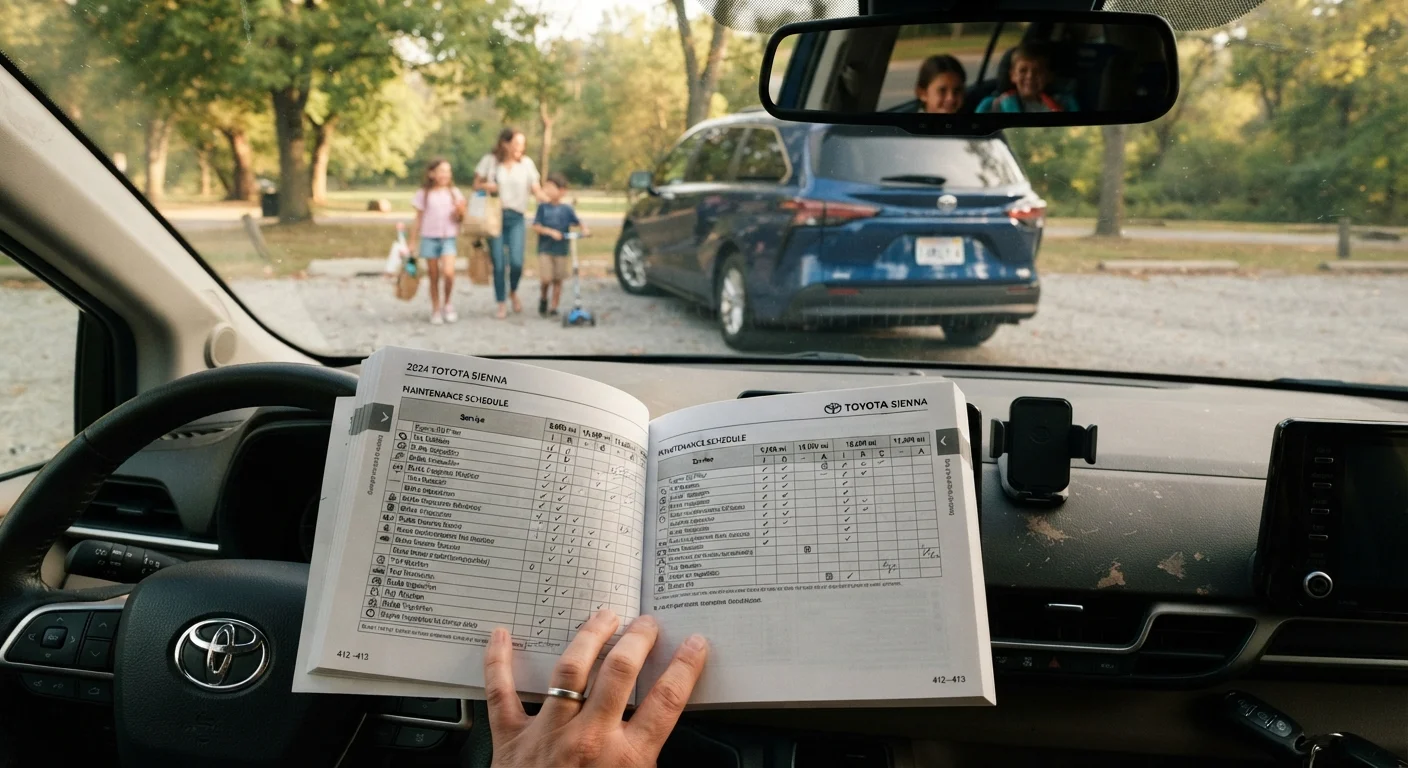
Why Your Owner's Manual Is the Starting Point
Most families never open their owner's manual after the first week of ownership. That's understandable - it can read like a legal document. But buried inside is something genuinely valuable: the manufacturer's maintenance schedule, tailored specifically to your vehicle.
Dealer service advisors and quick-lube shops often push intervals that are shorter - and more profitable for them - than what your manufacturer actually recommends. The manual cuts through that noise. It tells you exactly what your car needs and when, based on the engineering that went into building it.
If you've misplaced your manual, most automakers post digital versions on their official websites. Search by your vehicle's year, make, and model to find one. Once you locate the maintenance section, you'll typically find two tables: one for normal driving conditions and one for severe conditions.
Warranty and Third-Party Service
You are not required to use a dealership for routine maintenance to keep your new-car warranty valid, provided the work meets manufacturer specifications and you retain documentation. This protection comes from the Magnuson-Moss Warranty Act. Keep all receipts as evidence that service was performed correctly and on schedule.
Normal vs. Severe Driving: Which One Applies to Your Family?
This is where many families make a costly assumption. "Severe" sounds like off-roading or towing a boat every weekend - but the manufacturer's definition is much broader. According to most owner's manuals, severe conditions include:
- Frequent short trips under 5 miles, especially in cold weather
- Stop-and-go city commuting
- Driving in extreme heat or cold
- Towing or carrying heavy loads regularly
- Driving on dusty or unpaved roads
If your family does the school run, weekend errands, and commutes in a busy metro area, there's a reasonable chance the severe schedule applies to you at least part of the time. When in doubt, check the specific criteria in your manual - not a generic internet summary.
35%
Of roadside breakdowns are maintenance-related
Industry estimates from organizations like AAA suggest a significant share of breakdowns involve issues - such as dead batteries or tire failures - that routine maintenance would likely have caught earlier.
~$1,200
Average annual car maintenance cost per vehicle
AAA's annual driving cost studies consistently estimate vehicle maintenance and repair costs in this range for a typical passenger car, though the actual figure varies by vehicle age and type.
How to Read the Maintenance Table
Maintenance schedules are organized by service interval - usually expressed as a combination of mileage and time (e.g., "every 7,500 miles or 12 months"). The rule is straightforward: service is due when you reach whichever threshold comes first.
The table will list specific items at each interval. Common entries include:
- Engine oil and filter
- One of the most frequent services. The correct interval depends on your oil type (conventional vs. synthetic) - your manual will specify.
- Tire rotation
- Rotating tires helps them wear evenly and last longer. Often listed at the same interval as an oil change.
- Air filter inspection
- A clogged air filter reduces fuel efficiency and engine performance. Inspection intervals vary widely by vehicle.
- Brake inspection
- Brake components wear gradually. Regular inspection catches problems before they become safety issues.
- Transmission fluid
- Intervals range from 30,000 to over 100,000 miles depending on the vehicle - don't guess on this one.
For a deeper look at what mechanics actually check during a full service visit, see what goes into a full vehicle service.
Keeping Track Without a Spreadsheet Degree
The simplest system is often a paper log kept in your glove compartment. After each service, jot down the date, mileage, and what was done. Receipts from shops work just as well - keep them in an envelope in the car. A well-documented service history also protects your resale value and helps any mechanic diagnose issues faster. For guidance on building that record, see why your maintenance history matters.
If you prefer digital, a simple notes app or a shared family calendar reminder works fine. Set recurring reminders based on your most common service interval - many families use every 5,000 miles as a general checkpoint to review what's due.
Set a Mileage-Based Calendar Reminder
After each service, note your current mileage and calculate when the next interval will fall. Enter it as a recurring calendar event on your phone. This takes about two minutes and removes the mental load of trying to remember when service is due - especially useful if multiple family members drive the same vehicle.
Some tasks - like checking fluid levels - can be done at home between service visits. See how to check your car's fluid levels at home for a practical walkthrough. And since your car's needs shift with temperature and road conditions, seasonal car care guidance can help you layer that context on top of your regular schedule.
Frequently Asked Questions
It's printed in your owner's manual, typically in a dedicated section near the back. Many automakers also post schedules on their official websites if you search by your vehicle's year, make, and model. Your dealership's service department can also provide a printed copy.
Skipping services can allow small problems - like worn brake pads or degraded oil - to escalate into expensive repairs. It can also void portions of your manufacturer's warranty, leaving you responsible for costs that would otherwise be covered.
For most urban and suburban families, yes. Stop-and-go commuting, frequent short trips, and idling in traffic all qualify as severe conditions under most manufacturers' definitions. Check your owner's manual for the specific criteria.
No. As long as the work meets manufacturer specifications and you keep records, you can use any qualified mechanic or independent shop. Maintaining thorough service records is key regardless of where the work is done.
A typical interval might read "every 5,000 miles or 6 months, whichever comes first." If you drive very little, you may hit the time threshold before the mileage threshold - and the service is still due. Time-based intervals exist because fluids and components degrade even when a car isn't driven much.
Dashboard reminders - like an oil life monitor - are useful prompts, but they don't cover every service item in your schedule. Use them as one tool alongside your owner's manual rather than a complete substitute for it.
The content provided on our blog site traverses numerous categories, offering readers valuable and practical information. Readers can use the editorial team’s research and data to gain more insights into their topics of interest. However, they are requested not to treat the articles as conclusive. The website team cannot be held responsible for differences in data or inaccuracies found across other platforms. Please also note that the site might also miss out on various schemes and offers available that the readers may find more beneficial than the ones we cover.