

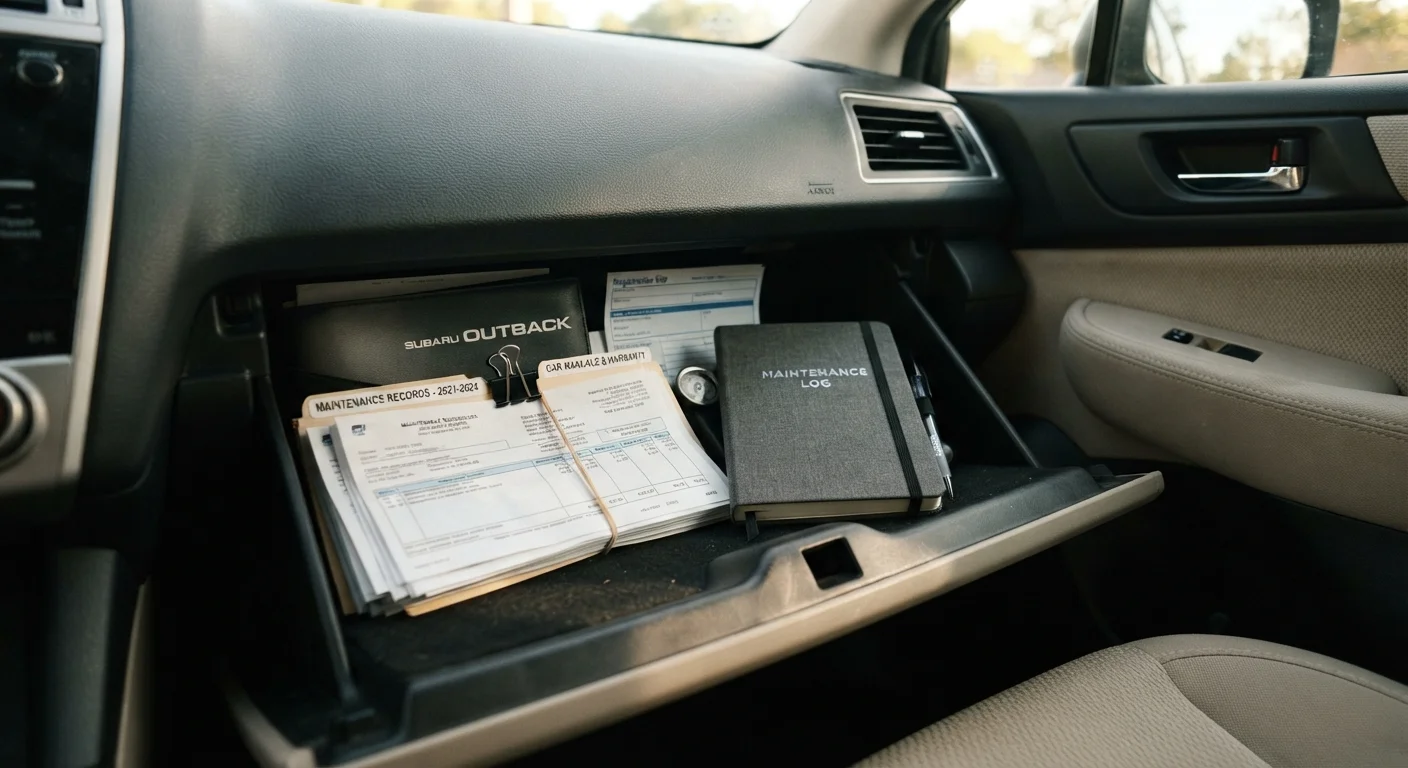
Why Service Records Are Worth the Effort
Most families treat vehicle paperwork the same way they treat instruction manuals - stuffed in a drawer and forgotten. But your car's service history is one of the few documents that actively works for you in multiple ways: during ownership, at the mechanic's bay, and eventually when you sell.
A documented maintenance history tells the next buyer the car was looked after. It tells a mechanic what's already been done and what's overdue. And it tells you whether you're on top of your own schedule - or quietly falling behind. Think of it as a medical record for your vehicle. Without it, every new mechanic starts from scratch.
For budget-conscious families, the financial angle is straightforward: a well-maintained car with documented proof typically commands a higher private-sale price than an identical car with no paperwork. It also reduces the risk of repeat repairs caused by a mechanic unknowingly duplicating - or skipping - work that was already done.
See our car maintenance essentials guide if you're just getting started with understanding what your vehicle actually needs.
Best Practices for Building a Solid Service History
Good record-keeping doesn't require special software or a filing system. It requires consistency. Here are the practices that make the biggest difference:
Record every service immediately, including the date, mileage, and what was done.
Memory fades quickly, and a vague entry like 'oil change - sometime last year' is nearly useless to a mechanic or a buyer. Mileage is especially critical because many services are interval-based rather than calendar-based.
Keep all receipts, including those from quick-lube shops and tire centers.
Third-party service providers don't always report to dealership systems. If you don't keep the receipt, that work may as well not exist from a documentation standpoint.
Log DIY maintenance with the same detail you'd expect from a shop.
Home oil changes and fluid top-offs count toward your car's history if documented. Without a receipt, a written log with the date, mileage, and product used is a reasonable substitute.
Note any symptoms or concerns raised at each service, even if no repair was made.
Intermittent issues - noises that come and go, warning lights that clear on their own - are much easier to diagnose when there's a timeline. A mechanic can spot patterns that a one-off appointment never would.
Review your records before every service appointment.
Arriving informed helps you have a more productive conversation with the mechanic, prevents duplicate work, and lets you flag anything that was recommended but not yet addressed.
For a clear picture of what a full service actually involves, our guide on what mechanics check during a full service explains each item and how often it typically applies.
Quick Wins to Start Today
You don't need to reconstruct years of history overnight. Even starting fresh from your next oil change creates a foundation that grows in value over time. Here's where to begin:
What If You Have No Previous Records?
Starting from zero is more common than you'd think, especially after buying a used vehicle. Contact the previous owner if possible, or ask a dealership - some manufacturers maintain service records for vehicles serviced at their network. A trusted mechanic can also do a condition inspection that establishes a credible baseline, even without historical paperwork.
If you're unsure how to read your manufacturer's recommended intervals, our maintenance schedule guide breaks down the owner's manual in plain language.
Paper, Digital, or Both?
There's no single right format - the best system is the one you'll actually maintain. A plastic sleeve in the glove compartment works well for physical receipts from shops. A free spreadsheet or a notes app works for entries you record yourself. Several apps are designed specifically for vehicle logs, letting you photograph receipts and set reminders for upcoming services.
The risk with paper-only records is obvious: a spilled coffee, a forgotten folder, or a rushed handover during a sale can wipe out years of history. The risk with digital-only is losing access to an old phone or app. The safest approach for most families is a physical folder for originals and a simple photo backup stored in cloud storage.
~$500+
Potential resale value difference with full service history
Industry observers and used-car dealers frequently note that a documented service history can add several hundred dollars to a private sale price compared to an identical vehicle with no paperwork.
3 in 10
Used-car buyers who say service records influenced their decision
Consumer surveys on used-vehicle purchases consistently find that maintenance history ranks among the top factors buyers consider when evaluating private-sale vehicles.
Whatever format you choose, the habit matters more than the tool. Logging a service the same day it happens - before the receipt gets buried - is the single most effective discipline you can build. And if you're weighing the cost difference between dealer and independent servicing, our article on annual versus full dealer servicing can help you decide what makes financial sense for your situation.
The content provided on our blog site traverses numerous categories, offering readers valuable and practical information. Readers can use the editorial team’s research and data to gain more insights into their topics of interest. However, they are requested not to treat the articles as conclusive. The website team cannot be held responsible for differences in data or inaccuracies found across other platforms. Please also note that the site might also miss out on various schemes and offers available that the readers may find more beneficial than the ones we cover.