

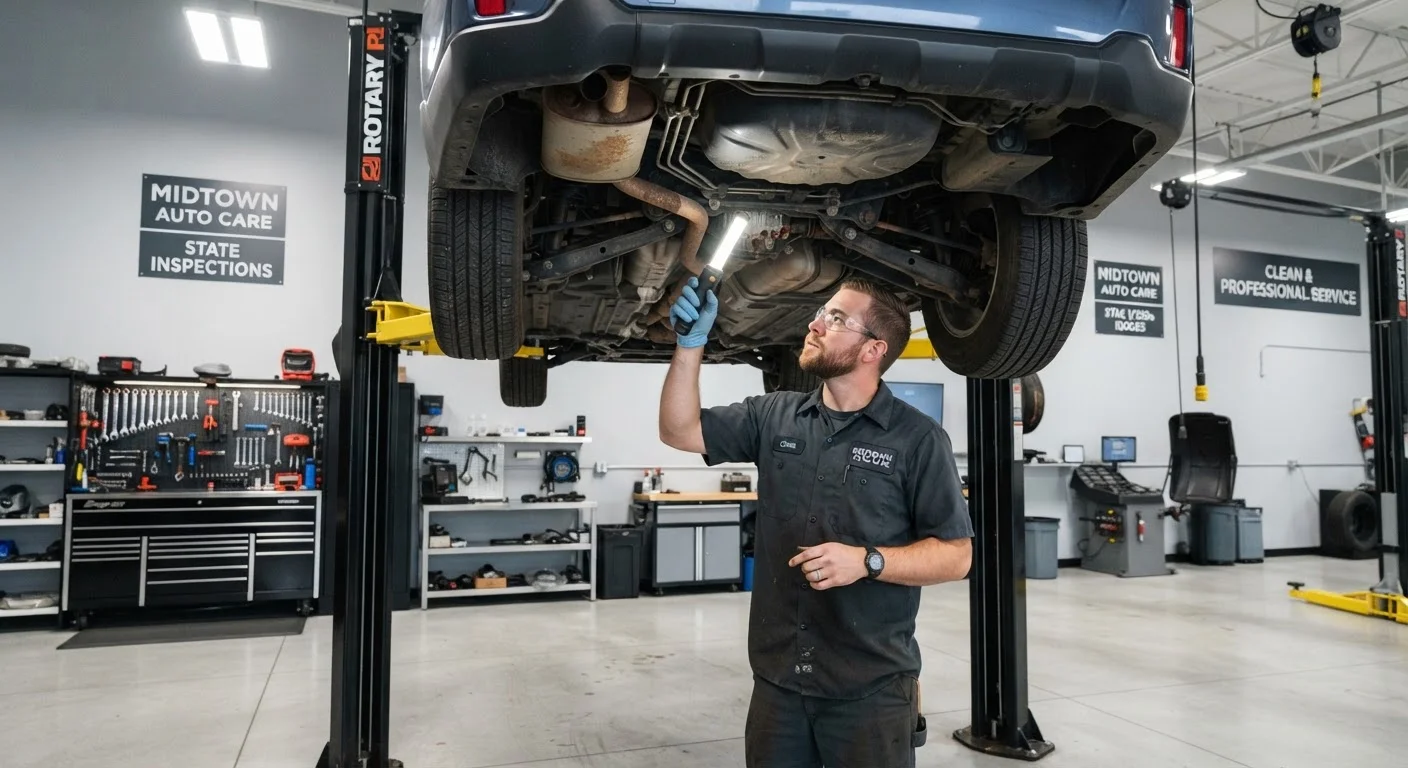
What 'Full Service' Actually Means
The phrase "full service" gets used loosely, and that ambiguity costs families money. A full service is not the same as an oil change, a safety inspection, or what some shops call an "interim service." It is the most comprehensive routine maintenance package a shop offers - typically covering 50 to 70 individual checks and replacements across every major system in the vehicle.
Think of it as a detailed health check for your car. The mechanic works through a structured checklist that includes fluids, brakes, tires, suspension, engine components, lights, belts, and more. At the end, you should receive a written report noting what was done, what was found, and what may need attention soon. For more on how service levels compare, see what different service levels actually cover.
Bring Your Owner's Manual
Before your service appointment, look up the manufacturer's recommended service intervals in your owner's manual. This lets you verify that the shop is following the correct specification for your specific vehicle - not a generic one-size-fits-all schedule. If you don't have a physical copy, most manufacturers provide digital versions on their websites.
Fluids: The Most Time-Sensitive Checks
Fluids degrade with heat, mileage, and time. A full service addresses all of them - not just engine oil.
- Engine oil and filter: The oil is drained, the filter replaced, and fresh oil added to the manufacturer's specification. This is the single most frequent maintenance task most vehicles need.
- Coolant (antifreeze): Checked for level, condition, and freeze protection. Old coolant becomes acidic and can corrode the cooling system from the inside.
- Brake fluid: Absorbs moisture over time, which lowers its boiling point and can cause brake fade. Most manufacturers recommend replacement every two years regardless of mileage.
- Power steering fluid: Checked for level and contamination on vehicles with hydraulic steering systems.
- Transmission fluid: Inspected for level and condition; replacement intervals vary widely by vehicle type.
- Windshield washer fluid: Topped up as part of routine checks.
If you want to understand what you can safely check yourself between services, checking your car's fluid levels at home walks through the process step by step.
~50-70
Individual checks in a typical full service
Industry service checklists from major automotive associations commonly list this range of inspection points.
2 years
Typical brake fluid replacement interval
Most vehicle manufacturers specify brake fluid renewal every two years regardless of mileage due to moisture absorption.
4/32"
Tire tread depth safety threshold
Safety organizations including AAA recommend replacing tires at 4/32" tread depth for adequate wet-road stopping performance.
Brakes, Tires, and Steering
These three systems are the most directly tied to passenger safety, which makes them central to any full service.
Brakes
The mechanic measures brake pad thickness (the friction material that presses against the rotor to stop the car) and inspects rotors for wear, warping, or scoring. Brake lines and hoses are checked for leaks or cracking. Rear drum brakes, where fitted, are also inspected for shoe wear and hardware condition.
Tires
Tread depth is measured at multiple points across each tire. In the U.S., tires are considered legally worn when tread reaches 2/32 of an inch, though many safety organizations recommend replacement at 4/32 for wet-weather grip. Tire pressure is adjusted to the vehicle placard specification (usually found on the driver's door jamb), and tires are inspected for sidewall damage, uneven wear patterns, and age cracking.
Steering and Suspension
The mechanic checks steering linkage, ball joints, tie rod ends, and shock absorbers for play or wear. Worn suspension components affect handling, tire wear, and braking distance - all of which matter more with a full car of passengers. See our family car safety hub for broader guidance on keeping passengers protected.
Engine and Drivetrain Components
Beyond fluids, several engine and drivetrain components are inspected or replaced on a mileage or time basis during a full service.
- Spark plugs: Checked for condition and replaced if due. Worn plugs reduce fuel efficiency and can cause misfires.
- Drive belts (serpentine belt): Inspected for cracking, fraying, or glazing. This single belt typically drives the alternator, power steering pump, and air conditioning compressor. A snapped belt leaves you stranded.
- Timing belt or chain: If the vehicle uses a timing belt (a rubber belt that synchronizes the engine's internal components), the mechanic checks whether replacement is due per the manufacturer's schedule. This is one of the more expensive services but one of the most consequential - a failed timing belt can destroy an engine.
- Battery: Load-tested to assess remaining capacity, and terminals cleaned of corrosion.
- Exhaust system: Visually inspected for rust, holes, or loose hangers that could allow exhaust gases into the cabin.
Ask the mechanic to show you the old cabin air filter when it's removed. A visibly dirty or debris-filled filter is one of the most persuasive arguments for keeping to your service schedule.
Seeing the evidence firsthand helps families understand what a filter actually traps - and what would otherwise circulate through the cabin HVAC system.
If your vehicle has a timing belt (check your owner's manual - not all do), treat the replacement interval as a firm deadline, not a suggestion. Don't defer this one.
A failed timing belt on an interference engine - where the valves and pistons share space - can cause catastrophic and irreparable engine damage, turning a scheduled service into a four-figure repair or total loss.
Lights, Belts, Filters, and Safety Items
A full service also sweeps through the items that are easy to forget but quick to check.
Filters
The engine air filter is inspected and replaced if clogged - a dirty filter reduces engine efficiency. The cabin air filter (which cleans the air flowing into the passenger compartment through the HVAC system) is also checked. Many families are surprised to learn this filter exists; a severely clogged one can reduce airflow and allow allergens and fine particles into the cabin.
Lights
All exterior lights are tested: headlights (low and high beam), brake lights, turn signals, reverse lights, and hazard lights. A burned-out brake light is a safety risk and a ticketable offense in most states.
Wipers and Horn
Wiper blade condition and horn function are typically included in a full service checklist - small items, but legally required safety equipment.
For families new to regular maintenance, car maintenance essentials for new owners provides a solid foundation before your first service appointment.
Don't Defer Safety-Critical Items
If a full service reveals worn brake pads, a cracked drive belt, or tires below the safe tread threshold, these are not items to schedule for later - they directly affect your ability to control the vehicle in an emergency. If the repair cost is a concern, discuss a phased plan with your mechanic that addresses safety-critical items first, then schedules remaining work around your budget.
How Often a Full Service Is Typically Needed
Most manufacturers recommend a full service every 12 months or every 12,000 miles, whichever comes first - but always check your owner's manual, since intervals vary by make, model, engine type, and driving conditions. Vehicles used for frequent short trips, towing, or stop-and-go urban driving may need more frequent attention than the standard interval suggests.
Some components within a full service have their own separate schedules. Timing belt replacement, for example, is commonly due between 60,000 and 100,000 miles depending on the manufacturer. Brake fluid replacement is typically time-based (every two years) rather than mileage-based.
After every service, ask for a written report and keep it. A complete record makes it easier to spot patterns, argue warranty claims, and reassure future buyers. Our article on why your service history matters explains exactly how to organize and store those records. If you are planning a long drive, a pre-trip vehicle checklist can help you verify everything is road-ready before you leave.
The content provided on our blog site traverses numerous categories, offering readers valuable and practical information. Readers can use the editorial team’s research and data to gain more insights into their topics of interest. However, they are requested not to treat the articles as conclusive. The website team cannot be held responsible for differences in data or inaccuracies found across other platforms. Please also note that the site might also miss out on various schemes and offers available that the readers may find more beneficial than the ones we cover.