

Why Driving Habits Have a Bigger Impact Than Most Drivers Realize
Most families focus on finding cheaper gas rather than using less of it - but how you drive and maintain your car can matter just as much as what you pay per gallon. The U.S. Department of Energy estimates that aggressive driving (rapid acceleration, speeding, and hard braking) can lower gas mileage by 15-30% on highways and 10-40% in stop-and-go traffic. That's a significant hit to your monthly fuel budget that no coupon can fully offset.
The good news: the habits that save fuel are also gentler on your brakes, tires, and engine - reducing wear-related repair costs at the same time. For a deeper look at related car maintenance practices that support efficiency, our hub covers the essentials.
Accelerate gradually and anticipate stops well in advance
Rapid acceleration burns a disproportionate amount of fuel compared to steady, gradual speed increases. Anticipating traffic stops and coasting to a deceleration rather than braking hard recovers kinetic energy as distance traveled rather than heat wasted through the brakes.
Keep highway speeds moderate and consistent
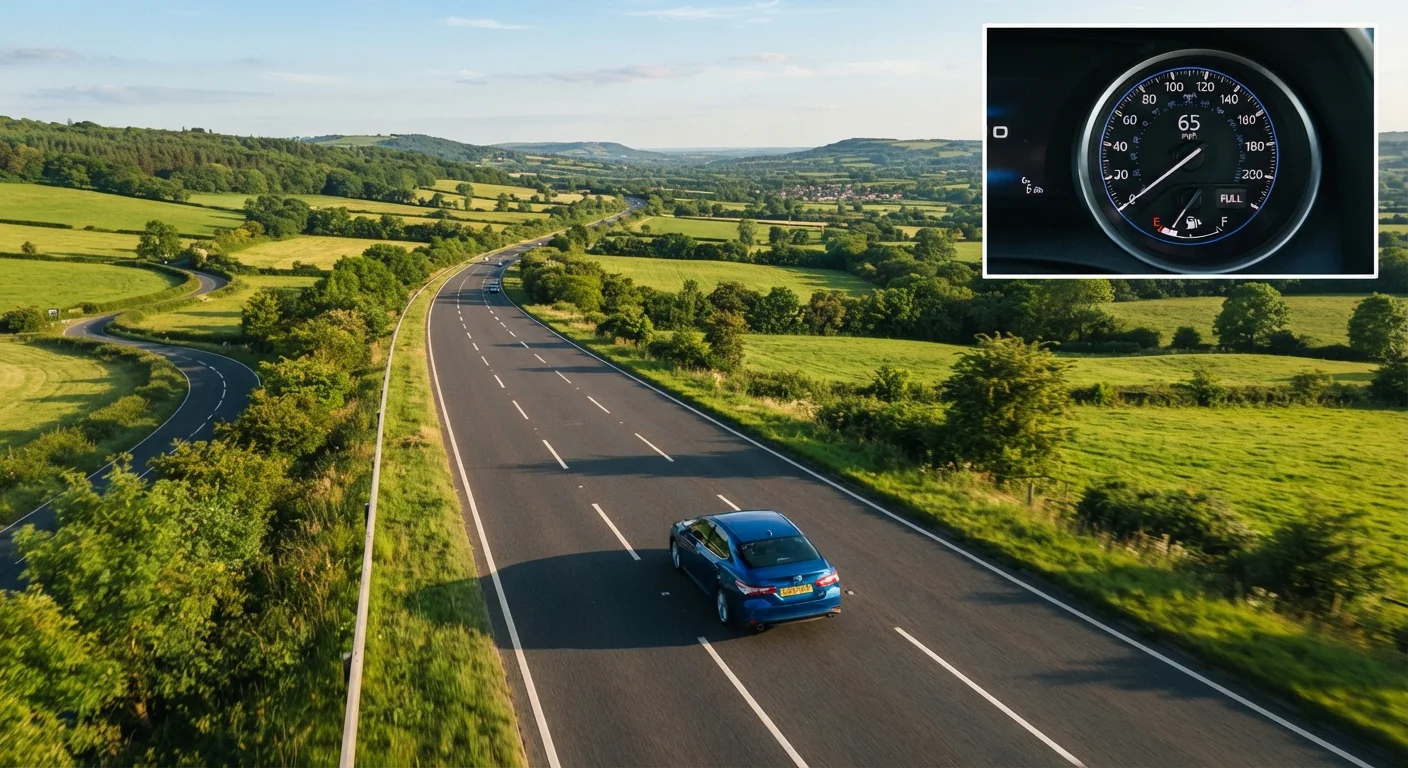
Aerodynamic drag increases exponentially with speed. Most vehicles are significantly less efficient above 60-65 mph. Using cruise control on flat highways maintains a steady speed and prevents the small surges that waste fuel.
Remove unnecessary weight and roof cargo when not in use
Every extra 100 pounds in a vehicle reduces fuel economy by roughly 1-2% according to the U.S. Department of Energy. Roof-mounted cargo boxes add significant aerodynamic drag even when empty, because of their shape and height.
Limit idling to under 30 seconds when practical
An idling engine burns fuel while moving the vehicle zero miles, producing zero mpg. Modern fuel-injected engines do not need extended warm-up time in most temperatures; idling longer than necessary simply wastes gas.
Combine short errands into a single trip
A cold engine uses significantly more fuel than a warm one. Multiple short trips that each start from a cold engine burn more fuel collectively than the same errands combined into one outing with a warm engine throughout.
Use air conditioning thoughtfully, especially at lower speeds
Air conditioning places a direct load on the engine, increasing fuel consumption - particularly pronounced at city speeds. At highway speeds, open windows create enough drag that A/C can be the more efficient choice.
Core Practices That Genuinely Move the Needle
The practices below are grounded in vehicle engineering and driver behavior research. None require spending money upfront - they're adjustments to how you operate a vehicle you already own.
15-30%
Fuel economy lost to aggressive driving on highways
According to the U.S. Department of Energy, rapid acceleration, speeding, and hard braking reduce highway fuel economy by this range.
~3%
Fuel economy improvement from correct tire inflation
The U.S. Department of Energy estimates that keeping tires properly inflated can improve gas mileage by up to 3%.
1-2%
Fuel economy reduction per extra 100 lbs of vehicle weight
The U.S. Department of Energy cites this figure for passenger vehicles carrying unnecessary cargo weight.
Maintenance Tasks That Support Fuel Efficiency
Driving habits matter, but a poorly maintained vehicle will undercut even your best efforts. Certain service items directly affect how hard your engine has to work - and therefore how much fuel it burns.
A clogged engine air filter restricts airflow, forcing the engine to work harder. Worn spark plugs cause misfires that waste unburned fuel. Low or degraded motor oil increases internal friction. None of these fixes are expensive, but skipping them quietly chips away at efficiency every mile. For context on which maintenance beliefs are worth your money and which aren't, see our article on car maintenance myths that cost drivers money.
Tire pressure deserves its own mention. Under-inflated tires create more rolling resistance - your engine burns more fuel to push the car forward. Check pressure monthly and before long trips; the correct figure is on the sticker inside your driver's door, not the maximum stamped on the tire sidewall. Our guide on tyre care basics explains this in plain terms.
Check Your Owner's Manual for Service Intervals
Your vehicle's owner's manual lists the manufacturer-recommended intervals for air filter replacement, spark plugs, and oil changes - often measured in miles or months. These intervals are the most reliable guide for your specific engine, and following them costs less in the long run than waiting for a problem to appear. If you've bought a used vehicle and don't have the manual, many manufacturers make them available as free downloads on their official websites.
Putting It All Together for Your Family's Budget
No single habit will transform your fuel bill overnight, but several practiced consistently add up across a year of driving. A family averaging 15,000 miles annually could realistically save hundreds of dollars by combining proper tire inflation, smoother acceleration, and smarter trip planning - without buying a new vehicle or switching fuel types.
If you're weighing whether a hybrid or different powertrain would suit your family better long-term, our article comparing petrol, diesel, and hybrid running costs breaks down the full ownership picture honestly. And for families looking at the broader picture of vehicle costs, reducing car insurance spending is worth reading alongside this guide.
The core principle is straightforward: treat your car as a system where driving style, load, and maintenance all interact. Improve one element and you'll see a modest gain; improve several together and the savings become meaningful.
The content provided on our blog site traverses numerous categories, offering readers valuable and practical information. Readers can use the editorial team’s research and data to gain more insights into their topics of interest. However, they are requested not to treat the articles as conclusive. The website team cannot be held responsible for differences in data or inaccuracies found across other platforms. Please also note that the site might also miss out on various schemes and offers available that the readers may find more beneficial than the ones we cover.