

Why a Car Cost Worksheet Matters for Families
Most families know what their car payment is. Far fewer know what their vehicle actually costs each month once fuel, insurance, maintenance, and registration fees are added together. That gap between perceived and real cost is where budgets silently unravel.
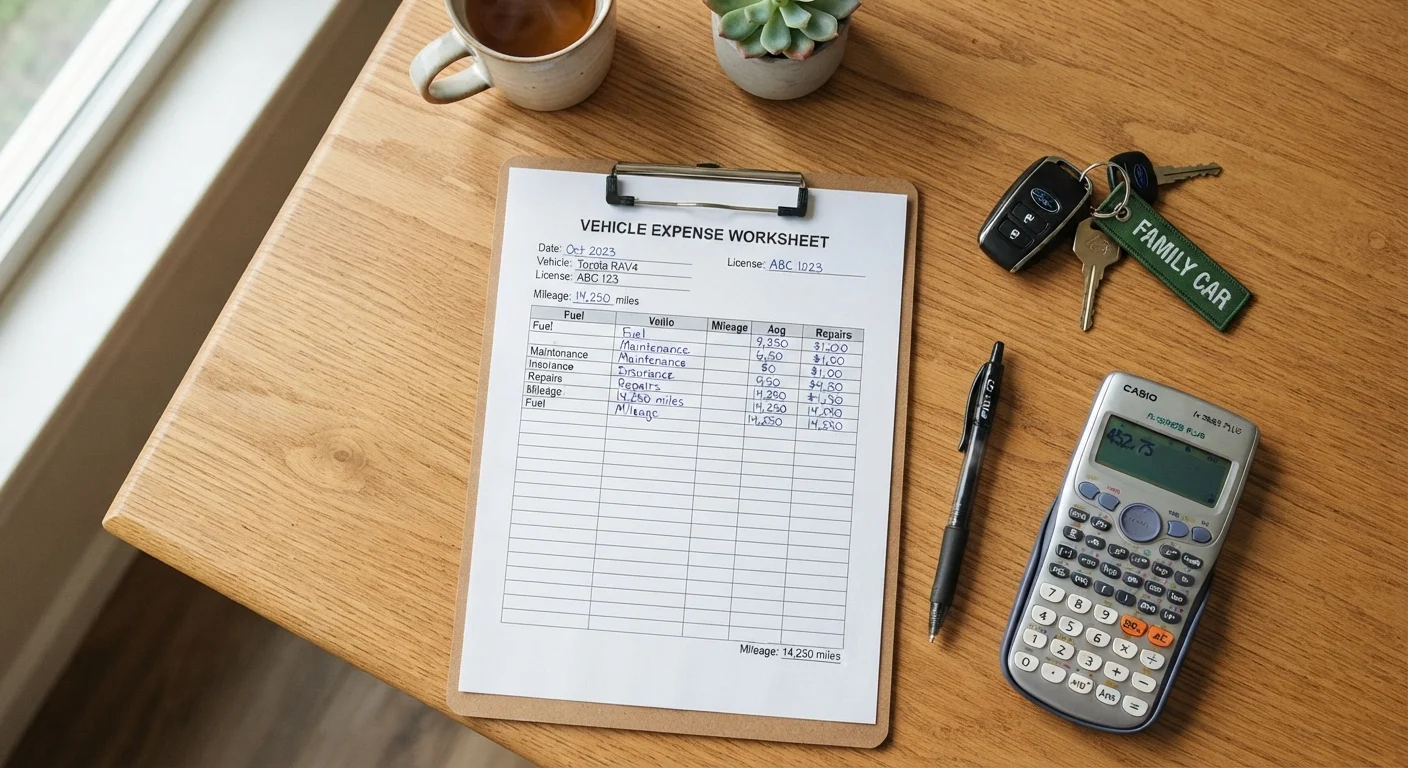
A structured worksheet forces every expense into the open - both the predictable monthly line items and the irregular costs that arrive without warning. Used consistently, it turns car ownership from a financial black box into a category you can genuinely manage. For a deeper look at where spending tends to accumulate, see where your car budget actually goes each month.
The Core Cost Categories to Track
Structure your worksheet around these six groups:
- Financing and depreciation. If you carry a loan, record the monthly payment and remaining balance. If you own outright, note the vehicle's estimated current value - depreciation is still a real cost even when invisible. Understanding how depreciation works helps you factor it into long-term planning.
- Insurance. Record the annual premium, divide by 12 for a monthly figure, and note coverage type (liability only, comprehensive, collision). Review this line annually - premiums shift with driving records, vehicle age, and ZIP code.
- Fuel. Estimate average miles driven per month, divide by your vehicle's real-world MPG, then multiply by your typical price per gallon. Fuel type matters here: comparing petrol, diesel, and hybrid running costs can reveal meaningful savings over time.
- Scheduled maintenance. Oil changes, filter replacements, tire rotations, and brake inspections all have manufacturer-recommended intervals. Total these annually and divide by 12 to build a monthly accrual.
- Tires and wear items. A set of tires typically lasts 25,000-60,000 miles depending on type and driving style. Divide replacement cost by expected lifespan in months for an accrual figure.
- Registration, taxes, and fees. State registration fees vary widely. Note the annual amount and set aside one-twelfth each month so the renewal never catches you short.
Irregular and Often-Forgotten Costs
Beyond the predictable six, several expense categories catch families off guard precisely because they don't recur on a neat schedule. Overlooked vehicle costs covers many of these in detail, but here is a worksheet-ready summary:
- Unplanned repairs. Industry data consistently suggests setting aside roughly 1-2% of a vehicle's current value per year as a repair reserve, though actual needs vary considerably by vehicle age, mileage, and make.
- Parking and tolls. Commuters and city-based families often undercount these. Track them for two weeks and project monthly.
- Car washes and detailing. Small individually, but $20-$30 per wash adds up over a year.
- Roadside assistance membership. An annual fee that belongs in the worksheet even if rarely used.
- Emissions and safety inspections. Required in many states; fees and frequency vary by location.
For families weighing whether a second vehicle is worth its combined cost load, the one car vs. two financial breakdown applies this same category structure to both scenarios.
Putting the Worksheet to Work
Once every category is populated, total the monthly figures to get your true cost of ownership. Compare this against what you thought you were spending. Most families find the real number is 15-30% higher than their mental estimate.
From there, the worksheet becomes a decision-making tool. If fuel costs are high, that informs the next vehicle purchase. If insurance is the largest line item, it signals a conversation with your insurer about bundling or raising deductibles. If unplanned repairs keep exceeding the reserve, it may be time to weigh repair costs against the vehicle's remaining value.
Integrate this worksheet into your broader household budget - it fits naturally into the expense-tracking framework described in the complete household budgeting guide for families. Revisit it every six months or whenever a significant change occurs: new insurance policy, major repair, or change in commute distance.
For a complete picture from purchase through eventual sale or trade-in, the full picture of family vehicle ownership costs walks through every stage in sequence.
This article is for general informational and educational purposes only. It does not constitute financial or legal advice. Consult a qualified financial professional for guidance specific to your situation.
The content provided on our blog site traverses numerous categories, offering readers valuable and practical information. Readers can use the editorial team’s research and data to gain more insights into their topics of interest. However, they are requested not to treat the articles as conclusive. The website team cannot be held responsible for differences in data or inaccuracies found across other platforms. Please also note that the site might also miss out on various schemes and offers available that the readers may find more beneficial than the ones we cover.