

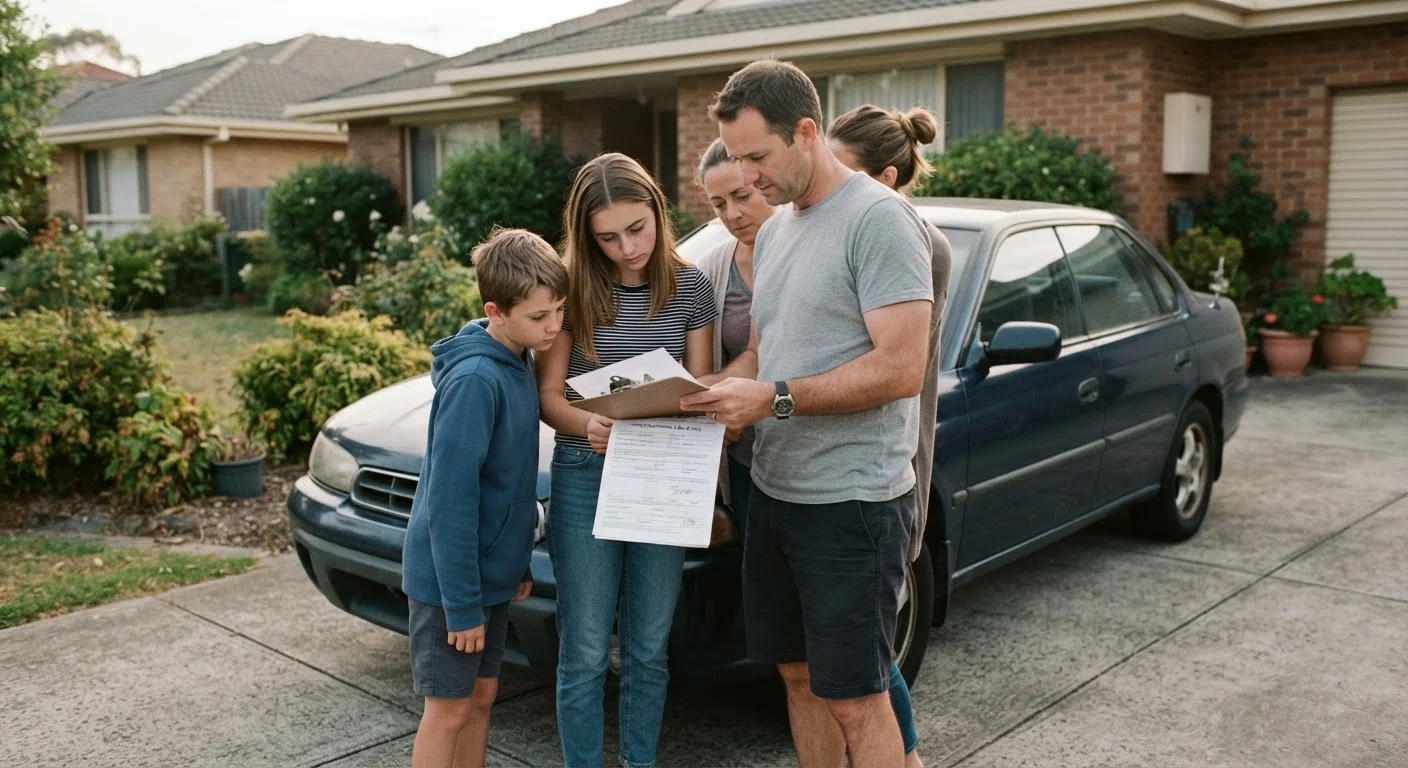
Why Depreciation Is the Cost No One Talks About
When families sit down to budget for a car, they usually think about monthly payments, fuel, and insurance. Depreciation rarely makes the list - because there is no invoice for it. Yet for most households, it is the single largest expense of vehicle ownership.
Think of it this way: if you buy a new car for $35,000 and sell it five years later for $15,000, you have quietly spent $20,000 on depreciation alone - roughly $333 a month, every month, whether you drove the car or not. That is often more than fuel costs and sometimes more than insurance.
Understanding depreciation is not about feeling bad about your purchase. It is about seeing the full picture of what a vehicle actually costs, so your family can make informed choices. See how depreciation fits alongside every other ownership expense in our full picture of family vehicle ownership costs.
~20%
Average new car value lost in year one
Industry sources including Edmunds and Kelley Blue Book consistently estimate new vehicles lose around 15-25% of their value in the first 12 months of ownership.
~50%
Value lost by year five for many new vehicles
Many new cars retain only about half their original purchase price after five years, though this varies significantly by make, model, and market conditions.
$0
Bills received for depreciation costs
Unlike fuel or insurance, depreciation generates no monthly invoice - making it the most invisible major expense in a family's vehicle ownership budget.
How Depreciation Works - and What Drives It
A vehicle's depreciation is not a straight line. It drops most sharply in the first one to three years, then slows. Several factors influence the rate:
- Age and mileage: Older vehicles and those with higher odometer readings are generally worth less, all else being equal.
- Condition: Dents, worn interiors, and a patchy service history accelerate value loss.
- Market demand: Popular body styles and fuel types hold value better. A model that falls out of fashion depreciates faster.
- Brand reputation for reliability: Vehicles associated with long-term durability tend to retain more value in the used-car market.
- Economic conditions: Fuel prices, interest rates, and supply chain disruptions can shift resale values in ways that are hard to predict.
Because these variables interact, two seemingly similar vehicles can follow very different depreciation paths. This is worth researching before any purchase decision.
The Budget Implications for Your Family
Depreciation affects families in a few concrete ways beyond just what you get at trade-in time:
Negative equity risk: When a car depreciates faster than you pay down the loan, you can owe more than the car is worth. This is sometimes called being 'upside down.' If the car is totaled in an accident and your insurance pays only current market value, you could owe your lender the difference out of pocket.
Lease payments: If you have ever wondered why leasing a car with strong resale value tends to cost less per month, it is because lease payments are essentially covering the vehicle's predicted depreciation during the lease term - plus interest and fees. A car expected to hold its value means lower monthly payments.
Total cost of ownership: Families focused only on the sticker price often underestimate true cost. Our car ownership cost worksheet can help you map out every expense category, including depreciation, before committing to a vehicle.
Depreciation also interacts with other overlooked costs. The vehicle costs that catch families off guard are worth reviewing alongside depreciation planning.
Practical Ways to Minimize Depreciation's Impact
You cannot stop depreciation, but you can make smarter decisions that reduce its bite on your budget:
- Buy used, not new: A vehicle that is two to four years old has already absorbed the steepest portion of its value drop. You benefit from that without having to be the one who paid for it.
- Prioritize maintenance: A complete service history and a well-kept interior meaningfully improve resale value. Consistent upkeep through your regular car maintenance routine protects your investment.
- Watch the mileage: Excess miles accelerate depreciation. If your family has two vehicles, being thoughtful about which car absorbs long-distance trips can protect the one you plan to sell sooner.
- Avoid over-customizing: Aftermarket modifications rarely add resale value and often reduce it by limiting the pool of interested buyers.
- Research before you buy: Historical resale data is publicly available through sources like Kelley Blue Book and Edmunds. Choosing a model known for holding its value is one of the highest-leverage decisions you can make.
For a full breakdown of where your monthly car spending actually goes, see where your car budget actually goes each month.
Research Resale Value Before You Buy
Before committing to any vehicle, look up its historical depreciation using publicly available tools from sources like Kelley Blue Book or Edmunds. Compare similar models to see which holds value better over three to five years. A small difference in purchase price can be outweighed by a large difference in long-term depreciation.
This article provides general financial information for educational purposes only. It is not personalized financial advice. Consult a qualified financial professional before making significant vehicle purchase or financing decisions.
Frequently Asked Questions
Most new cars lose somewhere between 15% and 25% of their purchase price in the first year alone, according to industry data from sources like Edmunds and Kelley Blue Book. The exact drop depends on the make, model, demand, and how many miles you drive. Some vehicles hold value significantly better than others.
Yes, in a practical sense. If your car depreciates faster than you pay down your auto loan, you can end up 'underwater' - owing more than the vehicle is worth. This becomes a problem if your car is totaled or you need to sell unexpectedly. Even if you keep the car forever, depreciation shaped the true cost of what you paid.
Vehicles with strong reputations for reliability and high consumer demand tend to hold value better. Pickup trucks and certain SUVs have historically shown slower depreciation in the US market, though this varies by model year and economic conditions. Electric vehicles are a newer category with less predictable depreciation patterns.
Buying a used vehicle that is two to four years old lets someone else absorb the steepest early depreciation. Keeping your car in good condition, following the manufacturer's maintenance schedule, and avoiding excess mileage all help preserve resale value. Choosing a model with historically strong resale value also helps.
Not directly. Your loan payment covers principal and interest on what you borrowed - it does not account for how fast the car's value is falling. This is why many financial planners recommend tracking depreciation separately as part of your total cost of ownership.
Negative equity - sometimes called being 'upside down' - means you owe more on your car loan than the vehicle is currently worth. It happens most often when a car depreciates faster than the loan is paid down, particularly in the early years of a long-term loan. It can create serious problems if you need to sell or if the vehicle is written off in an accident.
The content provided on our blog site traverses numerous categories, offering readers valuable and practical information. Readers can use the editorial team’s research and data to gain more insights into their topics of interest. However, they are requested not to treat the articles as conclusive. The website team cannot be held responsible for differences in data or inaccuracies found across other platforms. Please also note that the site might also miss out on various schemes and offers available that the readers may find more beneficial than the ones we cover.