

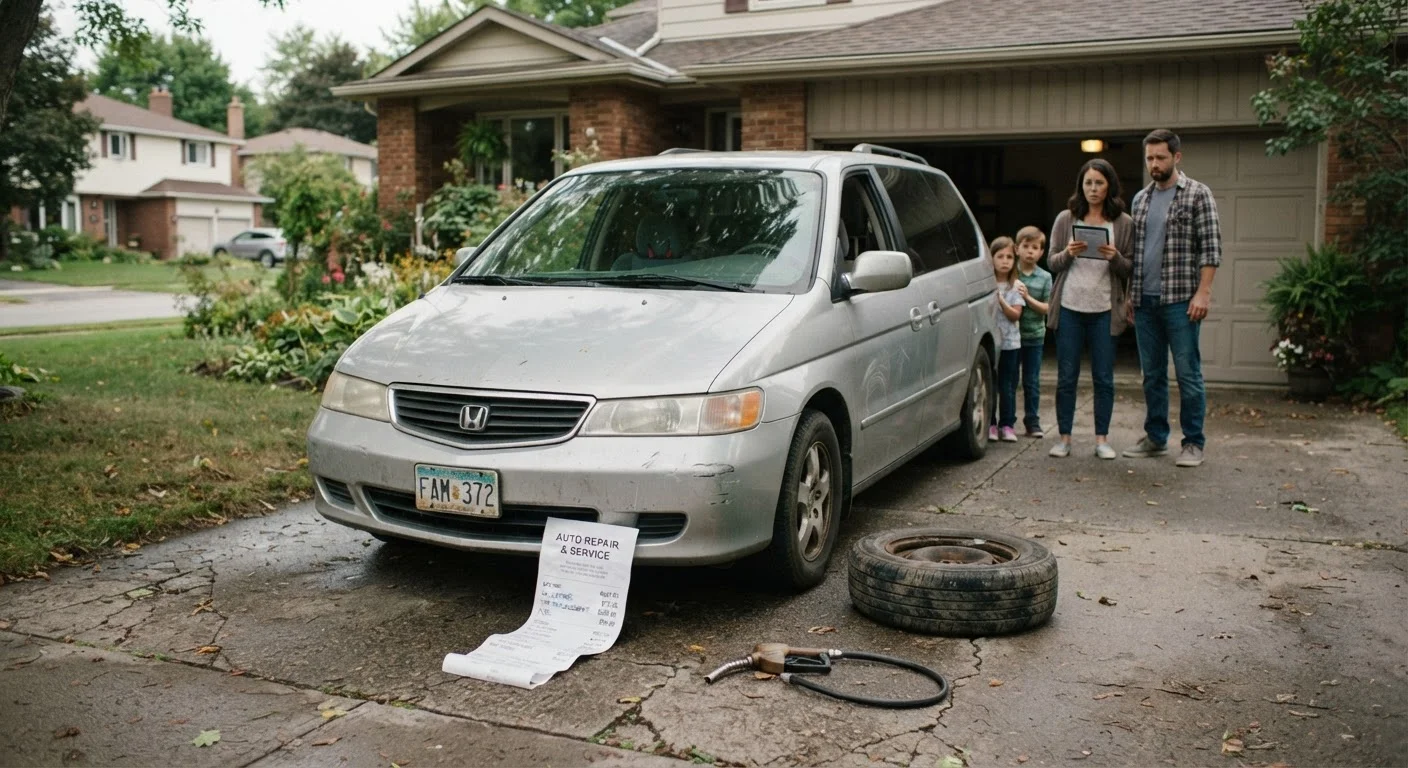
The Costs Nobody Warns You About
Most families budget for car payments, insurance, and gas. Those are the obvious ones. What tends to derail household finances are the costs that show up unannounced - the inspection that fails, the registration renewal that arrives in the mail, the parking ticket from an unfamiliar lot. None of these are rare events, yet most families aren't holding money aside for them.
The good news is that awareness alone goes a long way. Once you know which costs tend to blindside families, you can plan for them instead of absorbing the hit cold. Our car ownership cost worksheet is a useful companion for tracking all of these in one place. The list below covers the expenses families most commonly overlook - and what to keep in mind for each one.
Annual Registration and Emissions Testing Fees
Vehicle registration must be renewed each year in every U.S. state, and many states also require a separate emissions inspection or safety check. These fees vary significantly by state and vehicle type, but they are guaranteed recurring costs. Families with more than one vehicle multiply this exposure. Because the bill arrives once a year - often tied to a specific month - it can feel like a surprise even though the date never changes.
Note the renewal month in your calendar now, and set aside a portion of the expected fee each month leading up to it. Check your state's DMV website for current fee schedules, since amounts can change between cycles.
Registration fees are guaranteed annual costs - but they feel like surprises because families don't plan monthly for them.
Tyre Replacement
Tyres are a consumable item - they wear down with every mile driven and eventually need replacing. A set of four tyres for a family SUV or minivan typically represents a meaningful expense, and the timing is rarely convenient. Tread wear, sidewall damage, or a slow leak found just before a road trip can force an unplanned purchase.
Checking tyre condition regularly and understanding basic tread wear indicators helps families anticipate replacement before it becomes urgent. The basics of tyre care - including how pressure and rotation affect lifespan - can meaningfully extend how long a set lasts and help you avoid an emergency replacement at full retail price.
Tyres are a guaranteed expense - routine checks extend their life and help you replace them on your terms, not the road's.
Brake Wear and Fluid Services
Brake pads wear down gradually and require periodic replacement. Waiting until brakes are grinding metal-on-metal - meaning the pad material is fully worn - typically leads to rotor damage, turning a moderate pad replacement into a significantly more expensive repair. Similarly, brake fluid should be changed at manufacturer-recommended intervals, yet it's one of the most commonly skipped services.
Both are predictable, schedulable costs. Knowing your vehicle's service schedule - found in the owner's manual - lets you anticipate these expenses rather than absorb them reactively. See early warning signs your car needs attention for what to watch between service visits.
Ignoring worn brake pads almost always leads to more expensive rotor damage - a predictable cost that becomes avoidable with planning.
Parking Fines and Toll Charges
Parking fines are easy to dismiss as rare one-offs, but for families navigating school pickups, hospital appointments, sports events, and shopping areas with inconsistent signage, they accumulate. Electronic tolls - especially on unfamiliar roads or during family road trips - can also generate unexpected charges if a transponder account runs out of funds or a cash-only toll is missed, sometimes resulting in administrative fees on top of the toll itself.
Keeping a small cash reserve in the car for meters and tolls, and regularly topping up any electronic toll account, reduces both the frequency and the penalty cost of these charges. Underestimating costs on family trips is a related pattern worth reading before longer drives.
Parking fines and toll penalties are small individually but can total hundreds of dollars annually for active families.
Depreciation - The Invisible Drain
Depreciation is the reduction in a vehicle's value over time. It doesn't appear on a monthly statement, and no invoice arrives - yet it is consistently the largest single cost of car ownership for most families, often exceeding fuel or insurance when calculated annually. A vehicle that loses significant value in its early years is effectively costing the family money every month, even when it's running perfectly.
Understanding how depreciation works doesn't change the expense, but it does help families make more informed decisions about how long to keep a vehicle and what type to consider next. The full explanation of depreciation and family budgets covers the mechanics in plain terms.
Depreciation is the largest cost of car ownership for most families - and the one that never shows up on a single bill.
Deferred Repairs That Compound
Putting off a small repair - a minor oil leak, a worn belt, a check-engine light that seems stable - is a common coping strategy when money is tight. The problem is that small issues in a vehicle often escalate. A timing belt that snaps, for example, can cause engine damage that costs many times more than the belt replacement would have. The same pattern repeats across dozens of common vehicle systems.
The cost of skipping small car repairs walks through the most common examples and the repair bills that tend to follow. Addressing items early - when they're still small - is nearly always the lower-cost path, even when the timing feels inconvenient.
Deferred repairs rarely stay small - the most expensive vehicle bills are often the result of something fixable that was put off.
Building a Buffer Before the Bills Arrive
The pattern across every item on this list is the same: none of these costs are genuinely unpredictable. Tyres wear out, registrations renew annually, and older vehicles need more attention. The problem is that families treat them as surprises rather than certainties.
Start a Dedicated Car Expense Fund
Calculate your total expected annual vehicle costs - including registration, tyres, brakes, and a buffer for unexpected repairs - then divide by 12 and set that amount aside monthly. Even a modest dedicated fund prevents these costs from derailing the broader household budget when they arrive. A separate savings account labeled specifically for vehicle expenses makes it easier to avoid spending the money on other things.
A simple approach is to total your estimated annual vehicle costs - including the overlooked ones - and divide by 12. Setting that amount aside each month in a dedicated account means the money exists when you need it. For a fuller picture of where your vehicle spending actually goes, see where your car budget goes each month. And if vehicle costs are part of a broader household budget strain, it's worth reviewing hidden budget leaks that often go unnoticed alongside car spending.
This article is for general informational purposes only and does not constitute financial or mechanical advice. Consult a qualified mechanic for vehicle-specific guidance and a licensed financial professional for personal budgeting decisions.
The content provided on our blog site traverses numerous categories, offering readers valuable and practical information. Readers can use the editorial team’s research and data to gain more insights into their topics of interest. However, they are requested not to treat the articles as conclusive. The website team cannot be held responsible for differences in data or inaccuracies found across other platforms. Please also note that the site might also miss out on various schemes and offers available that the readers may find more beneficial than the ones we cover.