

Summary
34 items · 30-60 minutes
Why One List Works for Every Trip
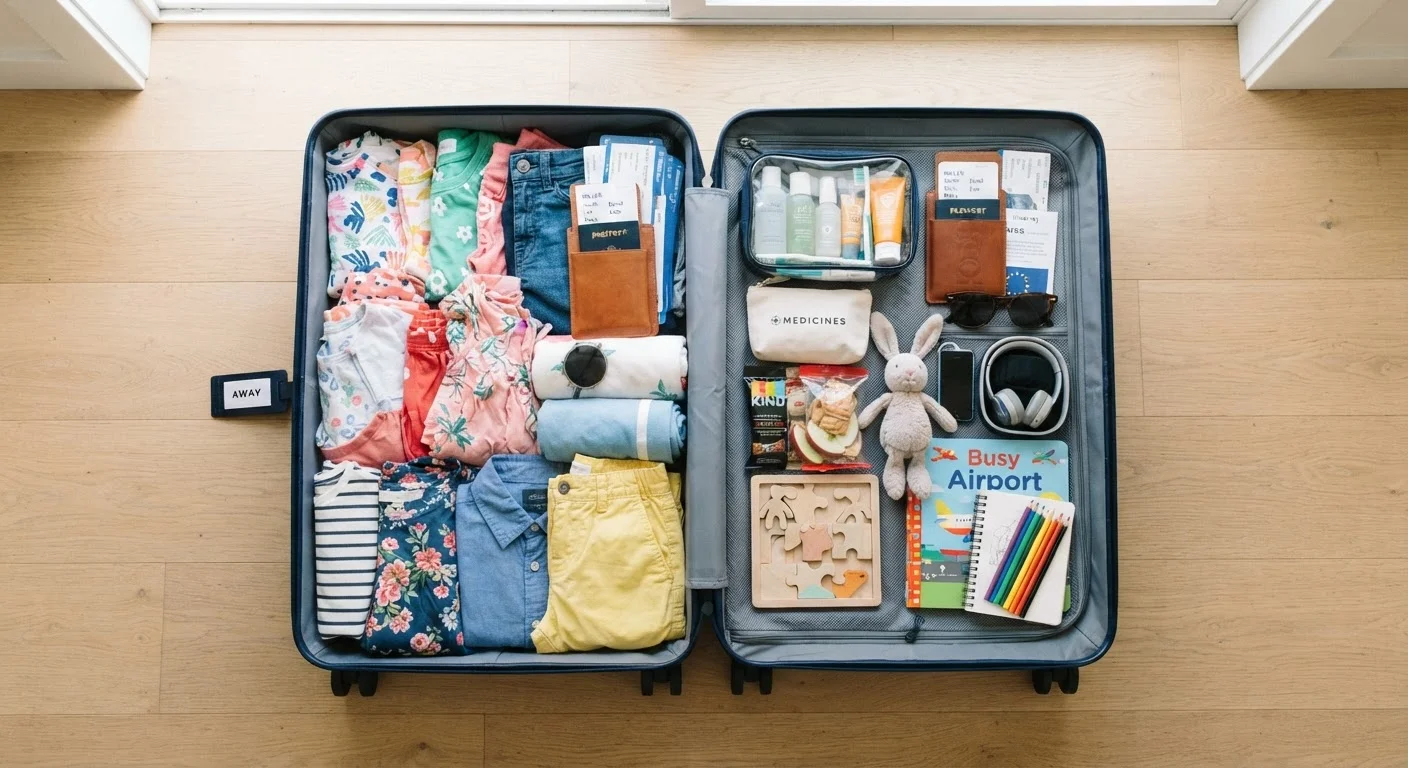
Most packing mistakes happen when families start from scratch each trip. A reusable master list - adjusted by mode of travel rather than rebuilt every time - cuts prep time and prevents the classic forgotten-item regrets: the child's medication left on the bathroom counter, the car charger sitting in the kitchen drawer.
This checklist is structured into logical groups you can scan and check off in under an hour. Before you dive in, it's worth pairing it with your trip's financial prep. See the Complete Family Travel Savings Playbook for budget-setting strategies that work alongside smart packing decisions - including whether checking bags is worth the cost for your group.
Use the groups below in order. Mark items that don't apply to your trip and leave the rest as your living checklist.
Packing Cubes
Keep clothing and accessories sorted by person or category, reducing repacking time across multi-night trips.
Portable Power Bank
Keeps devices charged during long travel days or delays when outlets aren't available.
Travel-Size First Aid Kit
Covers minor injuries and illness symptoms without relying on finding a pharmacy at your destination.
Luggage Scale
Helps verify bag weight before arriving at the airport and avoids overweight baggage fees.
Reusable Water Bottles
Cuts beverage spending at transit hubs and keeps kids hydrated throughout travel days.
The Checklist
Work through each group before you zip a single bag. The must items are non-negotiable; should items are strongly recommended for most families; nice-to-have items add comfort without being essential.
Documents & Money
Clothing & Footwear
Health, Medications & First Aid
Kids-Specific Essentials
Electronics & Charging
Toiletries & Personal Care
Bag Organisation & Trip Admin
Don't Pack Prescription Meds in Checked Luggage
If a checked bag is delayed or lost, medication in that bag may be inaccessible for days. Always keep prescription medications, along with any critical health supplies, in your carry-on or personal bag. Consult your doctor or pharmacist before travel if you have questions about travelling with specific medications - rules vary by country and medication type.
If you're flying, the baggage fee math matters more than you might expect - especially for groups of four or more. Our companion piece on carry-on vs. checked bag costs runs the real numbers so you can decide before you overpack.
Traveling by car? Your vehicle needs its own pre-trip check. Walk through the pre-drive safety walkthrough to cover tyre pressure, car seat positioning, and emergency kit basics before you leave the driveway.
Mode-Specific Add-Ons
Plane Travel
Beyond the core list, flying with kids requires a stocked carry-on that survives a delay. Pack a change of clothes for each child and one for at least one adult in your personal bag - not in checked luggage. Tablets or activity kits should be accessible from your seat, not buried. For a full walkthrough on airport logistics, see flying with young children. If screens aren't your only plan, low-tech entertainment ideas for long-haul flights offers practical alternatives.
Car Travel
Road trips add a category the other modes don't: roadside emergency supplies. Beyond the core packing list, every family vehicle should carry a jump starter, a basic first-aid kit, water, and reflective triangles. The full breakdown is in our guide on emergency supplies every family car should carry.
Train Travel
Train packing sits between car and air: no TSA screening, but limited overhead space on many routes. Prioritise soft-sided bags that compress, bring your own snacks (café car prices are steep), and keep entertainment within easy reach - delays happen and kids notice every extra minute.
This article provides general travel preparation guidance only. Always verify entry requirements, travel advisories, and any health-related recommendations with official government and healthcare sources before travelling.
The content provided on our blog site traverses numerous categories, offering readers valuable and practical information. Readers can use the editorial team’s research and data to gain more insights into their topics of interest. However, they are requested not to treat the articles as conclusive. The website team cannot be held responsible for differences in data or inaccuracies found across other platforms. Please also note that the site might also miss out on various schemes and offers available that the readers may find more beneficial than the ones we cover.