

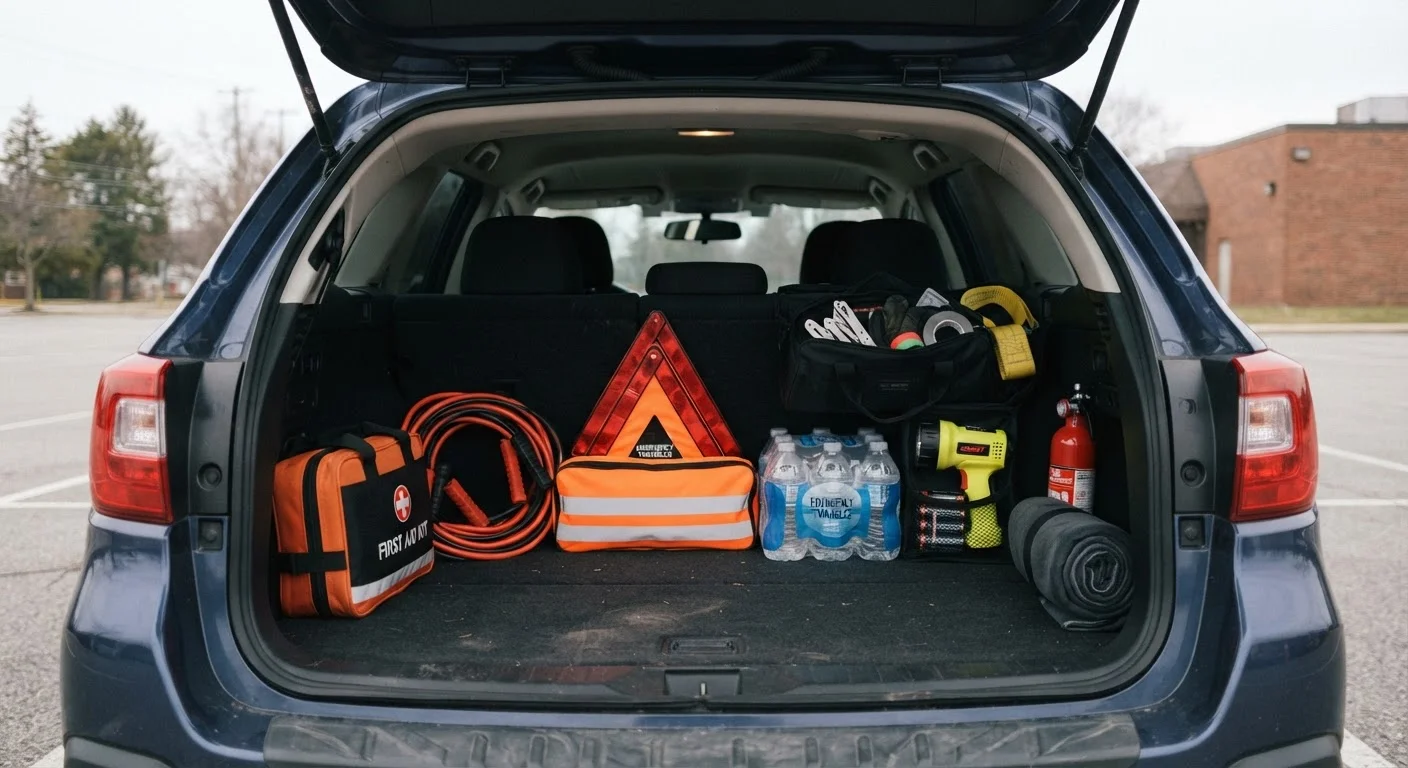
Why Your Car Kit Matters More Than You Think
Most families assume roadside trouble happens to someone else - until it doesn't. A flat tire on a rural highway, a dead battery in a parking lot, or a minor fender-bender on a dark stretch of road can escalate quickly when you're unprepared, especially with children in the car. Organizations such as the American Red Cross and the National Safety Council consistently recommend that all drivers carry a basic emergency kit, and the guidance becomes more pointed when kids are involved.
A stocked kit doesn't require a large investment or a commercial product. What matters is having the right items on hand before you need them. The list below reflects what safety guidance and automotive organizations broadly recommend - think of it as a practical floor, not a ceiling. If you're heading out on a longer trip, run through a full pre-drive safety walkthrough before you leave.
Keep the Kit Accessible, Not Buried
Storing your emergency kit under heavy cargo or in an awkward corner of the trunk reduces the chance you'll actually use it when needed. Use a dedicated bag or bin that can be located quickly, even in low light or a stressful situation. If you have young children, a small pouch with kid-specific items - snacks, a comfort item, a glow stick - kept within easier reach can help in the immediate moments after a stop.
Essential Items to Keep in Your Family Vehicle
First Aid Kit
A compact first aid kit is the starting point for any vehicle emergency supply. Look for one that includes adhesive bandages in multiple sizes, sterile gauze pads, medical tape, antiseptic wipes, disposable gloves, and a basic instruction card. If anyone in your family uses prescription medications or has known allergies, keep a small supply and any relevant supplies (such as an epinephrine auto-injector, if prescribed) accessible - not buried in the trunk.
The American Red Cross offers guidance on what a complete basic kit should include. Review yours periodically to replace anything that's expired or been used.
A basic first aid kit is the single most universally recommended item for any vehicle emergency supply.
Jumper Cables or a Portable Jump Starter
A dead battery is one of the most common reasons families call for roadside assistance. Traditional jumper cables work when another vehicle is available, but a portable jump starter (sometimes called a jump pack) lets you restart your car without a second vehicle present. These compact battery units have become widely available and are straightforward to use - most include clear instructions on the device itself.
Whichever option you carry, make sure you understand the correct connection sequence before you need it. Incorrect use of jumper cables can damage vehicle electronics or, in rare cases, cause sparks near a battery. If you're unsure, calling a roadside assistance service is the safer choice.
A portable jump starter means you don't need another vehicle present to restart a dead battery.
Reflective Warning Triangles or Road Flares
Visibility is the critical factor when your vehicle is stopped on or near a roadway. Reflective warning triangles are reusable, don't require a flame, and can be seen by approaching drivers from a significant distance. The general guidance from roadway safety organizations is to place them at 10 feet, 100 feet, and 200 feet behind your vehicle - adjusting for curves or hills.
If you carry traditional flares, be aware they involve an open flame and should be kept away from fuel or spilled liquids. LED flares are a safer alternative for families with young children. Whatever you use, getting them deployed quickly - before attending to anything else - is the priority. This connects directly to advice in our guide on teaching kids breakdown safety steps.
Getting warning devices deployed quickly is the top priority when your vehicle stops on or near a roadway.
Flashlight and Extra Batteries
Breakdowns don't wait for daylight. A reliable flashlight is essential for everything from checking under the hood at night to signaling for help. LED flashlights last significantly longer on a set of batteries than older incandescent models. Store extra batteries separately - keeping them installed in the flashlight long-term can cause corrosion that renders the flashlight useless at the wrong moment.
Headlamps - the hands-free type worn on your head - are particularly useful because they free up both hands for tasks like changing a tire or reading a map. If your family includes young children, a small nightlight or a spare flashlight at their level can also help manage anxiety in a dark, stopped vehicle.
Store extra batteries separately to prevent corrosion from rendering your flashlight useless when you need it most.
Water and Non-Perishable Snacks
In hot climates or during summer travel, dehydration can become a concern within hours of a breakdown - particularly for young children. Keeping at least one liter of water per person in the vehicle provides a meaningful buffer. Rotate it every few months, as plastic bottles can degrade or leach when exposed to sustained heat.
A small supply of shelf-stable snacks - crackers, nuts, or individually wrapped energy bars - helps manage hunger during delays and significantly reduces stress when children are involved. Keep snacks in a sealed container to deter pests if the car sits for extended periods. For longer trips, the family packing list for every trip type covers broader provisions worth considering.
Dehydration can set in within hours in hot conditions - carrying water per person is basic protection.
Blanket and Basic Warmth Items
A compact emergency blanket - the thin mylar type used in first aid kits - takes up almost no space and can be critical in cold weather while you wait for help. For families who live in or travel through winter climates, a heavier fleece or wool blanket stored in the trunk adds meaningful warmth during an extended wait. Gloves, a hat, and an extra pair of socks for each family member round out cold-weather readiness.
If your family travels seasonally, our seasonal car care guide covers what to add and remove from your kit as conditions change.
A compact emergency blanket takes up almost no space but provides meaningful protection during a cold-weather wait.
Basic Tool Kit and Tire-Changing Equipment
A modest set of tools - adjustable wrench, screwdrivers in both flat and Phillips head, pliers, and zip ties - handles a surprising number of minor roadside fixes. More specifically for tires: confirm your vehicle has a serviceable spare (not just a compact temporary spare that's flat or cracked), a jack rated for your vehicle's weight, and a lug wrench that actually fits your wheel bolts. These should already be in your vehicle, but they're worth verifying before a long trip.
A can of tire inflator sealant can temporarily seal small punctures and inflate a tire enough to reach a service station - useful when changing a tire isn't safe or practical. Note that sealant-treated tires usually can't be repaired afterward and may affect tire pressure monitoring systems, so it's a backup measure, not a routine fix. See our guide to checking your car's fluid levels for related under-hood basics worth knowing.
Verify your spare tire is serviceable before a trip - a flat or cracked spare offers no help at all.
Maintaining Your Kit Over Time
Assembling the kit is step one - keeping it functional is the ongoing part. Medications expire, batteries drain, and food and water degrade. A practical habit is to review your kit when you change your clocks in spring and fall. Check expiry dates on first aid supplies and food, test the flashlight, and confirm the spare tire is properly inflated. Our guide to seasonal car care for families is a good companion for this rhythm.
If you frequently travel with children, consider also reading how to teach children what to do after a breakdown or minor crash. Kids who understand basic steps - stay calm, stay in the car, call for help - can genuinely support safer outcomes. And for families building out their broader household preparedness, the car maintenance hub covers the upkeep tasks that help prevent many roadside emergencies in the first place.
The content provided on our blog site traverses numerous categories, offering readers valuable and practical information. Readers can use the editorial team’s research and data to gain more insights into their topics of interest. However, they are requested not to treat the articles as conclusive. The website team cannot be held responsible for differences in data or inaccuracies found across other platforms. Please also note that the site might also miss out on various schemes and offers available that the readers may find more beneficial than the ones we cover.