

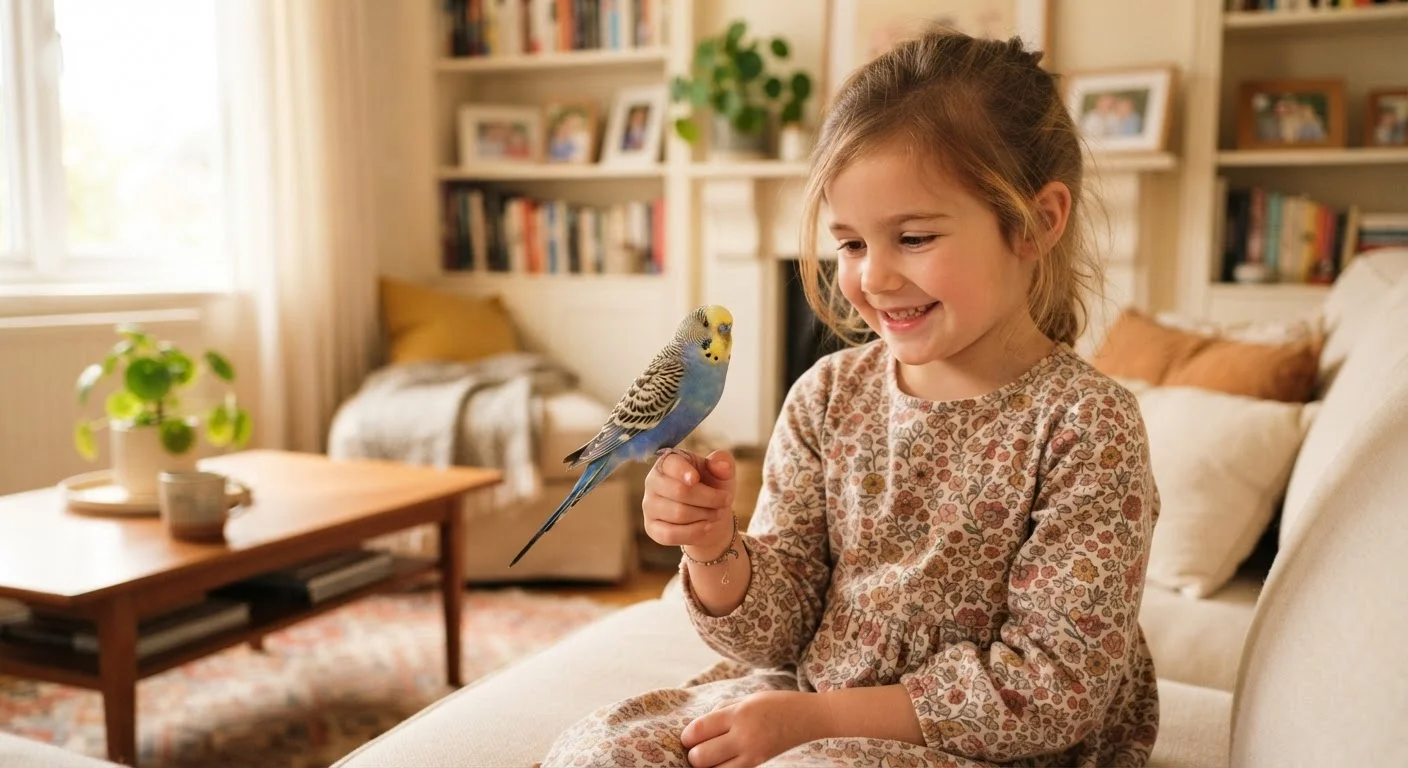
What It Actually Means to Live With a Bird
Birds occupy a unique middle ground in the pet world - more interactive than fish, less demanding of physical space than dogs, but requiring a level of daily engagement that surprises many first-time bird families. A budgie left alone in a cage with no interaction isn't a low-maintenance pet; it's an understimulated animal that may develop stress behaviors over time.
The daily reality of bird ownership involves refreshing food and water, cleaning cage liners or trays, and - importantly - letting your bird out of its cage for supervised exploration and social time. Most avian veterinarians and behaviorists recommend at minimum one to two hours of out-of-cage time per day for small species like budgies, and more for larger parrots.
If your household is busy and unpredictable, that rhythm is still achievable, but it requires planning. Birds thrive on routine, and a consistent daily schedule for feeding and interaction genuinely affects their behavioral health.
“Birds are not decorations. They are flock animals that require the same quality of social relationship from their human families that they would get from other birds in the wild. When that relationship is missing, you see the consequences in their behavior.”
— Dr. Susan Friedman, Behavioral psychologist and consultant specializing in applied behavior analysis for captive animals
Choosing the Right Species for a Family With Kids
Not all birds are equal in terms of child-friendliness. Species selection matters enormously, and the most popular - the large, colorful parrots - are often the least suitable for households with young children.
- Budgerigars (budgies): Small, social, and relatively quiet. They can learn to mimic words and enjoy gentle handling. A good starting point for families new to birds.
- Cockatiels: Gentle and affectionate. They whistle and can mimic simple tunes. Generally tolerant of calm children and easier to handle than larger parrots.
- Larger parrots (macaws, African Greys, cockatoos): Highly intelligent but demanding. These species can bite hard enough to cause real injury, require enormous social investment, and may live longer than the children who grow up with them. They are generally not recommended for households with young kids.
If your family is considering a first bird, starting smaller and building experience is the approach most avian specialists support. See our guide on choosing your family's first pet for broader species comparisons.
Start With One Bird or a Bonded Pair
For families new to birds, starting with a single socialized budgie or a bonded pair is generally wiser than jumping to a larger, more demanding species. A single budgie will rely more heavily on human interaction, while a bonded pair can keep each other company during the day - which suits busy households. Give yourself time to learn bird body language and care rhythms before considering a more complex species.
The Hidden Costs and Commitments
Initial cage and setup costs for a budgie can be modest, but ongoing expenses add up. Quality food (a mix of pellets, seeds, and fresh vegetables), cage accessories for enrichment, and routine avian vet visits are recurring costs families should budget for realistically.
7-10 years
Average budgie lifespan with good care
According to avian veterinary references, budgerigars typically live 7-10 years, making them a meaningful but manageable long-term commitment for families.
Up to 80 years
Potential lifespan of large parrot species
Species such as macaws and cockatoos are documented to live several decades in captivity, a fact that dramatically shapes the adoption decision for families.
1-2 hours
Recommended daily out-of-cage time for small birds
Avian behaviorists generally recommend at least one to two hours of supervised out-of-cage time daily to support a small bird's behavioral and physical well-being.
Unlike dogs and cats, birds require a veterinarian with specific avian training - and those specialists are not available in every community. Finding one before you bring a bird home is a practical first step, not an afterthought. For a realistic picture of ongoing pet health costs, our article on pet wellness on a budget breaks down what to expect.
There's also the time investment. A bird that doesn't receive daily interaction - especially a species as social as a parrot - can develop behavioral problems including excessive screaming or feather destruction. That's not a flaw in the animal; it's a predictable response to unmet social needs. Honest self-assessment about your family's schedule is essential before adopting.
Families considering birds alongside other small pets may also find it useful to compare care demands - our overview of small mammals as family pets offers a useful contrast in terms of time and handling requirements.
Making Your Home Safe for a Bird
Bird-proofing a home is a distinct discipline from child-proofing or dog-proofing. Avian respiratory systems are extraordinarily sensitive - far more so than mammals. Fumes from overheated polytetrafluoroethylene (PTFE) coatings on certain non-stick cookware, for example, are well-documented as lethal to birds even at low concentrations.
Common household hazards for birds include:
- Aerosol sprays, air fresheners, and scented candles
- Cigarette and e-cigarette smoke
- Certain cleaning products and paint fumes
- Open windows and ceiling fans during out-of-cage time
- Other household pets, particularly cats
This level of environmental awareness is real work, especially in the first months of ownership. Families who live in smaller spaces may find birds more manageable than larger pets in terms of physical space - but the environmental management requirements are significant. Our companion guide on pets for small homes and apartments explores how birds compare to other small-space-friendly options.
This article is for general informational purposes only and does not constitute veterinary advice. Consult a qualified avian veterinarian for guidance specific to your bird's health and care needs.
Frequently Asked Questions
Budgies are often considered one of the more manageable bird species for families. They are small, relatively quiet compared to larger parrots, and can become affectionate with patient handling. That said, young children need supervision around any bird, as rough or sudden movements can frighten or injure a small bird.
Budgies typically live 7-10 years with good care. Cockatiels average 15-20 years. Larger parrot species like African Greys or Amazons can live 40-80 years - a commitment that can outlast the owner. This lifespan should factor heavily into any adoption decision.
All birds vocalize, but the volume and frequency vary greatly by species. Budgies produce cheerful chatter that most households find manageable. Larger parrots - macaws and cockatoos in particular - can be extremely loud and are generally not suited to apartment living or noise-sensitive households.
Birds have highly sensitive respiratory systems. Overheated non-stick cookware (which releases fumes toxic to birds), aerosol sprays, scented candles, cigarette smoke, and certain cleaning products can all be harmful or fatal. Bird-proofing your home environment is a non-negotiable part of ownership.
Yes - birds need routine wellness exams from a veterinarian with avian experience. Avian vets are not universally available, and their services may cost more than general veterinary care. It's worth identifying a qualified provider in your area before bringing a bird home.
Children can participate in feeding, refreshing water, and gentle interaction under adult supervision. However, cage cleaning, health monitoring, and out-of-cage time management should remain adult responsibilities. Bird care is a good opportunity to teach kids about routine and gentle handling.
The content provided on our blog site traverses numerous categories, offering readers valuable and practical information. Readers can use the editorial team’s research and data to gain more insights into their topics of interest. However, they are requested not to treat the articles as conclusive. The website team cannot be held responsible for differences in data or inaccuracies found across other platforms. Please also note that the site might also miss out on various schemes and offers available that the readers may find more beneficial than the ones we cover.