

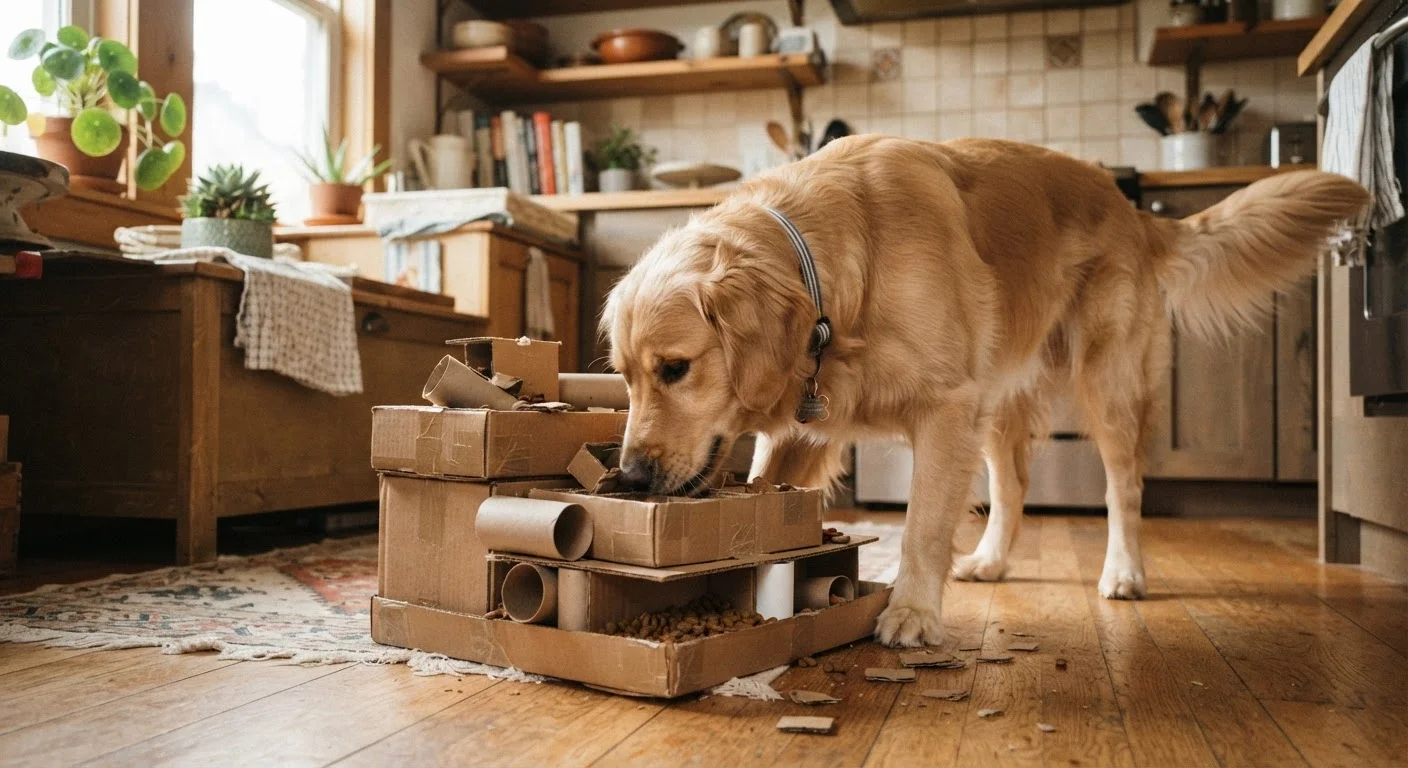
Why Mental Stimulation Is as Important as Physical Exercise
Many families focus on walks and playtime to tire out their pets, but cognitive engagement is equally critical. Veterinary behaviorists generally agree that under-stimulated pets are more likely to develop anxiety, excessive barking, destructive chewing, or inappropriate elimination - all behaviors that stress out households already juggling kids, school schedules, and tight budgets.
The good news is that enrichment doesn't require a shopping cart full of specialty toys. Research on animal cognition consistently shows that novelty, problem-solving, and sensory variety are what engage a pet's brain - and those elements are abundant in most kitchens, recycling bins, and junk drawers. For more on managing pet care costs without sacrificing quality, see our guide to pet wellness on a budget.
Before diving in, one important note: always supervise pets during enrichment activities, especially when children are involved. Some DIY options that work beautifully for a calm, older cat may be a choking hazard for an enthusiastic large-breed puppy. Know your pet's play style.
Supervise All DIY Enrichment Activities
Homemade enrichment items are not tested to commercial safety standards. Always supervise your pet during use, especially with cardboard, paper, or bottle-based activities. Discard any item that shows signs of significant chewing or structural damage. If your pet is a determined chewer or has a history of intestinal blockages, consult your veterinarian before introducing DIY puzzle feeders.
What You'll Need Before You Start
Gather your materials and do a quick safety pass before assembling anything. The goal is to keep costs near zero while eliminating hazards.
What you will need
Cardboard boxes or egg cartons
Used as the base structure for puzzle feeders and hide-and-seek foraging trays.
Muffin tin and tennis balls
Classic dog puzzle: hide treats under balls in each cup to encourage problem-solving.
Old towel or fleece fabric
Rolled or knotted with kibble tucked inside to create a simple snuffle mat for dogs.
Empty plastic bottle (clean, label removed)
Creates a tumble feeder that dispenses kibble as the pet rolls it - use only with close supervision.
Crinkled paper or brown paper bags
Provides sensory novelty for cats when kibble or small toys are hidden inside.
Scissors and pet-safe tape
For trimming sharp edges and securing cardboard structures so they don't collapse mid-session.
Step-by-Step: Building and Introducing DIY Enrichment
Follow these steps to create, test, and rotate enrichment activities that genuinely engage your dog or cat. Kids ages six and up can participate in most of the assembly steps - a great way to build empathy and responsibility toward family pets. You can also explore our guide on keeping pet toys and kids' toys separate to avoid common mix-ups at home.
Choose the right activity for your pet's profile
Match the enrichment type to your pet's age, size, and energy level. A high-energy young dog needs more challenging puzzle feeders or scent games. A senior cat may prefer a simple paper bag with a pinch of dried catnip. Avoid activities that require your pet to ingest non-food materials - always think about what happens if they chew through it.
Inspect materials for hazards
Before assembling anything, remove staples, tape residue, plastic windows, and rubber bands from cardboard or packaging. Check that any plastic containers are BPA-free and have no sharp edges. Avoid boxes that previously held cleaning products, strongly scented foods, or alcohol - residue can irritate pets' airways or skin.
Build a basic puzzle feeder
For dogs: place a muffin tin on the floor, drop a small treat into each cup, and cover several cups with tennis balls. Let your dog nose or paw the balls aside to find rewards. For cats: fold the flaps of a small cardboard box inward, cut a few paw-sized holes in the sides, and drop a handful of kibble inside. The cat bats and reaches to retrieve pieces.
Introduce the activity calmly
Place the enrichment item on the floor and step back - resist the urge to guide your pet. Most animals need a moment to investigate on their own terms. If your pet shows no interest after two or three minutes, lightly tap the puzzle or rub a treat along the surface to transfer scent. Never force interaction; a disinterested pet today may engage enthusiastically tomorrow after watching a sibling animal use it.
Supervise the full session and debrief the materials
Stay present for the entire first session, and for any session where a dog or cat is using a cardboard or paper item. After the activity ends, inspect the material for chewed edges, torn pieces, or compromised structure. Discard anything that has been partially eaten or significantly damaged - these items become hazards on reuse.
Rotate and refresh your enrichment library
After a session, clean reusable items (tennis balls can go in the washing machine; plastic containers can be rinsed and air-dried) and store them out of reach. Introduce a different activity the next day. Aim to cycle through three to five activities across the week so each feels relatively new. Track which activities your pet engages with longest - those are worth repeating more frequently.
Keeping It Fresh Without Spending More
The single most effective enrichment strategy costs nothing: rotation. Putting an activity away for a week and reintroducing it makes it feel novel again to most pets. Behaviorists often describe this as managing a "enrichment library" rather than constantly adding new items.
For cats especially, vertical space is enrichment. Clearing a windowsill, rearranging furniture to create a jumping path, or placing a bird feeder outside a window can occupy an indoor cat for hours. Dogs benefit from sniff-focused outdoor time - even a ten-minute "sniff walk" where the dog sets the pace is cognitively exhausting in a healthy way.
If your household is also working on pet-proofing shared spaces, enrichment stations can be incorporated into that planning - keeping pets occupied in safe zones while kids play elsewhere. For more ways to stretch your overall pet budget, our food budget guide is a practical companion read.
Turn Enrichment Into a Family Routine
Assigning kids a rotating "enrichment helper" role - setting up the day's puzzle or hiding treats in a snuffle mat - builds responsibility and strengthens the child-pet bond without additional cost. Even a five-year-old can drop kibble into a muffin tin with a little guidance. Keep the activity age-appropriate for both the child and the pet, and always have an adult nearby.
The content provided on our blog site traverses numerous categories, offering readers valuable and practical information. Readers can use the editorial team’s research and data to gain more insights into their topics of interest. However, they are requested not to treat the articles as conclusive. The website team cannot be held responsible for differences in data or inaccuracies found across other platforms. Please also note that the site might also miss out on various schemes and offers available that the readers may find more beneficial than the ones we cover.