

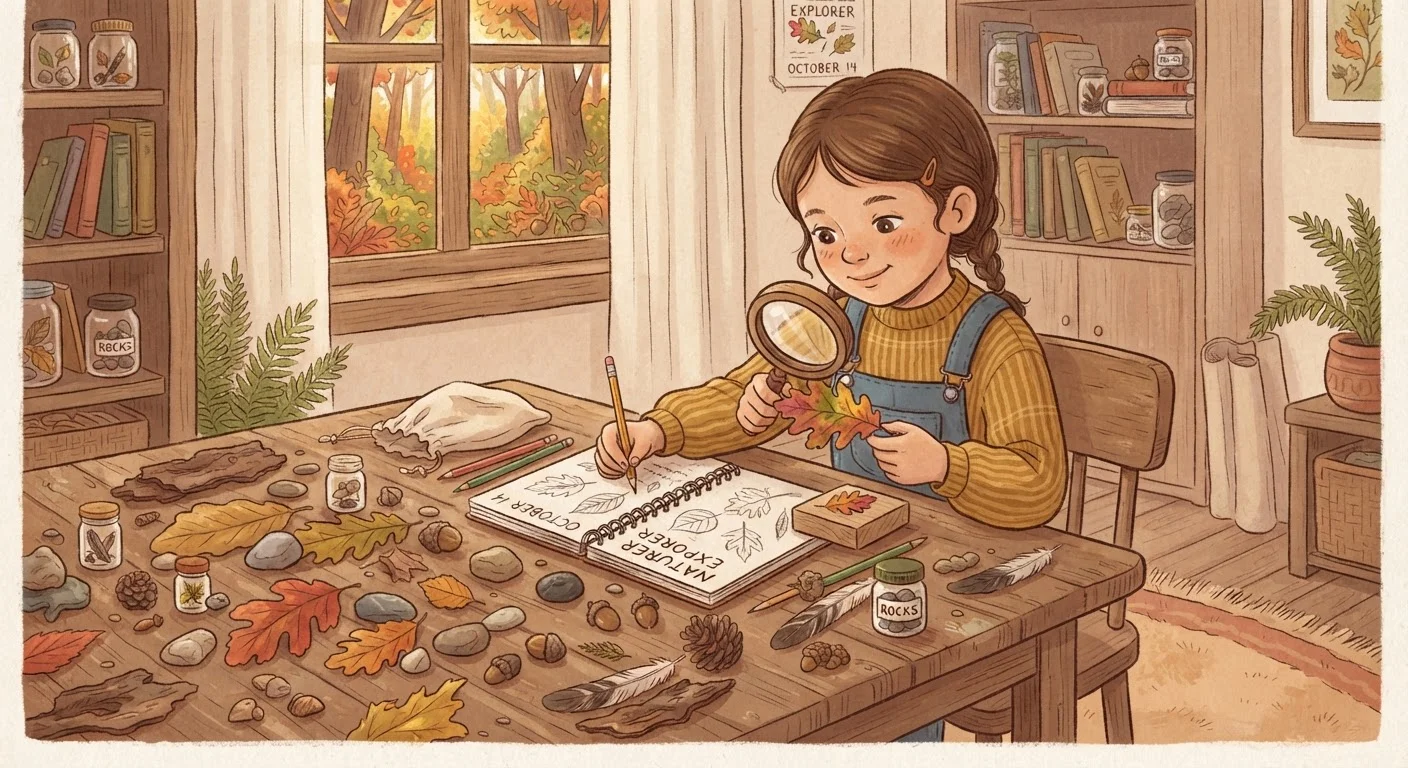
Why Free Science Resources Are Worth Seeking Out
Science curiosity is one of the most valuable things a child can carry through school - and it doesn't have to cost a thing to nurture. Whether your child is fascinated by space, obsessed with bugs, or just starting to ask "why" about everything, a wealth of no-cost tools is available right now from libraries, universities, national parks, and public broadcasters.
The challenge most parents face isn't a shortage of resources - it's knowing which ones are trustworthy, age-appropriate, and actually engaging. If you're new to exploring free educational tools online, starting with the basics can help you build a solid framework before diving into subject-specific content.
The resources in this list come from publicly funded or mission-driven organizations and are designed to supplement - not replace - classroom learning. Most work well on a tablet or laptop, and many include printable components so learning can move away from screens entirely.
Start With Your Child's Current Curiosity
Rather than working through resources systematically, follow what your child is already asking about. If they're curious about volcanoes, start with USGS maps and a printable experiment. If animals are their thing, try Cornell Lab's bird tools. Anchoring new resources to existing interest dramatically increases engagement and follow-through.
8 Free Science and Nature Resources to Explore Today
NASA's Kids' Club and Science Pages
NASA offers a dedicated section of its website designed for younger learners, with games, videos, and articles about space exploration, Earth science, and astronomy. Content is organized by reading level, making it usable for a wide age range. Because it comes directly from a federal science agency, the information is reliable and regularly updated.
Older children can also access mission data, satellite imagery, and educator guides - many of which work just as well at home as in a classroom.
NASA's free content spans everything from early readers to mission-level data.
Smithsonian Institution's Free Virtual Resources
The Smithsonian's museums and research centers publish an enormous library of free educational content online, including virtual tours of natural history collections, interactive science activities, and educator-developed lesson plans. Children can explore dinosaur fossils, ocean ecosystems, and human biology through engaging multimedia.
The Smithsonian Science Education Center specifically publishes free downloadable units designed around inquiry-based learning - meaning kids are encouraged to ask questions and test ideas, not just absorb facts.
Smithsonian's inquiry-based downloadable units put kids in the scientist's seat.
Public Library Science Databases and E-Books
A library card unlocks far more than physical books. Most US public libraries provide free access to databases like Britannica School or PebbleGo, which include science encyclopedias, videos, and reading-level-adjusted articles. Many libraries also offer free digital lending of science e-books and audiobooks through platforms like Libby.
If your child tends to read below or above grade level, library databases are particularly helpful because they often sort content by reading complexity rather than age alone. Understanding how free digital tools work can help you evaluate which database features are most useful for your child.
A free library card is one of the most underused science tools available to families.
US Geological Survey (USGS) Learning Resources
The USGS publishes free educational materials about Earth science topics - earthquakes, volcanoes, water cycles, maps, and natural hazards - written for students and general audiences. These resources are particularly useful for children who are curious about geography and the physical world around them.
The USGS also offers interactive maps and real-time data tools that let children track actual seismic activity or monitor river levels, turning current events into hands-on learning opportunities.
Real-time USGS data tools turn current Earth events into live science lessons.
National Park Service's Junior Ranger Activities
The National Park Service's Junior Ranger program is well-known as an in-park activity, but many parks now offer free downloadable Junior Ranger booklets that can be completed at home. These booklets cover ecology, geology, wildlife, and conservation - and are designed to encourage children to observe nature in their own neighborhoods, not just national parks.
Completing a booklet and mailing it in (or submitting it online for some parks) can earn children a real Junior Ranger badge, which makes the effort feel tangible and rewarding.
Junior Ranger home booklets connect neighborhood nature walks to real science inquiry.
Cornell Lab of Ornithology's Bird-Watching Tools
Cornell Lab's free resources - including the eBird database and Merlin Bird ID app - introduce children to citizen science, the practice of everyday people contributing real data to scientific research. Children can log bird sightings in their backyard or local park and see how their observations become part of a global dataset.
This is an excellent entry point for children who learn best through outdoor activity rather than screen time, and it builds skills in observation, classification, and data recording that apply across all sciences.
Citizen science through bird-watching teaches data skills while kids enjoy the outdoors.
PBS LearningMedia Science Videos and Activities
PBS LearningMedia is a free platform offering thousands of curriculum-aligned videos, interactives, and lesson materials across science topics from life science to physical science to engineering. Content draws from well-known PBS series and is organized by grade band, making it easy to find age-appropriate material quickly.
Parents can create a free account to save favorites and build playlists around a child's current interests or school topics, which helps connect home learning directly to what's being covered in class.
PBS LearningMedia's grade-banded science library connects seamlessly to classroom topics.
Printable Science Experiment Guides From University Extension Programs
Many US land-grant universities publish free printable experiment guides through their cooperative extension programs - originally designed for 4-H clubs but freely available to any family. These guides cover biology, chemistry, physics, and agriculture using materials most families already have at home: vinegar, baking soda, seeds, and basic kitchen tools.
Because extension programs are tied to universities, the science behind each experiment is sound, and the guides typically explain the concept being demonstrated, not just the steps to follow.
University extension experiment guides explain the science, not just the steps.
Science learning at home works best when it stays connected to a child's real curiosity. If your child is struggling with specific concepts covered at school, our plain-language breakdown of tricky upper-primary science topics can help bridge the gap between home exploration and classroom expectations. You can also find a broader overview of free platforms in our age-by-age platform guide.
Making the Most of What's Already Free
The most effective science learning doesn't require a subscription or a kit - it requires consistency and follow-through. Set aside even 20 minutes a week for a virtual tour, a nature journal entry, or a simple kitchen experiment, and you'll see curiosity compound over time. Pairing digital resources with outdoor observation - a walk, a backyard count of insects, a cloud-spotting session - reinforces what children read or watch online in a way that sticks.
For a comprehensive look at building a full home learning environment across all subjects without spending, see our guide to supporting learning at home without spending. And if your child has a learning difference that affects how they engage with science content, specialized free tools are available to make these resources more accessible.
The content provided on our blog site traverses numerous categories, offering readers valuable and practical information. Readers can use the editorial team’s research and data to gain more insights into their topics of interest. However, they are requested not to treat the articles as conclusive. The website team cannot be held responsible for differences in data or inaccuracies found across other platforms. Please also note that the site might also miss out on various schemes and offers available that the readers may find more beneficial than the ones we cover.