

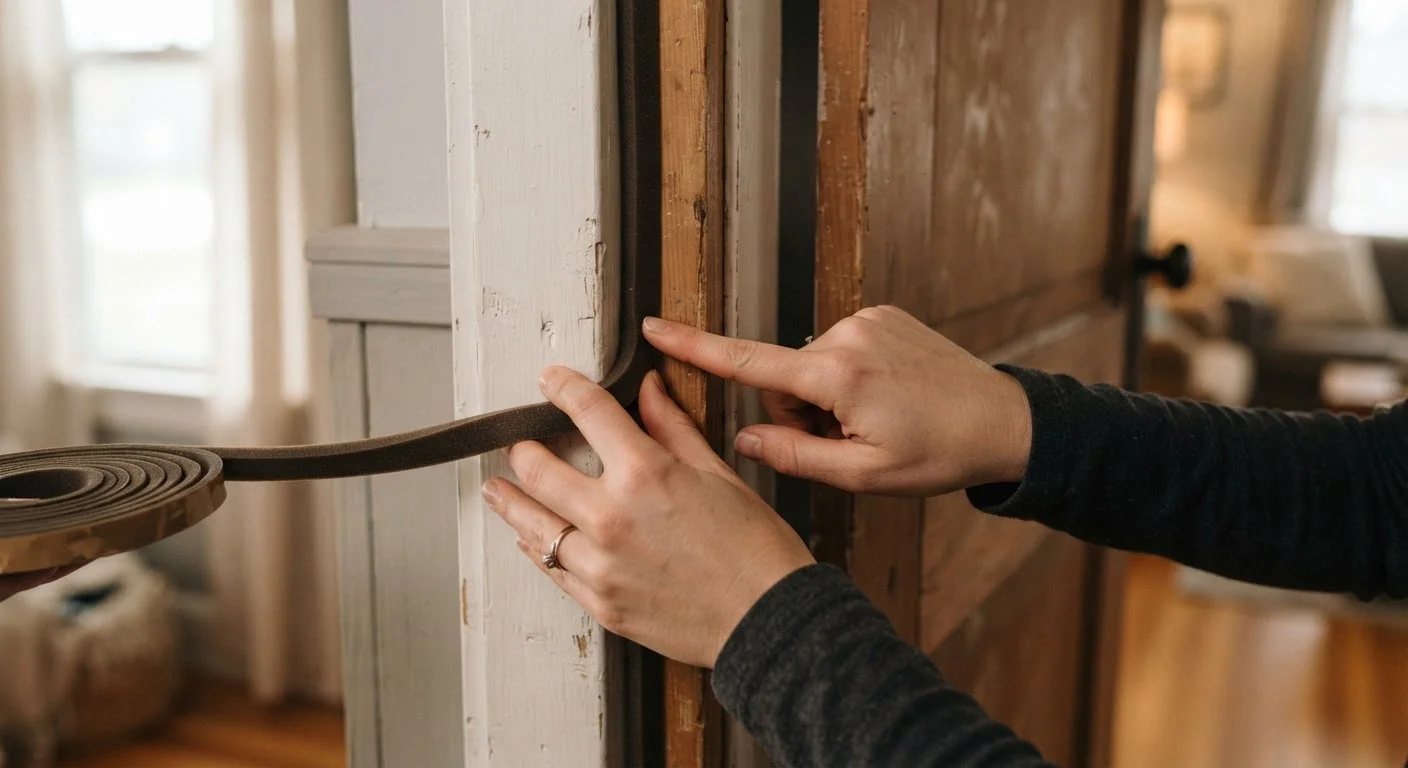
Why Gaps Around Doors and Windows Matter
Even a narrow gap - one you might not notice by eye - around a door or window can allow a surprising amount of air exchange. Cold drafts in winter and hot air in summer force heating and cooling systems to work harder. Beyond comfort and energy use, those same gaps let in moisture that can cause wood rot over time, and they provide easy entry points for insects.
Weatherstripping is the straightforward fix. Unlike caulk, which is meant for stationary cracks and joints, weatherstripping is designed to compress and recover repeatedly as doors and windows open and close. If you've noticed a draft near a closed door or felt air movement around a window sash, deteriorated weatherstripping is a common culprit. See our guide to why caulk fails for a look at the complementary - and equally important - role caulk plays in sealing static gaps.
The Four Main Types of Weatherstripping
Each weatherstripping type is engineered for a different kind of gap and movement pattern. Choosing the right one matters more than brand or price.
- Foam tape (open- or closed-cell): Self-adhesive strips that compress when the door or window closes. Closed-cell foam resists moisture better and lasts longer than open-cell. Best for irregular or slightly oversized gaps, and for window sashes that slide or tilt.
- V-strip (tension seal): A folded strip of plastic or metal that springs open to fill a gap. It installs inside the door stop channel or along window jambs and is nearly invisible when the door is closed. Durable and effective for side and top door edges, as well as double-hung windows.
- Door sweeps: A strip of rubber, nylon brush, or silicone attached to a flat metal or plastic carrier, screwed to the interior face of the door bottom. It bridges the gap between the door and the threshold. Good for doors with a consistent gap across the full width.
- Door shoes (automatic door bottoms): A more robust version of the sweep that attaches to the door bottom edge and drops automatically as the door closes. Better suited for exterior doors where the gap varies or where a tighter seal is needed.
Match Weatherstripping to the Surface Motion
Before buying, think about how the gap moves - does the surface press straight in (like a door closing against a stop), or does it slide past another surface (like a window sash)? Compressing materials like foam or rubber work for press-fit gaps; pile or brush strips work better for sliding contact. Using the wrong type will cause premature wear regardless of quality.
For sliding windows and patio doors, a foam or pile weatherstrip designed for sliding contact - rather than compressing - is the appropriate choice, since those surfaces rub rather than press together.
How to Measure, Prepare, and Install
Getting the installation right comes down to three steps: accurate measurement, clean surface preparation, and choosing the correct thickness.
- Measure the gap: Close the door or window and shine a flashlight from inside on a dark day - light peeking through shows you exactly where gaps exist. Use a thin feeler gauge or even a piece of paper to gauge gap width; most residential doors have gaps between 1/8 inch and 3/8 inch.
- Remove old material: Strip out any existing weatherstripping entirely. Use a putty knife to scrape off adhesive residue, then wipe the surface with rubbing alcohol and let it dry completely. Adhesive will not bond reliably to a dirty or oily surface.
- Cut to length: Measure each side individually - door frames are rarely perfectly square. Cut V-strip or foam tape with sharp scissors or a utility knife. For door sweeps, cut to the exact door width using a hacksaw for metal carriers.
- Install and test: Press foam tape firmly into place, or use a tack hammer for V-strip. Screw door sweeps so the rubber just grazes the threshold when the door closes - not so tight that the door drags. Open and close the door several times to confirm the seal and adjust if needed.
Seasonal house movement can also affect how well a door closes and seals. If your door suddenly develops a gap after fitting correctly, read about diagnosing seasonal house movement to understand whether the frame itself has shifted.
Common Mistakes and How to Avoid Them
Most weatherstripping failures trace back to a handful of avoidable errors.
Up to 30%
Home heating and cooling energy lost through gaps
The U.S. Department of Energy estimates that air leaks through gaps, cracks, and openings can account for up to 30% of a home's heating and cooling energy use.
$10-$30
Typical cost to weatherstrip one exterior door
Most hardware stores carry weatherstripping materials that cover a standard door perimeter for well under $30, making it one of the most cost-effective home improvements available.
Using foam tape on high-traffic doors: Foam tape works well on window sashes but compresses quickly on a door that is opened dozens of times a day. Use V-strip or a rubber compression strip on frequently used exterior doors instead.
Skipping the bottom: Many homeowners seal the sides and top of a door but neglect the bottom, which is often the largest gap. A door sweep is inexpensive and addresses one of the most significant sources of drafts.
Installing material that is too thick: A strip that overfills the gap will make closing the door difficult and will wear out faster because it is constantly over-compressed. Match the strip thickness to the measured gap size.
Not checking the door alignment first: If a door is noticeably warped or the frame has shifted significantly, weatherstripping alone will not create an even seal around the full perimeter. Fixing the fit of the door comes first.
Frequently Asked Questions
Hold a lit candle or incense stick near the door or window edge on a windy day - flickering indicates air infiltration. You can also visually inspect for cracked, flattened, or missing material. If daylight is visible around a closed door, the seal has failed.
No - layering is not recommended. Old material that is compressed or damaged will prevent the new strip from seating properly, resulting in an uneven seal. Always remove old weatherstripping completely and clean the surface before applying new material.
The bottom of an exterior door typically needs a door sweep or door shoe, which handles the gap between the door bottom and the threshold. The sides and top of the frame work well with V-strip (tension seal) or compression foam, depending on the gap size.
Properly sized weatherstripping creates light resistance but should not require extra force to close. If the door feels very stiff, the material may be too thick for that gap - choose a thinner profile or trim slightly.
Foam tape tends to compress within one to three years under heavy use. V-strip and door sweeps made of rubber or silicone can last five to ten years or more with minimal maintenance. Durability depends heavily on how often the door is used and exposure to sunlight or moisture.
The content provided on our blog site traverses numerous categories, offering readers valuable and practical information. Readers can use the editorial team’s research and data to gain more insights into their topics of interest. However, they are requested not to treat the articles as conclusive. The website team cannot be held responsible for differences in data or inaccuracies found across other platforms. Please also note that the site might also miss out on various schemes and offers available that the readers may find more beneficial than the ones we cover.