

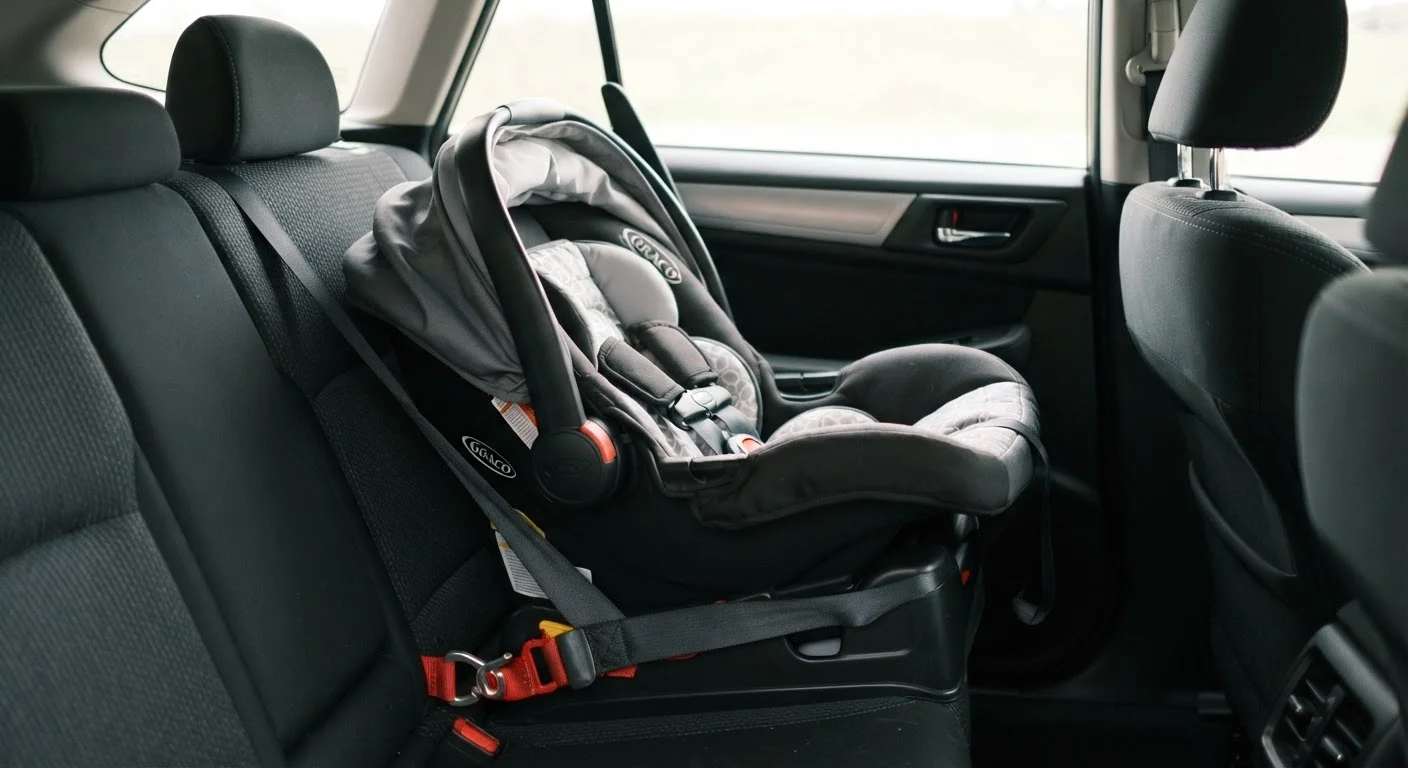
Why Installation Errors Are So Common
Car seat installation looks straightforward on the surface - click it in, buckle up, drive. But the reality is more complicated. Seats must work with dozens of different vehicle geometries, and manufacturers' instructions often run to 30 or more pages. According to the National Highway Traffic Safety Administration (NHTSA), studies have found that a majority of car seats are used with at least one significant misuse error. That's not a fringe problem - it reflects how genuinely difficult correct installation can be without guidance.
Part of the issue is overconfidence. Parents who installed a seat without incident tend to assume they did it right. Without a clear feedback signal - the seat either seems to fit or it doesn't - errors go unnoticed for months. Understanding where mistakes cluster gives you a concrete checklist to run through, rather than a vague sense that something might be off.
For a broader look at how crash forces interact with seat direction, see our explainer on rear-facing vs. forward-facing physics.
Installing the seat with too much movement - more than one inch of side-to-side or front-to-back wobble at the belt path.
Why it happens: Parents often test stability by pushing the top of the seat rather than the base near the belt path, which can feel firm even when the foundation is loose.
Routing the seatbelt or harness through the wrong slot for the child's current size.
Why it happens: Slots that worked when the seat was first installed may no longer be correct as the child grows, and parents aren't always aware that the harness height needs to be adjusted.
Leaving the harness too loose so it doesn't hold the child firmly against the seat.
Why it happens: A snug harness can feel uncomfortably tight to a parent, and children sometimes protest. It's easy to rationalize a little extra slack as 'room to breathe.'
Positioning the chest clip too low - at the stomach rather than at armpit level.
Why it happens: The chest clip can slide down during normal use, and parents may not reset it before each trip. Some caregivers also misunderstand its purpose, treating it as a simple buckle rather than a positioning device.
Installing a rear-facing seat at the wrong angle, leaving it too upright.
Why it happens: Vehicle seat cushions vary in contour, and without using the seat's angle indicator, it's difficult to judge the recline by eye. Some parents also worry that a reclined seat is unsafe.
Using ISOFIX (LATCH) connectors in a vehicle position or with a child weight that exceeds the system's limits.
Why it happens: Many families assume ISOFIX is always safer than seatbelt installation and continue using it as the child grows, unaware that a combined weight limit applies to the system.
How to Check Your Installation - and When to Get Help
After reviewing the common mistakes above, run through your own seat using the manufacturer manual as your primary reference - not memory, not a friend's setup. The manual is vehicle- and seat-specific; generic advice only gets you so far.
~59%
Car seats with at least one significant misuse error
NHTSA-cited research has found that the majority of car seats are used with at least one significant installation or usage error.
Free
Cost of a certified car seat inspection
NHTSA maintains a national network of inspection stations where certified Child Passenger Safety Technicians check installations at no charge.
Start with the basics: grip the seat at the belt path and try to move it side-to-side and front-to-back. Movement greater than one inch in any direction is too much. Then check harness snugness using the pinch test - if you can pinch slack webbing at your child's collarbone, tighten the harness. Confirm the chest clip sits at armpit level, not belly-button level. For rear-facing seats, verify the angle using the built-in indicator if your seat has one.
If anything feels uncertain, a certified Child Passenger Safety Technician (CPST) can inspect your setup for free. NHTSA's website maintains a locator for inspection stations. Many fire stations, hospitals, and community health programs host regular check events. This is not a judgment - CPSTs report that even experienced parents bring seats with fixable errors.
Also consider what your child is wearing. A puffy winter coat compresses in a crash, creating hidden slack in the harness that wasn't there when you buckled up. The fix is simple: buckle your child in a thin layer, then place the coat over the harness like a blanket. For more on the coat myth and other widely held misconceptions, see car safety myths parents still believe.
Finally, installation is not a one-time event. Check the seat's security and harness fit at the start of each trip - it takes under 30 seconds and catches the small shifts that accumulate from daily loading and unloading. If you're considering a used seat, verify its history carefully; what safety guidance says about second-hand car seats explains the specific risks involved.
The content provided on our blog site traverses numerous categories, offering readers valuable and practical information. Readers can use the editorial team’s research and data to gain more insights into their topics of interest. However, they are requested not to treat the articles as conclusive. The website team cannot be held responsible for differences in data or inaccuracies found across other platforms. Please also note that the site might also miss out on various schemes and offers available that the readers may find more beneficial than the ones we cover.