

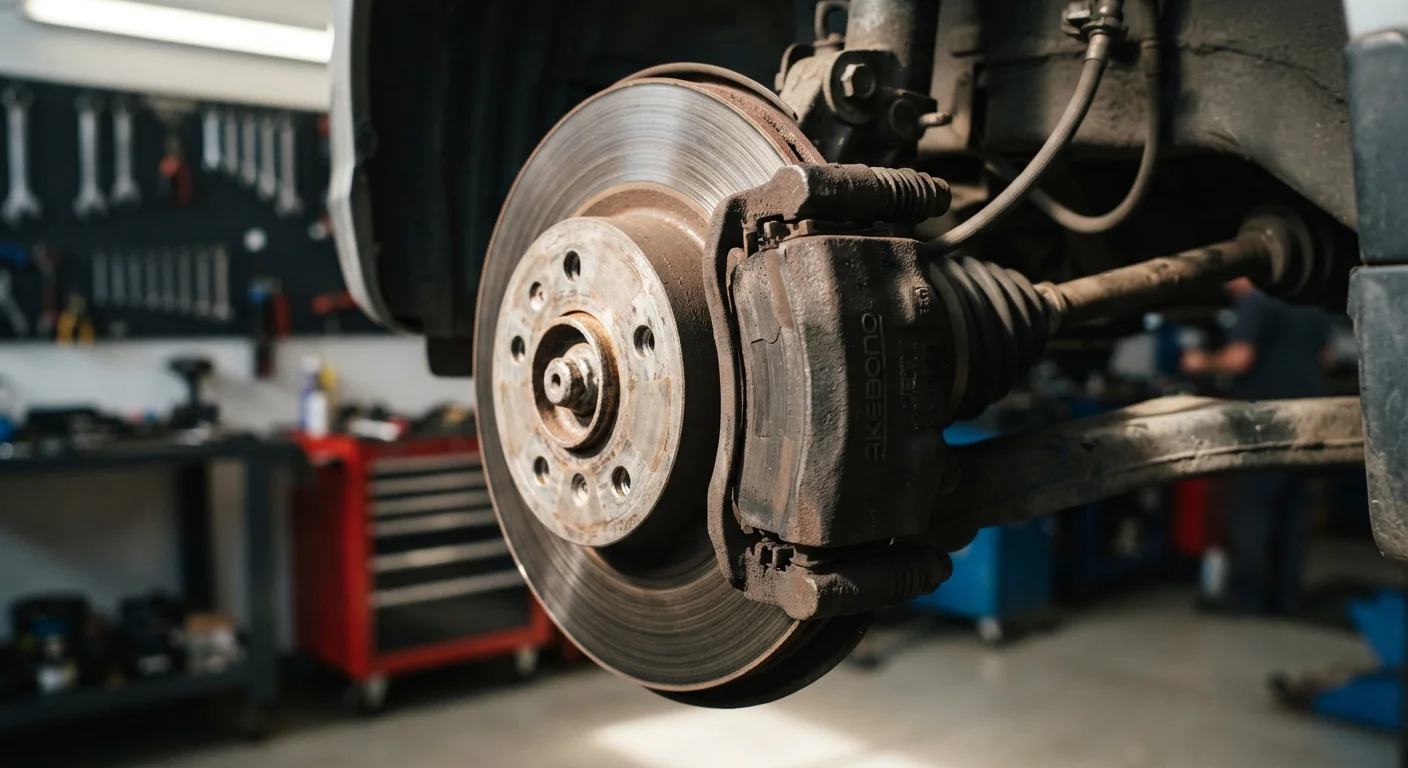
Not All Brake Squeals Are Created Equal
If you've ever backed out of the driveway on a cool morning and heard your brakes screech, only for the noise to vanish two blocks later, you've experienced one of the most common - and benign - brake sounds: surface rust. Overnight moisture causes a thin layer of oxidation to form on the rotors (the metal discs your brakes clamp against). The first few stops scrub it off, and the noise disappears.
But not every squeal earns that same calm response. Brake noise falls into a few distinct categories, and the differences matter:
- Light squealing that clears up quickly: Almost always surface rust or morning dew - normal and harmless.
- Persistent high-pitched squeal during braking: Most vehicles have a small metal tab called a wear indicator built into the brake pad. When the pad wears thin, this tab contacts the rotor and squeals - intentionally. It's your car's built-in alarm telling you the pads need replacing soon.
- Grinding or growling noise: This means the pad material is likely gone entirely, and metal is scraping against metal. This is urgent.
- Squealing combined with pulling to one side or a soft pedal: These are multi-symptom situations that warrant same-day professional attention.
Understanding which sound you're dealing with is the first step. The early warning signs families commonly ignore covers how brake noises fit into the broader picture of vehicle health.
Common Mistakes That Make Brake Problems Worse
Most brake-related repair bills that balloon out of control start with a small misstep - usually a decision that felt reasonable at the time. Here are the mistakes families make most often, and how to sidestep them.
Assuming the noise will go away on its own and delaying a mechanic visit.
Why it happens: Brake noise often comes and goes, which makes it easy to convince yourself it's not serious. Busy schedules make it tempting to push the appointment back another week.
Replacing only one side's brake pads instead of doing both sides of an axle together.
Why it happens: It seems logical - and cheaper - to fix only the side that's making noise. Some shops may even offer this to keep the quote lower.
Ignoring brake dust and heat buildup by skipping the visual check during tire rotations.
Why it happens: Most families focus on tire tread and pressure during routine maintenance, overlooking the brakes sitting just behind the wheel.
Using heavy downhill braking repeatedly instead of engine braking to control speed.
Why it happens: Drivers default to the brake pedal as the primary speed control, even on long descents - it's the most intuitive response.
Topping off brake fluid without investigating why it was low in the first place.
Why it happens: A low fluid level looks like a simple fix, and adding fluid feels like responsible maintenance.
If a dashboard warning light has illuminated alongside your brake noise, that combination deserves immediate attention. The guide to dashboard warning lights explains which symbols are urgent and which can wait for a scheduled appointment.
When to Stop Driving and Call a Mechanic Today
Some brake symptoms are genuinely urgent. Pull over safely and arrange a tow or same-day inspection if you notice any of the following:
Stop Driving If You Notice These Symptoms
A spongy brake pedal, grinding that doesn't clear up, strong pulling to one side, or a burning smell after normal driving are all signs that continuing to drive could be dangerous. These symptoms suggest the braking system may be compromised in a way that affects stopping distance. Arrange a tow or same-day mechanic visit rather than risking an emergency stop that the brakes can't complete.
- The brake pedal sinks closer to the floor than usual, or feels spongy underfoot
- You hear grinding that doesn't stop - not just on the first stop of the morning
- The vehicle pulls sharply to one side when you brake
- You smell burning after driving, especially after highway use
- The brake warning light stays on while driving
These signs can indicate low brake fluid, a seized caliper, or severely worn pads that have damaged the rotor. Acting quickly often limits the damage - and the cost. A basic pad replacement typically costs a fraction of what a rotor or caliper replacement runs.
~$250-$400
Typical brake pad replacement cost per axle
Industry service data suggests pad-only replacements are significantly cheaper than combined pad-and-rotor jobs, which can run $400-$800 or more per axle depending on the vehicle.
7 years
Average brake fluid change interval
Many vehicle manufacturers recommend replacing brake fluid every 2-3 years or per mileage intervals; consult your owner's manual for the specification that applies to your vehicle.
This article is for general informational purposes only. For any brake concern you are unsure about, have your vehicle inspected by a qualified mechanic before continuing to drive.
The content provided on our blog site traverses numerous categories, offering readers valuable and practical information. Readers can use the editorial team’s research and data to gain more insights into their topics of interest. However, they are requested not to treat the articles as conclusive. The website team cannot be held responsible for differences in data or inaccuracies found across other platforms. Please also note that the site might also miss out on various schemes and offers available that the readers may find more beneficial than the ones we cover.