

What Your Car Is Trying to Tell You
Most vehicles don't fail without warning. The engine that strands you on a highway on-ramp usually gave signals days or weeks earlier - a shudder at startup, a smell that didn't quite belong, a brake pedal that felt slightly softer than usual. The problem isn't that the car didn't communicate; it's that most of us aren't sure what to listen for.
For families juggling school runs, weekend trips, and tight budgets, an unexpected breakdown is more than an inconvenience - it's a safety risk and a financial hit. Understanding the early warning signs is one of the most practical things you can do to stay ahead of costly repairs. As we cover in why delaying small repairs tends to cost more, the maintenance items families ignore most often are exactly the ones that lead to the biggest bills later.
Below are the most common and important early signals your car may be giving you right now.
The engine takes longer than usual to start
If your car cranks for a beat longer than it once did before firing up - especially on cold mornings - your battery, starter motor, or fuel system may be weakening. A healthy engine should start quickly and consistently. Sluggish starts are one of the most reliable early indicators that something in the ignition chain is losing capacity. Batteries typically give several weeks of deteriorating performance before they fail entirely, so a slow start is a window of opportunity, not just an annoyance.
A sluggish start is a window of opportunity - batteries rarely fail without warning first.
You notice unfamiliar smells
Your nose is a surprisingly useful diagnostic tool. A sweet, syrupy smell often points to a coolant leak - coolant prevents your engine from overheating, so this warrants prompt attention. A burning smell after braking can indicate worn brake pads or fluid that has overheated. A rotten-egg odor may suggest a problem with the catalytic converter or fuel system. Any persistent, unusual smell that wasn't there last month deserves investigation by a qualified mechanic.
A sweet smell under the hood often signals a coolant leak - don't dismiss it.
Steering pulls to one side or feels loose
A car that gradually drifts left or right when you're driving straight on a flat road is signaling a problem - it could be uneven tire pressure, wheel misalignment, or worn suspension components. Loose or imprecise steering (where the car feels vague or slow to respond) may indicate worn tie rods or steering linkage. Both issues affect your ability to control the vehicle in an emergency and should be assessed by a mechanic rather than monitored and hoped away.
Steering that pulls or feels vague affects your emergency control - get it checked.
Brakes squeal, grind, or feel spongy
A high-pitched squeal when braking is often a built-in wear indicator telling you the brake pads are getting thin. A grinding noise typically means the pads are worn through and metal is contacting metal - a more urgent (and expensive) situation. A spongy or soft brake pedal that travels further than usual before engaging suggests air in the brake lines or a fluid leak, both of which reduce braking effectiveness. Brake issues directly affect family safety and should never be deferred.
Grinding brakes mean metal-on-metal contact - this goes beyond routine maintenance urgency.
Vibrations you didn't notice before
New vibrations - through the steering wheel, the seat, or the pedals - usually indicate something is out of balance or failing. Vibration through the wheel at highway speeds often points to wheel balance or tire issues. Vibration under acceleration can suggest a worn driveshaft or transmission problem. Shuddering when braking may mean warped brake rotors. While not every vibration signals immediate danger, a new or worsening one is your car's way of flagging that something has changed mechanically.
New vibrations under braking or acceleration are mechanical changes, not just road noise.
Dashboard warning lights you've been ignoring
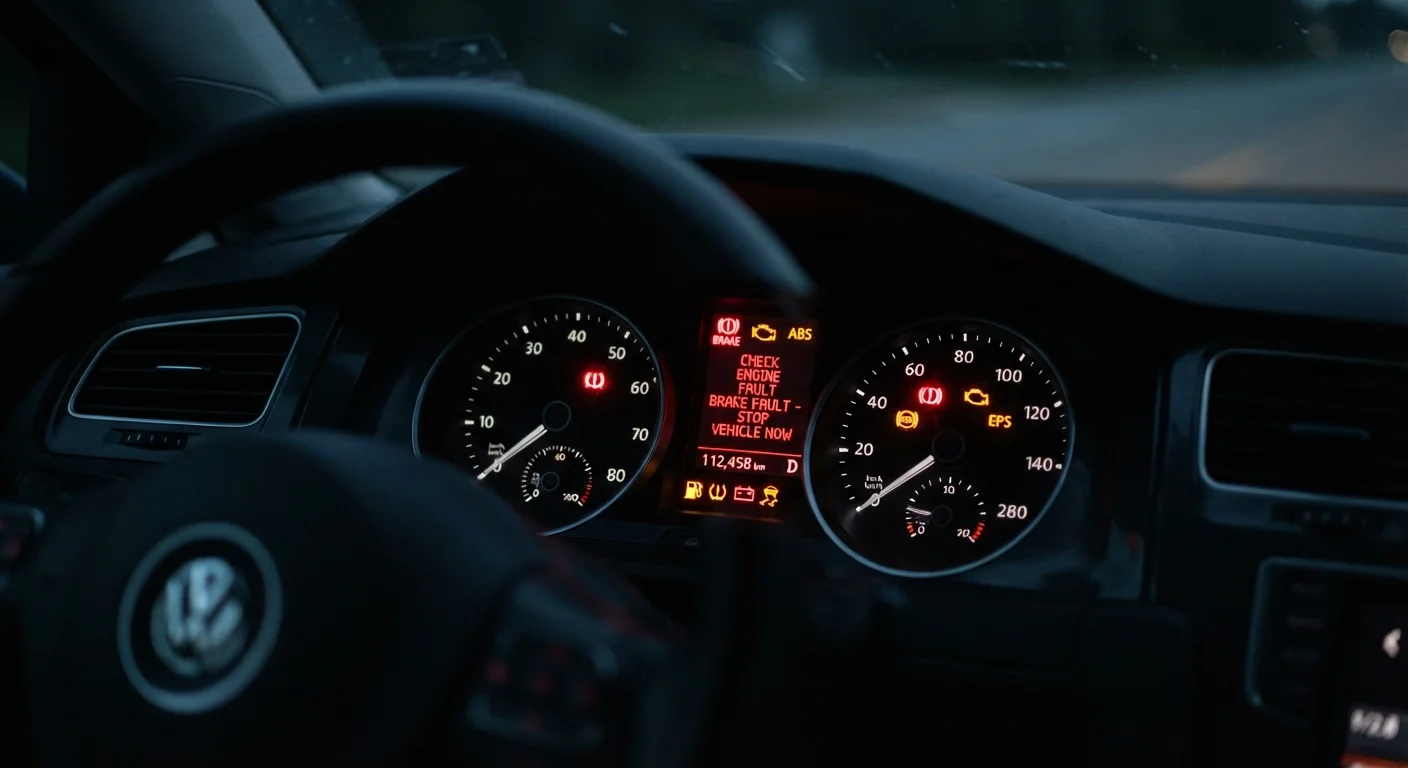
It's tempting to treat a persistent warning light as background noise once the car continues to drive normally. This is a common and expensive habit. The check engine light, in particular, can flag anything from a loose gas cap to a failing oxygen sensor - problems that compound silently over time. The oil pressure and temperature warning lights indicate conditions that can cause serious engine damage within minutes if not addressed. For a plain-language breakdown of what each light means, see our warning lights reference guide.
Ignoring a warning light because the car 'drives fine' is how small problems become engine damage.
Fluid spots where you park
A puddle or drip stain beneath your parked car is worth identifying before dismissing. Clear water near the front passenger area is usually normal condensation from air conditioning. But oily spots, bright green or orange fluid (coolant), reddish fluid (transmission or power steering fluid), or dark brown fluid (engine oil) all point to leaks that will worsen over time. Check your fluid levels monthly - a reservoir that drops between service intervals almost always means a leak somewhere in the system.
Monthly fluid level checks catch leaks long before they cause serious engine or transmission damage.
Don't Wait for the Breakdown
None of these warning signs require mechanical expertise to notice - they require attention. Building a habit of a quick sensory check every week or two (listen on startup, glance under the car after parking, note any changes in how the car feels) puts you in a far stronger position than relying solely on annual service intervals.
Make It a Quick Weekly Habit
You don't need tools or mechanical knowledge for a basic check. Once a week, spend 60 seconds listening to your engine at startup, glancing under the car for any new drips, and noting whether anything feels or smells different on your first drive. Catching changes early is the entire game when it comes to avoiding expensive repairs.
If you're planning a longer journey, go further with a structured inspection before you leave. Our pre-road-trip vehicle check walks through everything worth inspecting before a family drive. And if your dashboard has lit up recently, our guide to warning lights explains in plain language what each one means and how urgently you need to act.
Early action almost always costs less, takes less time, and carries far less risk than a roadside breakdown with kids in the car.
The content provided on our blog site traverses numerous categories, offering readers valuable and practical information. Readers can use the editorial team’s research and data to gain more insights into their topics of interest. However, they are requested not to treat the articles as conclusive. The website team cannot be held responsible for differences in data or inaccuracies found across other platforms. Please also note that the site might also miss out on various schemes and offers available that the readers may find more beneficial than the ones we cover.