

Why Electrical DIY Deserves Honest Scrutiny
The appeal of DIY electrical work is understandable: watching someone swap a light switch on a video looks straightforward, and the cost of an electrician's visit is real. But electricity carries risks that don't announce themselves the way a leaky pipe does. Mistakes can hide inside walls for months before causing a fire or shock hazard.
This doesn't mean homeowners should never touch a wire. It means you need an accurate picture of what's genuinely low-risk, what requires professional hands, and - critically - what local codes say about permits and inspections. Our guide to DIY home repairs families can safely tackle puts electrical tasks in context alongside other household projects.
Myth
If I flip the breaker off, the work is completely safe.
Fact
Turning off the breaker removes power from that circuit, but doesn't eliminate all risk - especially near the panel itself, where the main service line remains live regardless of breaker position.
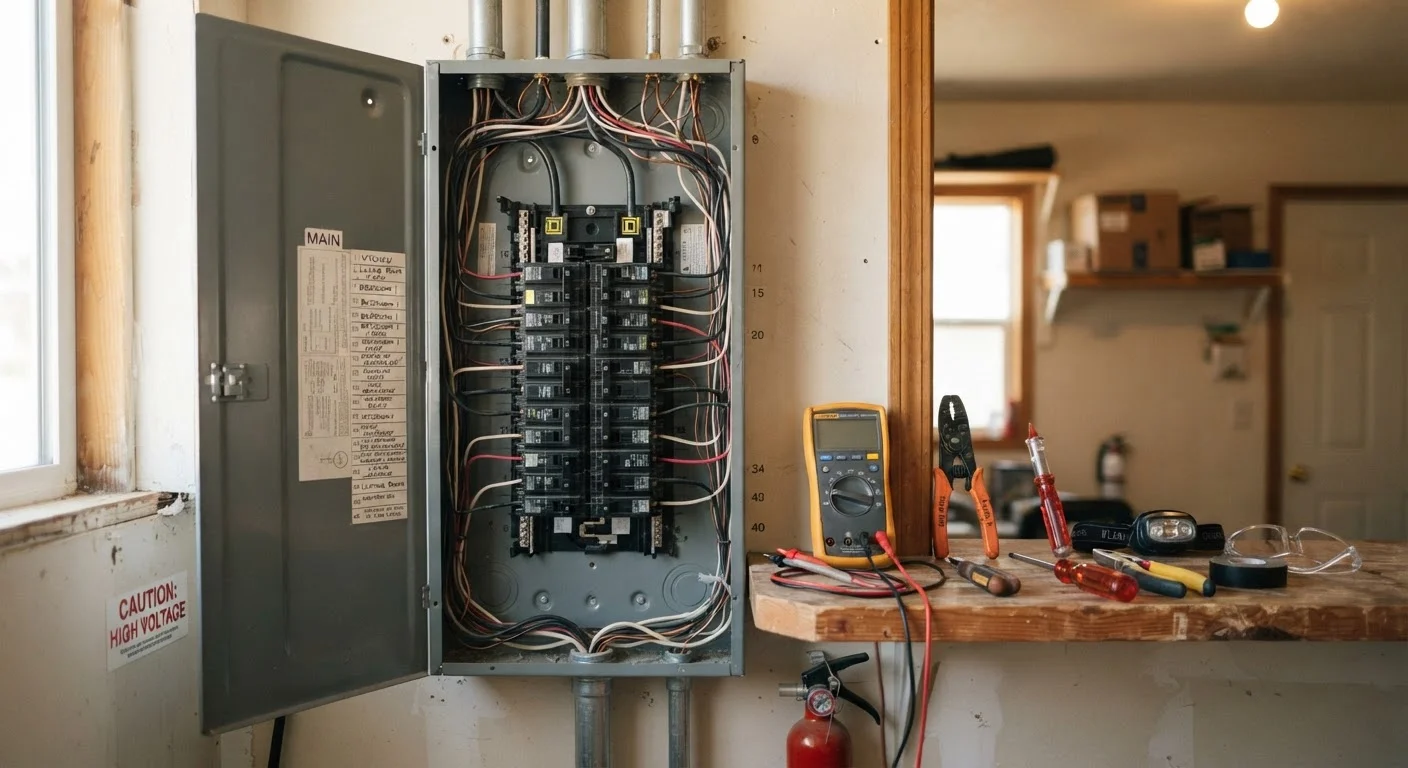
Breakers protect individual circuits, not the wires connecting your panel to the utility grid. Those wires are energized at all times. Any work near or inside the panel carries serious shock risk even with every breaker switched off. Always verify a circuit is de-energized using a non-contact voltage tester before touching any wire.
Myth
I don't need a permit for small electrical jobs.
Fact
Most jurisdictions in the U.S. require permits for electrical work beyond simple like-for-like fixture replacements, including adding outlets, circuits, or upgrading panels.
Building codes exist to ensure work is inspected and safe. Unpermitted electrical work can create problems when you sell your home, may void your homeowner's insurance if a fire results, and could leave a hazard hidden in your walls. Always check with your local building department before starting - requirements vary by city and county.
Myth
Electrical work is basically the same in any house.
Fact
Older homes may have aluminum wiring, knob-and-tube systems, or undersized panels that require specialized knowledge and different handling than modern copper wiring.
Aluminum wiring, common in homes built in the 1960s and 70s, requires special connectors and techniques to join safely with copper devices. Knob-and-tube wiring, found in pre-1940s homes, is ungrounded and often degraded. A professional assessment is essential before DIY work in older homes, as standard procedures may worsen existing hazards.
Myth
Electrical mistakes are obvious right away.
Fact
Many wiring errors produce no immediate sign of trouble and can cause fires or shock hazards months or years later.
A loose wire connection, for example, may work intermittently for a long time before arcing and igniting nearby insulation. The U.S. Fire Administration has identified electrical fires as a significant cause of residential fires, many of which originate in wiring rather than appliances. This delayed-failure pattern is precisely why inspections by qualified electricians - and the permits that require them - exist.
Myth
If the lights work afterward, the job was done correctly.
Fact
A functional light or outlet does not confirm that connections are safe, properly grounded, or code-compliant.
A loose neutral wire, missing ground connection, or reversed polarity can all result in a working fixture while leaving real hazards in place. Reversed polarity, for instance, energizes the sleeve of a light socket rather than the center contact - creating shock risk when changing a bulb. A simple outlet tester (an inexpensive plug-in device) can flag several wiring errors that aren't visible to the eye.
Common Myths That Lead to Real Danger
Misconceptions about electrical safety often come from a kernel of truth stretched too far. Understanding exactly where the line falls keeps you empowered to handle what you reasonably can, while protecting you from overstepping into genuinely hazardous territory.
Older Home Wiring Requires Extra Caution
If your home was built before 1980, consult a licensed electrician before attempting any electrical DIY. Aluminum wiring, knob-and-tube systems, and outdated panels behave differently from modern installations and carry elevated risk. What looks like a simple swap can become a serious hazard without the right knowledge of the existing system.
Before any electrical task - even one considered beginner-friendly - shut off the correct breaker, then use a non-contact voltage tester to confirm the circuit is dead at the outlet or fixture. Never rely on the breaker label alone. Review our safety and preparation checklist before you start.
Where to Draw the Line
A practical rule: if a task involves your electrical panel, service entrance, adding a new circuit, or anything behind walls that requires running new cable, stop and call a licensed electrician. These jobs typically require a permit and inspection in virtually every U.S. jurisdiction, and for good reason - errors are invisible and potentially deadly.
Tasks that are more commonly considered within reach for careful, informed homeowners include replacing a like-for-like light switch or outlet on an existing circuit, swapping a light fixture for one of similar wattage, or installing a ceiling fan where wiring and a supported junction box already exist. Even these tasks carry risk if the home has older aluminum wiring, knob-and-tube wiring, or any pre-existing code violations. If you open a box and find something unexpected - scorched insulation, mismatched wire gauges, or more wires than you anticipated - that's your cue to stop. Our article on DIY repairs that went wrong covers exactly these scenarios and what they can cost.
If you're new to home repair generally, starting with beginner-friendly projects before electrical work builds the foundational skills - tool handling, reading instructions carefully, knowing when to stop - that matter most when the stakes are higher.
The content provided on our blog site traverses numerous categories, offering readers valuable and practical information. Readers can use the editorial team’s research and data to gain more insights into their topics of interest. However, they are requested not to treat the articles as conclusive. The website team cannot be held responsible for differences in data or inaccuracies found across other platforms. Please also note that the site might also miss out on various schemes and offers available that the readers may find more beneficial than the ones we cover.