

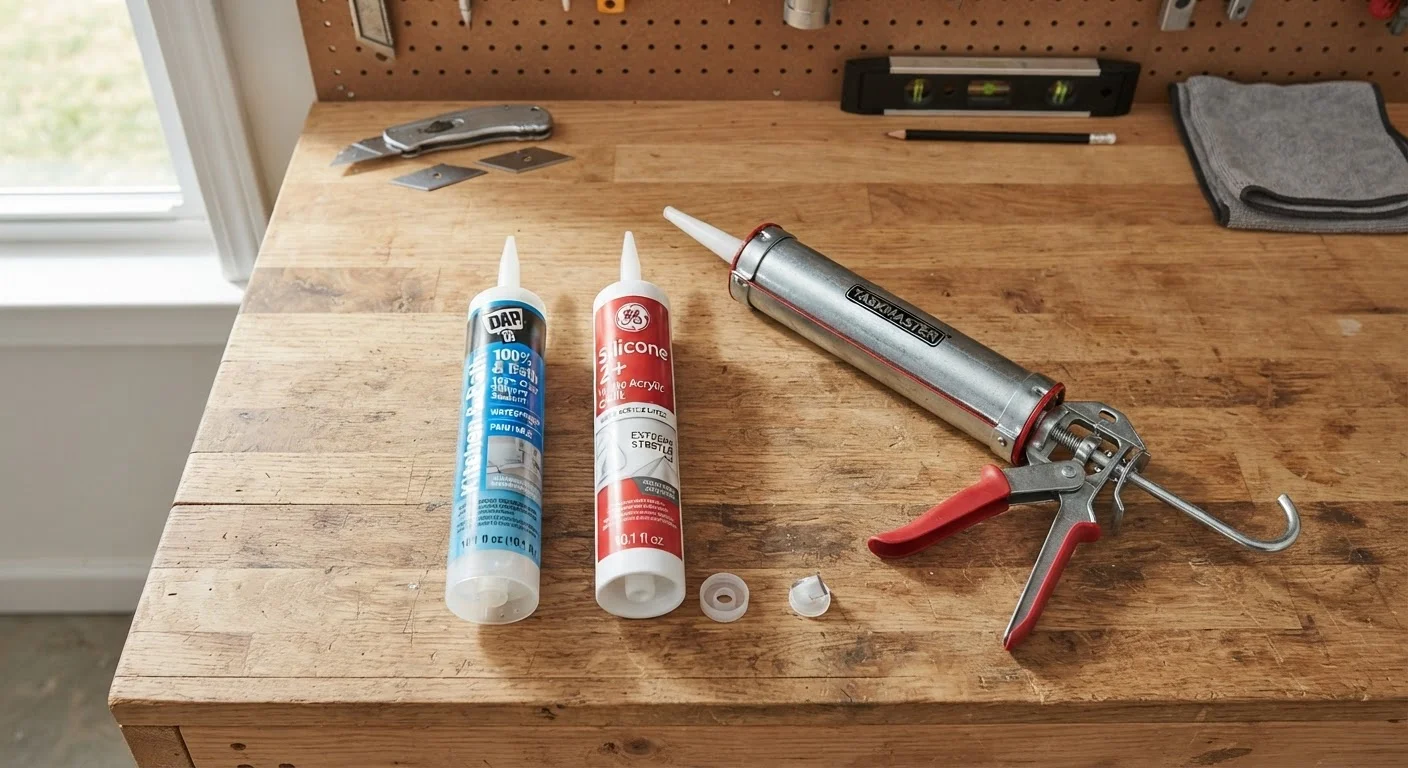
Option A
Silicone Caulk
The waterproof, flexible workhorse for wet and outdoor areas.
Best for: Sealing bathtubs, showers, sinks, and exterior gaps where moisture and movement are ongoing concerns.
Option B
Acrylic Caulk
The paintable, beginner-friendly sealant for interior trim and dry areas.
Best for: Filling gaps around interior window trim, baseboards, door casings, and crown molding before painting.
What Makes Silicone and Acrylic Caulk Different
At first glance, silicone and acrylic caulk appear nearly identical - both come in tubes, both fill gaps, and both create a seal. The difference lies in their chemistry, and that chemistry determines where each belongs in your home.
Silicone caulk is made from silicone polymers, which give it extraordinary flexibility and a completely waterproof bond even after years of exposure. It doesn't shrink significantly after curing and can handle temperatures ranging from well below freezing to well above 300°F. Because it doesn't absorb water, it also resists mold and mildew growth better in wet environments.
Acrylic caulk (also sold as latex caulk or painter's caulk) is water-based. That single fact has big practical consequences: you can thin it with water, clean tools with water, and wipe away mistakes before it dries. It also means it can absorb moisture over time, which leads to shrinkage, cracking, and eventual failure in consistently wet conditions.
Understanding these two fundamentally different chemistries makes the right choice for every job much clearer. See our guide on why caulk fails for a deeper look at how material choice connects to longevity.
Head-to-Head: Key Properties Compared
The table below summarizes how silicone and acrylic caulk compare across the criteria that matter most for home repair projects.
| Criterion | Silicone Caulk | Acrylic Caulk |
|---|---|---|
| Water resistance | Fully waterproof | Limited; absorbs moisture over time |
| Flexibility after curing | Highly flexible; moves with surfaces | Moderate; can crack under movement |
| Paintability | Cannot be painted | Fully paintable |
| Cleanup | Requires mineral spirits or alcohol | Soap and water |
| Ease of application | Moderate; less forgiving | Beginner-friendly |
| Mold and mildew resistance | Excellent in wet areas | Lower; needs mold-inhibiting formula |
| UV and temperature tolerance | Excellent for exterior use | Degrades faster outdoors |
| Typical cure time | 24-48 hours | 1-24 hours |
| Ease of removal/rework | Difficult; requires tools and solvents | Easier; peels or scrapes off |
One property worth emphasizing: silicone cannot be painted. Standard latex or oil-based paint will not bond to cured silicone and will peel off within days. If your project ends with a coat of paint - interior trim, ceiling joints, door frames - acrylic caulk is essentially the only option. Silicone belongs where paint never goes: inside shower stalls, around sink basins, and along exterior joints that stay exposed.
Where Each Type Belongs: Room-by-Room Guidance
Bathrooms and Kitchens
Use silicone caulk anywhere water pools or splashes regularly. The joint between a bathtub and tile wall, the perimeter of a shower base, and the gap where a sink basin meets the countertop all need silicone's waterproof flexibility. Tubs and sinks shift slightly with weight and temperature - silicone moves with them without cracking.
Interior Trim and Walls
Use acrylic caulk along baseboards, window casings, crown molding, and anywhere you'll be painting afterward. It fills gaps cleanly, dries in one to two hours, and blends invisibly under a coat of paint. A damp fingertip or tool is all you need to smooth a bead before it sets.
Exterior Sealing
Use silicone caulk for exterior window and door frames, gaps in siding, and around utility penetrations. Outdoor conditions - freezing winters, summer heat, driving rain - will break down acrylic caulk far faster than silicone. Check that the product is labeled for exterior use and UV resistance.
A Practical Hybrid Option
Siliconized acrylic caulk blends silicone into a latex base, offering better moisture resistance than pure acrylic while remaining paintable. It's a reasonable choice for areas with intermittent moisture, such as the top edge of a backsplash or around a utility sink, but it's still not a full substitute for 100% silicone in shower interiors.
Application Tips for Each Type
Getting a clean, durable bead depends as much on technique as material choice. A few key differences apply depending on which caulk you're using.
- Surface prep matters for both: The surface must be clean, dry, and free of old caulk residue. Silicone is especially unforgiving - any moisture or oil will prevent proper adhesion.
- Smoothing acrylic: Work quickly with a damp finger or smoothing tool within the first few minutes. Acrylic becomes tacky fast, and dragging a tool over partially set material tears the bead.
- Smoothing silicone: Use a dry finger or a tool lightly coated with rubbing alcohol. Water doesn't help with silicone; alcohol reduces drag without interfering with curing.
- Curing time: Acrylic caulk skins over quickly but takes up to 24 hours to fully cure. Silicone typically requires 24-48 hours before exposing the joint to water - check the label for the specific product's instructions.
- Removal: Acrylic caulk can often be peeled or scraped away and softened with water. Silicone requires a utility knife, a dedicated caulk remover tool, and often a chemical softener - plan for more effort if a re-do is needed.
For more detail on surface preparation and avoiding the most common mistakes, our article on caulk failure and prevention walks through the full process.
The content provided on our blog site traverses numerous categories, offering readers valuable and practical information. Readers can use the editorial team’s research and data to gain more insights into their topics of interest. However, they are requested not to treat the articles as conclusive. The website team cannot be held responsible for differences in data or inaccuracies found across other platforms. Please also note that the site might also miss out on various schemes and offers available that the readers may find more beneficial than the ones we cover.